


Trump Aims to Align with GOP Senators for Policy Progress
President-elect Donald Trump is slated to engage with Senate Republicans on Wednesday, aiming to unite lawmakers under a common strategy to push forward his key policy goals as he approaches his inauguration on January 20.
Ahead of his discussions with Senate leaders and general members, Trump will pay tribute to former President Jimmy Carter, whose remains lie in state at the Capitol in anticipation of his Thursday funeral.
Central to Trump's agenda is fulfilling the promises made during his campaign, though internal divisions among congressional Republicans present a challenge in terms of execution.
Negotiating a Strategy
Proposing an extensive legislative package, Trump envisions a bill that would encapsulate key priorities such as reform, energy initiatives, and the continuation of previous tax cuts, alongside other budget reductions. Additionally, there's a contemplation of raising or possibly removing the debt ceiling entirely.
Given their slender majorities in both chambers and anticipated minimal support from the Democratic side, Republicans are keen on using 'reconciliation' — a streamlined legislative tool that allows passage with a simple majority, bypassing the 60-vote filibuster in the Senate.
Despite House Speaker Mike Johnson's support for a comprehensive bill, fiscal conservatives express opposition, favoring a separation of issues into multiple measures, specifically bifurcating border security from fiscal matters.
Seeking Consensus
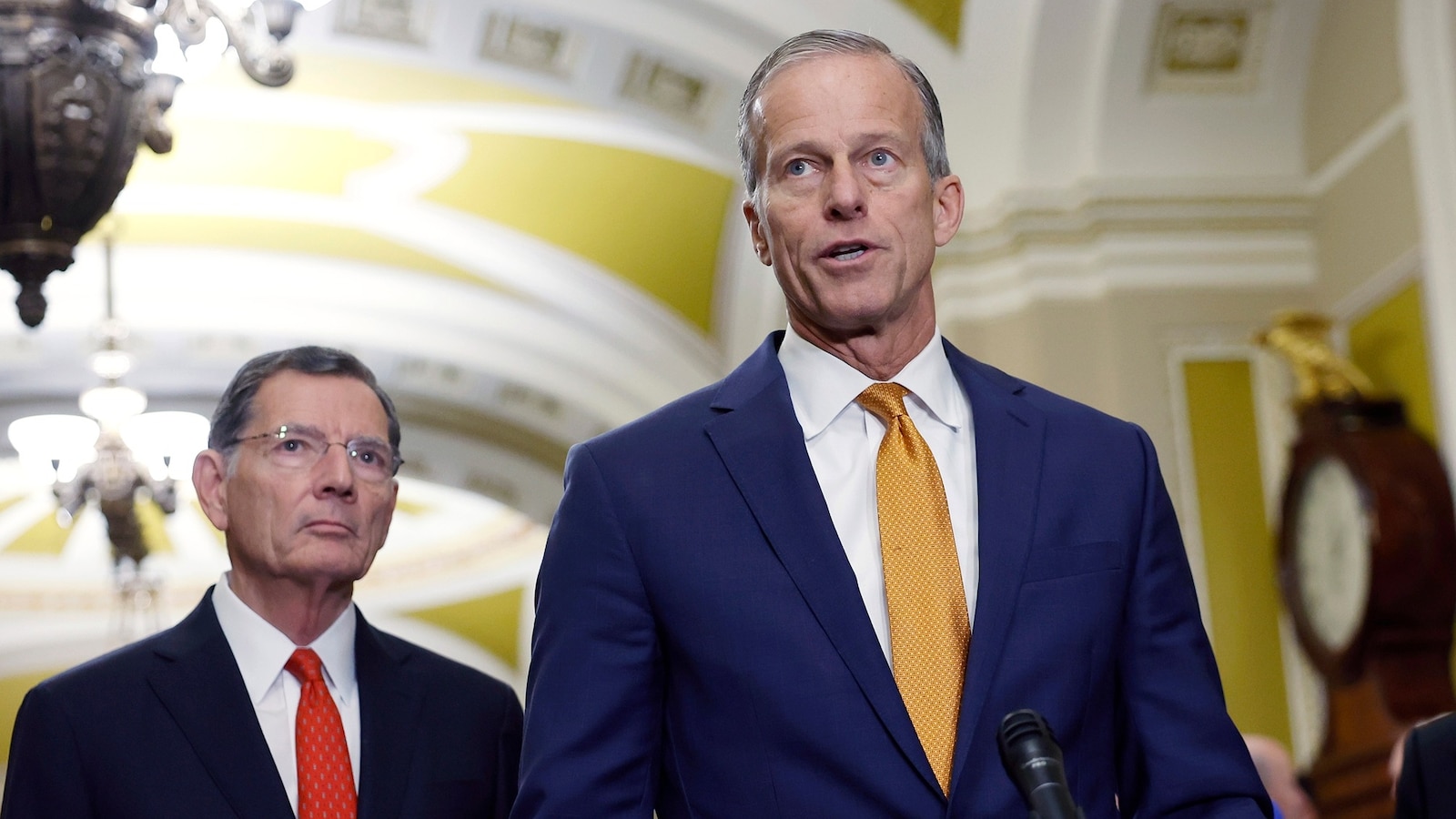
Senate Majority Whip John Barrasso emphasizes the primary aim of coordinating with the House to achieve mutual understanding and progress.
Barrasso suggests that a split approach might be beneficial, enabling immediate action on pressing concerns like border issues and energy independence, while allowing more time for dealing with financial policies due later in the year.
During discussions with reporters, Trump indicated his preference for a singular all-encompassing bill but acknowledged that a two-part plan could expedite proceedings, particularly regarding immigration.
Adjusting Strategies
In the House, Speaker Johnson remains open to dialogue with other Republican leaders like Thune, focusing on achieving strategic alignment across legislative priorities to avoid perceived threats to the agenda.
Johnson aims to finalize a legislative proposal by early April, although garnering support from fiscal conservatives within his party will be pivotal, especially as they traditionally oppose broad catch-all bills.
Johnson defends the proposed single-bill strategy, emphasizing its focus on reducing government size and spending, despite raising the debt ceiling to reassure financial markets and maintain fiscal stability.
He also plans to address the debt ceiling in the reconciliation package, independent of Democratic input, leveraging Republican control in both chambers to dictate terms without bipartisan negotiations.
Nonetheless, persuading fiscal conservatives presents a challenge, especially after their resistance to a short-term funding bill that aimed to prevent a government shutdown last month, partly due to Trump's pressure on the debt ceiling.
Following his Senate discussions, Trump will host House Republican groups at his Mar-a-Lago estate over the weekend, fostering deeper conversations on upcoming challenges and collaborative efforts.
Leave a Reply