


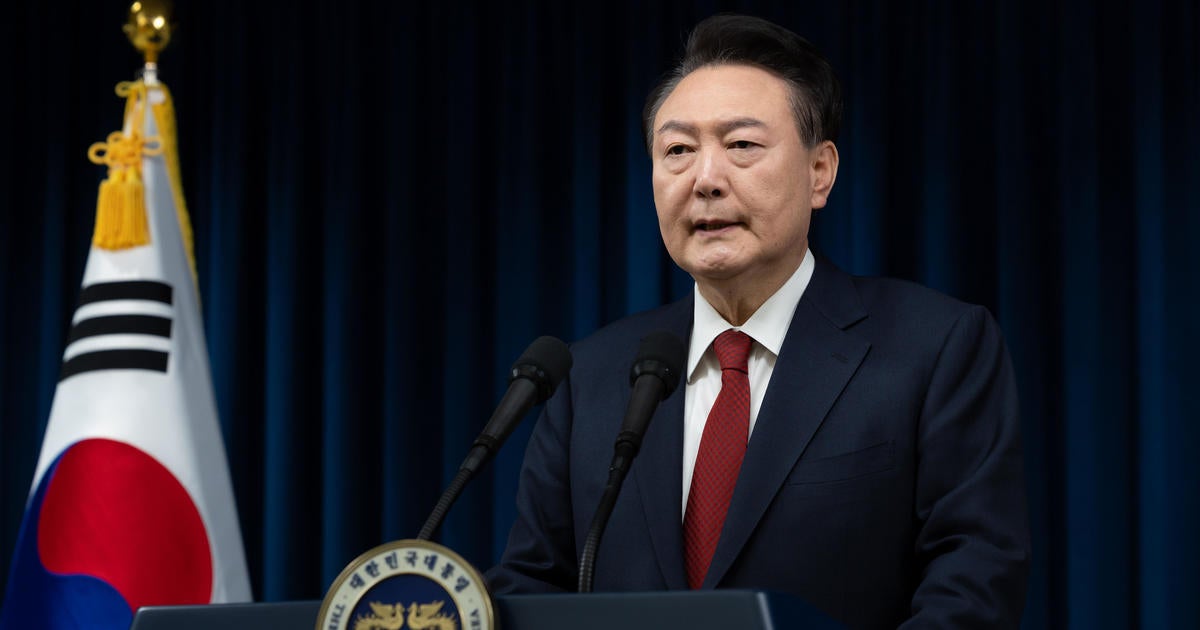
Court Orders Arrest of Impeached South Korean Leader Yoon Suk Yeol
A South Korean judiciary has sanctioned orders to arrest the impeached President Yoon Suk Yeol, simultaneously approving searches of his official and private premises. These actions are in response to his ephemeral declaration of martial law.
Investigations are underway by the nation's anti-corruption body to determine if Yoon's act constitutes rebellion. Despite this, legal experts suggest detention or thorough searches are improbable without his formal removal.
Details of the Judicial Orders
The Seoul Western District Court has issued detainment orders for Yoon, along with search mandates for his locations in central Seoul. These are part of a collaborative probe spearheaded by the Corruption Investigation Office for High-Ranking Officials, joining forces with police and military entities.
Under current law, leading a rebellion could lead to capital punishment or life incarceration. Although Yoon enjoys immunity from many criminal prosecutions due to his presidential status, charges related to rebellion or treason fall outside that protection.
The Context Behind Impeachment
Yoon saw his presidential functions suspended following the National Assembly's impeachment vote on December 14, triggered by his martial law declaration, which resulted in deploying a significant military and police presence in Seoul.
Defending his actions, Yoon labeled them as legitimate governance measures, targeting what he terms the 'monstrous' and 'anti-state' opposition party. He accuses them of using legislative leverage to impeach top officials and disrupt the government's financial plans while alleging their alignment with North Korean interests.
A ruling from the Constitutional Court will determine if Yoon remains in or is expelled from office.
Controversy and Legal Challenges
There are beliefs that Yoon may disregard the warrants, as he has consistently avoided interrogation sessions by investigative bodies. His security detail has thwarted all search attempts, invoking a statute that bars raids on state-sensitive sites.
Yoon's legal counsel dismissed the anti-corruption entity's warrant requests, pointing to a lack of jurisdiction over rebellion-related offenses.
Plans for executing the warrants remain undeclared by the agency at this time.
Choi Jin of the Seoul-based Institute of Presidential Leadership commented on the futility of detaining Yoon without his cooperation, questioning the practicality of any physical confrontations between investigators and security personnel.
Despite this, investigative teams are expected to visit Yoon's residence to affirm their commitment to impartiality and strict procedure.
Political Ramifications
Park Sung-min, head of MIN Consulting, interprets the arrest warrant issuance as a maneuver to push Yoon towards collaboration with inquiries.
Recalling past events, former President Park Geun-hye also disregarded prosecutorial summons during a similar impeachment scenario for corruption in 2017, resulting in her questioning and subsequent arrest post-impeachment by the Constitutional Court.
Impact and Aftermath of Martial Law Declaration
Yoon's brief martial law, spanning a mere six hours, ignited significant political unrest, derailing diplomatic efforts and unsettling financial landscapes. Despite military operations, the legislative body promptly reconvened to nullify his actions unanimously.
His defense personnel, law enforcement head, and prominent military officials have already faced arrests for their participation in the martial law enforcement.
Yoon maintains his stance of simply intending to restore order without curbing parliamentary processes or detaining lawmakers. However, testimonies from arrested military heads, such as Army Special Warfare Commander Kwak Jong-keun, contradict Yoon's narrative. Kwak disclosed under oath that Yoon instructed a forceful removal of lawmakers, a directive he chose not to execute.
Growing Political Crisis
The political intricacies deepened as the Democratic Party, alongside lesser opposition factions, initiated the impeachment of acting President Han Duck-soo. Their grievance pertains to his reluctance to appoint three justices to the Constitutional Court, a move seen as potentially swaying Yoon's impeachment resolution.
In the absence of Han Duck-soo, Choi Sang-mok steps up as the interim leader, fulfilling the roles of Deputy Prime Minister and Finance Minister, steering South Korea during this turbulent phase.
Leave a Reply