


Insights on Plane Crash Survivability
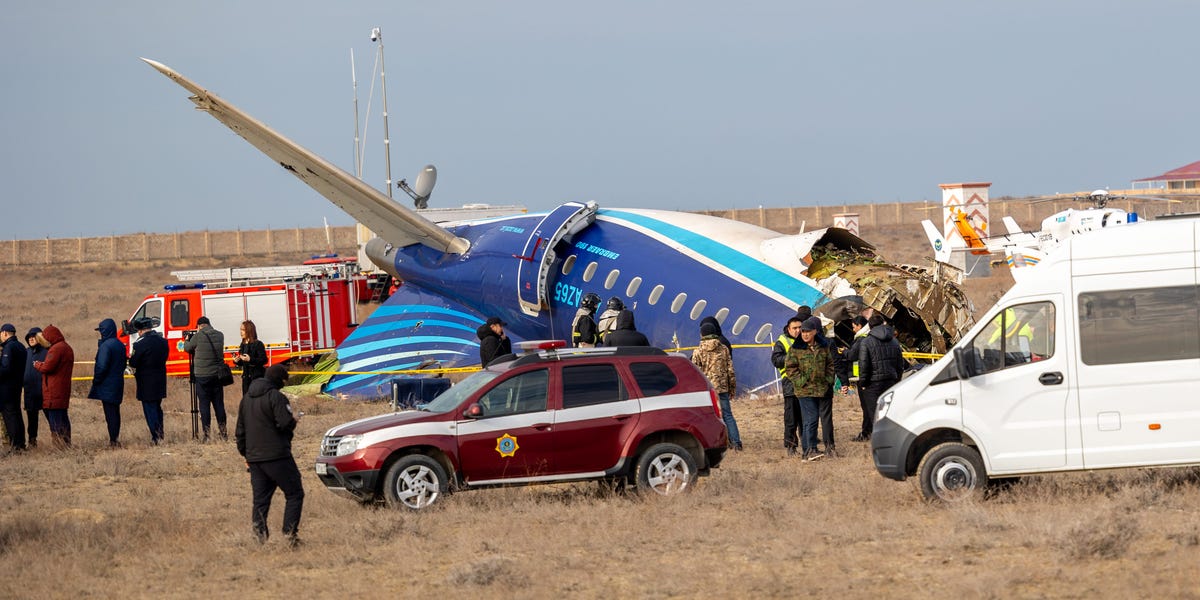
A compelling video displays individuals emerging alive from the debris of a plane belonging to Azerbaijan Airlines that went down on Wednesday. The incident, which occurred in Kazakhstan, resulted in 29 individuals surviving out of those onboard, with 38 fatalities.
The likelihood of surviving an aircraft disaster is significantly influenced by the specific circumstances surrounding the mishap. As of now, the exact reasons behind the Azerbaijan Airlines crash remain unclear, as does the fact that nearly half of the passengers escaped death.
Role of Seat Position in Survival
Typically, the arrangement of seating and the conduct of the crew can play crucial roles in determining survival outcomes. Historical data suggests that those seated towards the tail end of the aircraft, particularly where the survivors of the Azerbaijan incident were found, have better survival odds.
A 2015 Time Magazine study reviewed federal data from 17 crashes between 1985 and 2000. It revealed that passengers in the rear third of the plane experienced a fatality rate of just 32%, with middle seats in that section providing the lowest risk at 28%.
These findings are contrasted by higher fatality rates in other sections, such as the middle third at 39% and the front third at 38%, with aisle seats in the middle recording the peak fatality rate of 44%.
Impact Absorption and Safety Zones
The rear of a plane is often safer as the front and central parts tend to bear the brunt of crash impacts. This means the rear might remain more intact during forceful impacts, keeping it relatively safe even if it detaches from the rest of the craft.
Notable incidents reinforce this, such as the 1985 Japan Airlines crash where the only four survivors were seated in the back, and another 1985 crash by Delta in Texas, where most survivors were also situated towards the rear.
Importance of Crew Actions
The crew's actions can significantly enhance survival chances. Acknowledging the heroism of the pilots in the Azerbaijan Airlines crash, the airline president noted their sacrifice and commitment even in their final moments.
A notable example of effective pilot decision-making is the 2009 incident involving Chesley 'Sully' Sullenberger, who successfully executed a water landing in the Hudson River, saving all 155 occupants after dual engine failure over New York City.
Similarly, in a 1989 United Airlines crash in Iowa, pilots managed to retain some control despite major system failures, aiding in the survival of the majority of those on board.
Unpredictable Factors in Survivability
Determining a universally safe seating arrangement is challenging as each accident depends on unique elements, like the crash dynamics and post-impact conditions.
For instance, in the famous Hudson River landing, the aft section faced drowning dangers, while in the 1989 Iowa crash, passengers towards the front survived due to structural breaks allowing quick egress.
Interestingly, in a 1977 horrific collison between Pan Am and KLM aircraft, survival outcomes varied greatly, with some passengers escaping unscathed from the less damaged parts of the plane.
Continual Safety Improvements
Air travel remains one of the safest modes of transportation, largely thanks to rigorous safety standards and technological advancements in aircraft design. Studies indicate that fatalities in commercial airline accidents between 2001 and 2017 decreased significantly compared to earlier periods.
Leave a Reply