


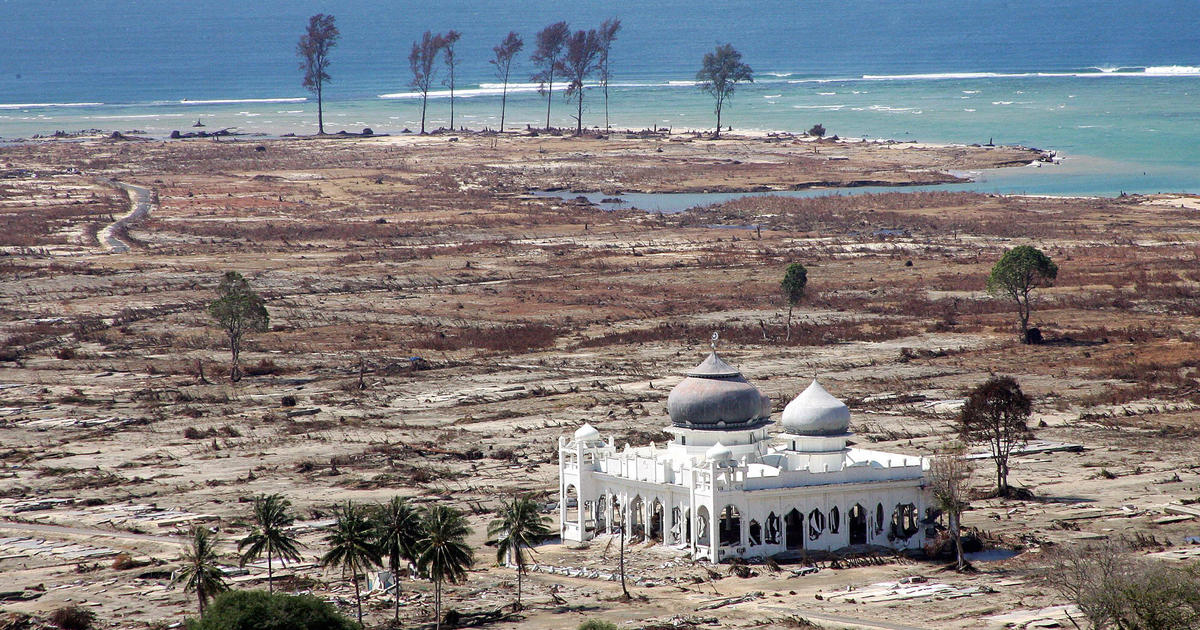
Commemorating Two Decades Since the Devastating Indian Ocean Tsunami
On the 20th anniversary of one of the most catastrophic natural events, people across the Indian Ocean region gathered to remember and honor those lost. The disaster struck the day after Christmas in 2004, when a colossal earthquake of 9.1 magnitude initiated a devastating tsunami.
In Indonesia's Aceh province, a poignant scene played out as individuals assembled at mass burial sites to reminisce and mourn. Overcome with emotion, they laid flowers on graves in Ulee Lheue village, a resting place for more than 14,000 unidentified victims.
Muhamad Amirudin, who lost two children in the tragedy and never recovered their remains, expressed continued longing for his family. Each year, he visits the joint graves, sharing with his wife that life is fleeting, yet their aim is to serve and help others.
Similarly, Nurkhalis, at 52 years old, still grapples with the loss of his entire close family. Despite the passage of time, the agony resurfaces annually, rekindling memories of that fateful day.
The enormous waves caused by the undersea quake on December 26, 2004, obliterated extensive areas and claimed approximately 230,000 lives across multiple nations, extending their reach as far as Africa's eastern coast.
In Indonesia alone, the tragedy took more than 170,000 lives and left more than 1.7 million displaced, predominantly impacting the hardest-hit countries: Indonesia, Sri Lanka, India, and Thailand.
With decades gone by, the residents of Indonesia still feel the profound absence of family and friends who perished. Notably, hundreds convened for prayers at Banda Aceh's Baiturrahman Mosque, where alarm sirens reverberated through the city.
Indonesia's geographic location on seismic fault lines places it at regular risk of earthquakes and consequent tsunamis. Since 2004, the infrastructure rebuild in Aceh incorporated reinforced resilience, supported by international aid that financed reconstruction efforts, establishing early warning systems for coastal defenses.
Thailand's Phang Nga province witnessed gatherings at a memorial in Ban Nam Khem, a village particularly ravaged by the tsunami. The event claimed over 8,000 lives, leaving a lingering trauma with nearly 400 individuals still unaccounted for.
Amid the ceremony with interfaith prayers, individuals supported each other through shared grief. Urai Sirisuk expressed her profound sorrow and anger, avoiding the ocean that took her four-year-old daughter.
In India, many congregated on Marina Beach in Chennai to pay homage, with rituals involving pouring milk into the ocean to appease deities. Tamil Nadu bore a significant loss, with around 7,000 of India's 10,749 deceased.
"It's been two decades," remarked 69-year-old Sadayammal, who came to honor those lost to the waves.
Sri Lanka held somber tributes in Pereliya, where families remembered the nearly 2,000 train passengers lost when the tsunami struck the Queen of the Sea. Anura Ranjith still mourns his sister and niece aboard the train, with their absence a constant heartache.
Altogether, Sri Lanka mourned over 35,000 victims as two minutes of silence were observed nationwide.
Though initial forewarnings were absent at the time of the tragedy, since then, comprehensive systems have been installed to mitigate future risks. A network of scientific instruments now ensures earlier warnings of potential tsunamis, offering critical alerts to safeguard populations at risk.
Leave a Reply