


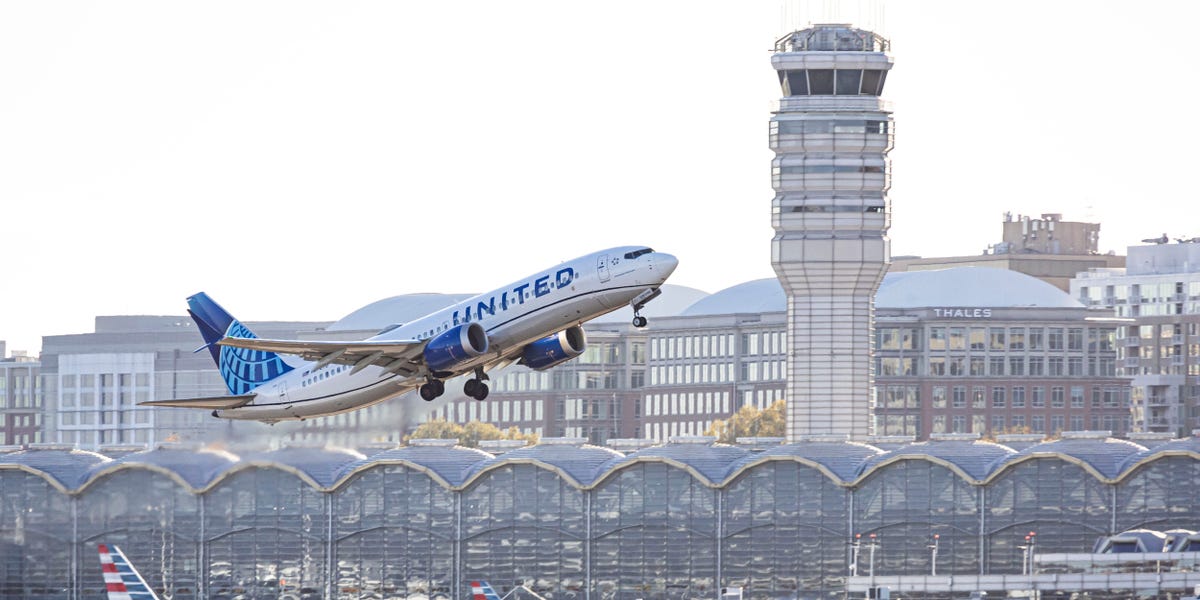
United Airlines' Remarkable Year Amid Boeing Challenges
Surprisingly, despite Boeing’s struggles, United Airlines is thriving.
Diverging Paths for United and Boeing
While Boeing faced significant issues like a quality-control crisis and labor unrest, leading to regulatory issues and production hold-ups, United Airlines managed to outperform.
Against the odds, United’s stock soared by 148% in 2024.
Experts attribute United's impressive performance to robust finances, a strategic network, timely share repurchases, and upcoming fleet improvements.
Despite Boeing's delivery delays, which pressed United to adjust its flight plans and offer unpaid leave to pilots, the airline adapted by leasing aircraft and reducing its domestic capacity.
Strategic Hub Network Creates Opportunities
According to Clark Johns from Alton Aviation Consultancy, United's strategic hub placement and incoming aircraft fleet bolstered its resilience against Boeing's setbacks.
Increased focus on long-haul international routes significantly boosted both passenger numbers and revenue. This growth complements United's expansion of premium seating and reliance on basic economy as a substantial revenue source.
Leading International Expansion
Standing out for its extensive international reach, United Airlines has been expanding globally more than any other U.S. carrier.
HSBC analysts lifted their price target for United, citing its robust global network. They noted United’s international market presence and stronger-than-peers demand.
The airline's European operations flourished despite domestic market overcapacity, leveraging high global demand to its advantage.
Johns highlighted United's tactical redeployment of aircraft to key Asian locations, planning further expansion in 2025.
Strategic Hub Locations Enhance Growth
United's major hubs, situated in key population centers such as Los Angeles and New Jersey, strengthen its international operations and connect lucrative business and premium traffic.
Complementing these are hubs in Chicago, Denver, and Houston, offering extensive U.S. connectivity.
Deutsche Bank expects continued regional growth, noting United's extensive hub network compared to peers.
Fleet Modernization Fuels Future Expansion
United’s fleet strategy includes the acquisition of 270 Airbus and Boeing narrow-body planes, alongside 150 Boeing 787 Dreamliners, advancing its market position.
United's initiative also involves replacing older models with new Airbus A321XLRs by 2026, targeting novel destinations like regions in Italy and West Africa.
Enhanced aircraft like those with Bluetooth amenities aim to refine customer experiences and diversify revenue sources.
Financial Resilience through Share Repurchases
Exceeding earnings predictions, United announced a $1.5 billion share buyback plan, emphasizing disciplined capital returns enabled by strong cash flow growth.
CFO Michael Leskinen and industry observers view this as a progression toward establishing United as a stable 'blue-chip' stock.
Overall, the market response reflects confidence in United's financial trajectory and performance improvements.
Leave a Reply