


The Value of Not Overanalyzing
Discussing how to truly feel alive.
Many of us have encountered peak experiences—moments of extreme happiness or elevation. These experiences vary widely, from the thrill of scaling mountains or catching waves, to the deep focus of meditation, or even that magical feeling during a concert.
These moments of ecstasy can be described as reaching a flow state, achieving transcendence, or simply being in bliss. They've been the topic of writing and exploration for countless generations, with mysticism providing a framework to understand and achieve them.
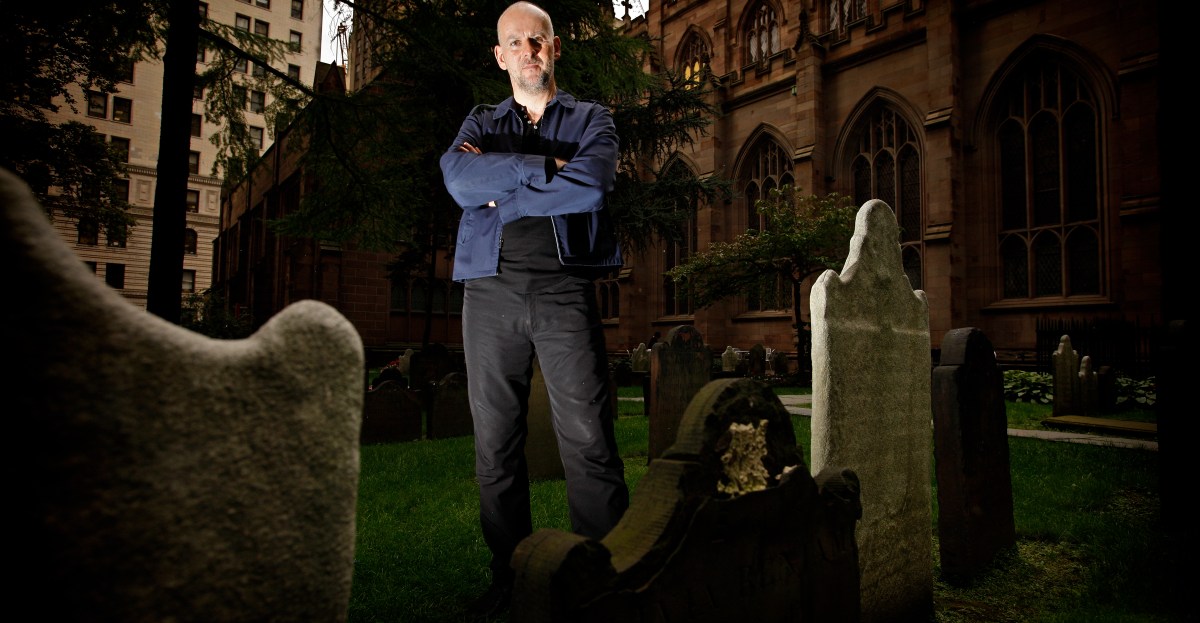
Simon Critchley, a philosophy professor at the New School in Manhattan, explores this theme in his latest work, Mysticism. Although not religious himself, Critchley is keenly interested in mystical experiences and the vast literature on the subject. His approach is refreshingly open-minded, which is uncommon in the domain of philosophy.
In a conversation on The Gray Area, Critchley discusses his view that mysticism—or 'the most intense form of experience,' as he quotes—is less about structured beliefs and rituals, and more about directing our attention and escaping the mundane patterns of our lives. The core question is: how can we step out of our minds to perceive and experience things beyond our usual reach?
This conversation offers insights beyond what's captured here, so check out The Gray Area podcast on any major platform for more episodes released every Monday.
Understanding Mysticism
What exactly is mysticism? It's challenging to define, but it's essential we try. In your book, you outline various interpretations. How do you explain it?
Simon Critchley on Mysticism
Evelyn Underhill's succinct depiction of mysticism, highlighting it as 'experience in its most intense form,' serves as a starting point for my book. Essentially, it involves setting oneself aside to embrace the vividness of an ecstatic experience. Mysticism, to me, is a current within religion, rather than a religion itself. Throughout history, mystical practices have been innate to the human experience.
The Role of Thought in Mystical Experiences
Does achieving these experiences require silencing our thoughts?
Simon Critchley on Letting Go of Thought
Mystical experiences often involve stepping away from our thinking minds. In my book, I compare this to the character of Hamlet, who is consumed by his mind's complexity and insights. His overthinking prevents him from experiencing love and life, turning his world into a barren place.
The challenge is distancing ourselves from inner dialogues that hinder our perception. Mystics chart paths for transcending the self, as Simone Weil suggests, to open ourselves to broader experiences.
Encountering the Inner Self
While reading your book, I was reminded of Dostoevsky’s character who claims, 'Overthinking is a real disease.' How does this connect to your views?
Simon Critchley on Self-Absorption
Indeed, I view the notion of Hell as being trapped in one's own mind. We are tormented by our doubts and second-guessing, entrapped daily by our own ruminations.
Thus, the idea is to still the mind and separate from the ego, accessing a world otherwise concealed from us.
Achieving Mystical Experiences
What methods do people employ to reach these states—perhaps fasting, meditation, or prayer?
Simon Critchley on Pathways to Mystical States
Mysticism begins with reading, the immersion into texts. Mystics aren't simply individuals with intense experiences; their journey starts with engaging literature. The process involves allowing a text to capture your attention wholly, without questioning its truth. Of course, this is complemented by physical and spiritual practices, but at its heart, mysticism is rooted in the written word.
Mysticism and Love
Is there a connection between mystical experiences and true love? Could love itself be a mystical practice?
Simon Critchley on Love as Mysticism
Certainly, love involves stepping outside oneself and giving oneself wholly to another. It demands offering what we lack and receiving what we cannot control, a concept wrapped in grace. Love’s practice, therefore, necessitates relinquishing control.
The Journey Beyond Intellectualism
Does this suggest that perpetual skepticism leads only to personal confinement?
Simon Critchley on the Pitfalls of Overintellectualism
Indeed, intelligence often paraded and rewarded is devoid of true substance. Meaningful work requires embracing a form of intellectual simplicity, exploring the world with awe and wonder, unhindered by detached logic.
The Aesthetic Survival of Mysticism
You propose that modern mysticism manifests aesthetically. How so?
Simon Critchley on Mysticism in Art
In contemporary times, mysticism finds expression in art and music rather than structured religion. It resides in personal, introspective creations, divorced from institutional settings.
For me, music exemplifies the mystical. Like leaving behind the self and skepticism, music invites us into an immersive experience.
The Mystical Power of Music
Your statement, 'You cannot be an atheist while immersed in beloved music,' is intriguing. Can you elaborate?
Simon Critchley's Musical Revelation
Music opens minds in indescribable ways. It presented me with a new perspective, a means of escaping my identity, as evidenced through my experiences with genres like Krautrock and punk.
Music resonates with something innate, a sacred sensation that challenges our judgment of others based on their musical preferences. This idea echoes Schopenhauer’s belief of music’s attunement with our inherent will and Nietzsche’s recognition of music as a reflection of our deepest selves.
Leave a Reply