


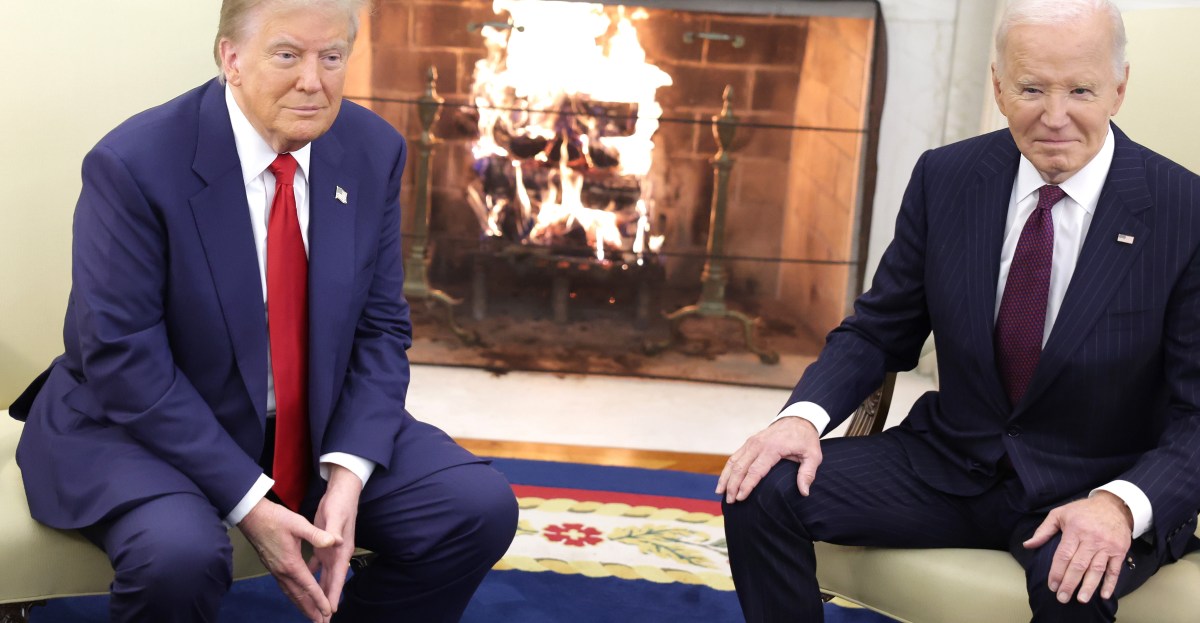
Biden's Limited Power to Protect Against Trump's Retaliations
The current administration is evaluating the possibility of issuing pardons to shield some of former President Trump's perceived adversaries. However, these pardons might offer only restricted protection.
There is a proposal in the White House that President Joe Biden might pardon several current and former federal officials who may face scrutiny from the in-coming administration under President-elect Donald Trump.
For over a century and a half, the highest court in the country has acknowledged the president's authority to grant pardons as being within his exclusive power, usually beyond the reach of Congress and the judiciary. Nevertheless, though the Constitution allows Biden to pardon anyone of his choosing, such clemency might not fully shield the recipient from any challenges posed by Trump or his government supporters.
Understanding the Supreme Court's Role
Trump has frequently warned of retaliatory actions against those he perceives as opponents, and some of his law enforcement appointees have outlined explicit plans. Kash Patel, nominated for the FBI directorship in 2023, unveiled a roster of 60 supposed 'deep state' officials for potential investigation by his bureau.
The roster by Patel features prominent figures such as Biden and Vice President Harris, alongside past and present higher-ups in government, spanning both parties, including Republican Bill Barr. It also lists lesser-known individuals like a previous FBI operative and a former legal representative associated with the Democratic National Committee.
As reported by the New York Times, while discussions on such pardons remain primarily among staff, they are guided by Ed Siskel, Biden's senior legal counsel.
Presently, federal pardons afford extensive legal safeguards against prosecution on federal charges. Any pardons from Biden are expected to be nearly impervious to legal challenges. As established in the 1866 case Ex parte Garland, the presidential power to pardons is broad, only restricted from applying to impeachments, and covers any federal crimes post-offense during any legal procedure or after sentencing.
Notable Restrictions on Biden's Pardon Capacity
Biden's pardon authority faces substantial constraints. An individual pardoned might still be pursued by state authorities with ties to Trump's allies.
Primarily, Biden, as the leader of the federal government, can issue pardons solely for federal crimes. Consequently, even after a pardon, state prosecutors could still press charges under state law. The Trump team might persuade state prosecutors aligned with Trump ideologies to go after those who receive Biden’s federal pardons.
It's crucial to acknowledge that state judiciary personnel shouldn't target ex-federal officials for acts performed under their federal duties.
A landmark decision, In re Neagle from 1890, sheds light on such matters. Justice Stephen Field of the US Supreme Court, confronted by David Terry, previously a Chief Justice in California, was defended by his federal guard Neagle, who fatally shot Terry. The high court determined Neagle acted under federal law and thus exempt from state court prosecution for his role in the incident.
Possible Future Challenges
If upheld, the Neagle precedent ensures that former federal officials cannot be charged at the state level for acts performed under federal authority. For instance, if a state pursued charges against ex-public health official Anthony Fauci over COVID-19 policies he backed, the Neagle decision would likely protect such actions.
Another limitation is temporal: While pardons can be issued for past infractions, they cannot extend to protect future actions. Thus, post-presidency, acts of previously pardoned individuals may still face scrutiny under a Trump-led administration.
Additionally, presidential pardons traditionally do not extend to civil or non-criminal proceedings, a stance some scholars argue should evolve.
As such, even if federal criminal charges are removed under Biden’s pardons, civil cases or non-criminal probes, like tax audits, could still be employed by Trump toward his adversaries.
Potential Ongoing Harassment Despite Exoneration
Legal representation is notoriously expensive. Even preemptively pardoned individuals targeted by the federal system may amass significant legal debts, regardless of eventual court decisions in their favor.
The cost escalates if proceedings are transferred to judges with biases who might bypass established precedents such as Garland or Neagle. Though the Supreme Court might eventually affirm a person’s immunity, this might only occur after lengthy legal battles.
Furthermore, even if investigations reveal no illegal activities, they might still unearth harmful personal details, potentially made public, like private missteps or indiscreet communications.
No matter the absence of incarceration, a governmental pursuit has the power to wreak havoc on individuals deemed adversaries, stressing the vague assurances of protection through federal pardons.
Leave a Reply