


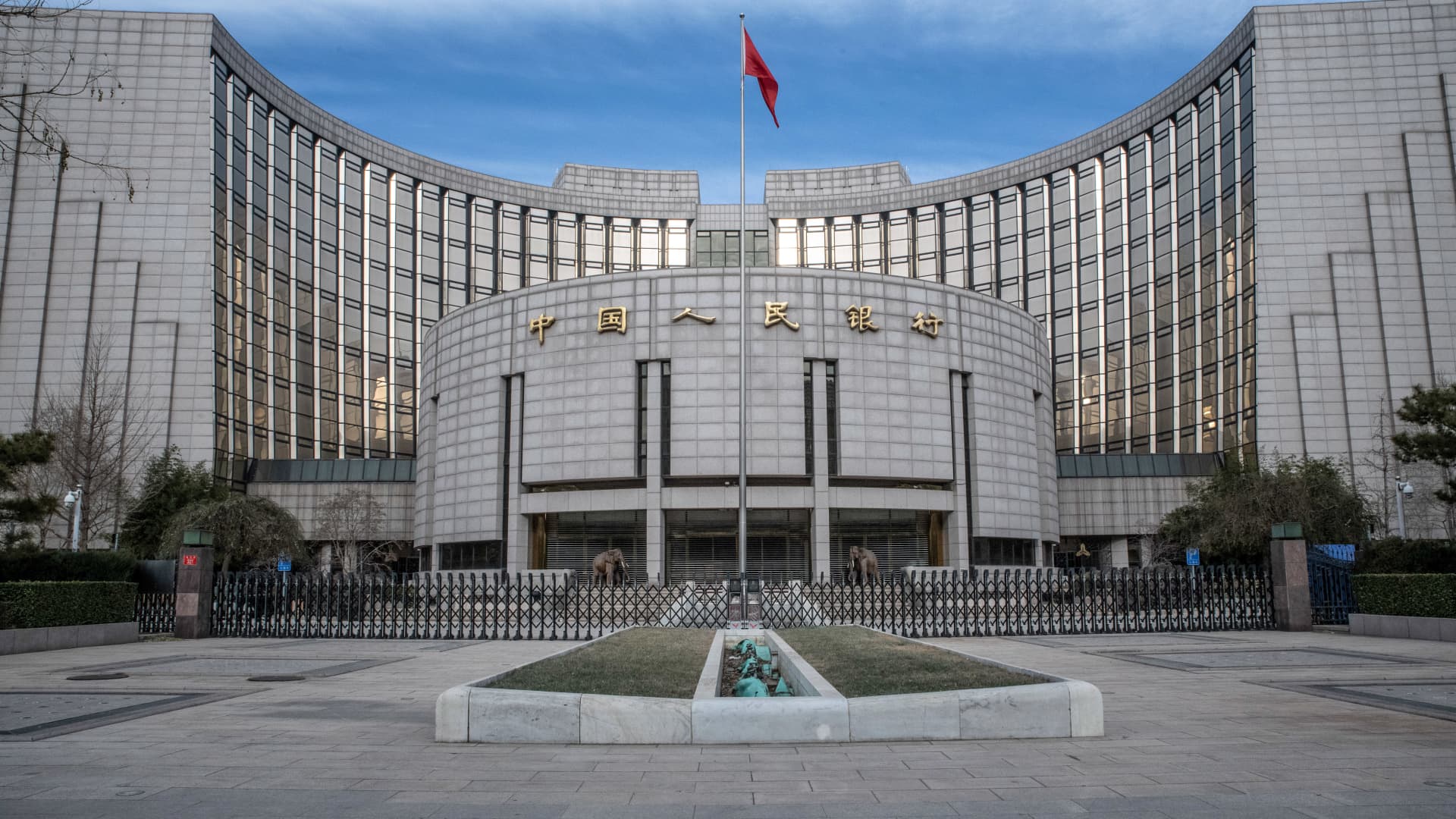
Beijing Retains Key Lending Rates as China Reviews Economic Stimulus
This Wednesday, China's central bank opted to maintain its benchmark lending rates, as the nation evaluates the effectiveness of its recent economic stimulus efforts.
The People's Bank of China has decided to uphold the one-year loan prime rate at 3.1% and keep the five-year loan prime rate steady at 3.6%.
Market Experts' Expectations
Analysts had anticipated that the PBOC would leave the lending rates unchanged this month.
Bruce Pang, who leads research and serves as chief economist for Greater China at JLL, remarked that there was no pressing necessity to modify the LPR. He suggested that Chinese authorities might still be weighing the impact of their recently implemented economic enhancements.
Factors Affecting Rate Changes
According to Pang, the narrowest net interest margins seen by Chinese commercial banks limit the capacity to reduce lending rates. While another policy rate reduction before year's end is improbable, interest rate cuts remain feasible in the future.
The one-year LPR influences both corporate and the majority of household borrowings in China, whereas the five-year LPR serves as a standard for home loan rates.
Last month's rate decision, affecting both the one-year and five-year LPRs, came amidst a backdrop of disappointing economic momentum, despite numerous new stimulus declarations.
Current Economic Indicators
Reports from October highlighted slower growth in industrial production and fixed asset investment than anticipated, with a deepening year-on-year decline in real estate investment from January to October.
Retail sales were a bright spot, surpassing expectations with a year-on-year increase of 4.8%, suggesting the beginning of positive effects from recent stimulus strategies in specific economic sectors.
Government Response
Since late September, the government has been announcing several measures to kickstart economic growth, hindered by an ongoing property market slump and subdued consumer and business confidence.
Earlier this month, the Finance Ministry revealed a substantial support package amounting to $1.4 trillion to tackle local government debt issues, hinting at further economic support in the coming year.
The governor of China's central bank, Pan Gongsheng, suggested maintaining a supportive monetary policy stance, signaling that there is still space to cut key policy rates by the end of the year.
Economic Outlook
Morgan Stanley forecasts that China's economic growth could slow to about 4% over the next couple of years. The firm recently downgraded its rating on Chinese stocks to 'slight underweight,' identifying a deflationary setting and increasing trade tensions as potential threats.
Analysts at the firm perceive minimal chances of the Chinese government deploying enough upfront fiscal stimulus to invigorate consumption and the housing sector.
Similarly, Goldman Sachs projects that China's GDP growth might slow to 4.5% by 2025, compared to 4.9% this year. Despite this, Goldman maintains an 'overweight' stance on Chinese equities, predicting a 13% rise in the benchmark CSI 300 index next year.
Global Challenges
The uncertainty surrounding China's export-intensive economy has been compounded by Donald Trump's election victory, which may lead to increased tariffs on Chinese goods.
Leave a Reply