


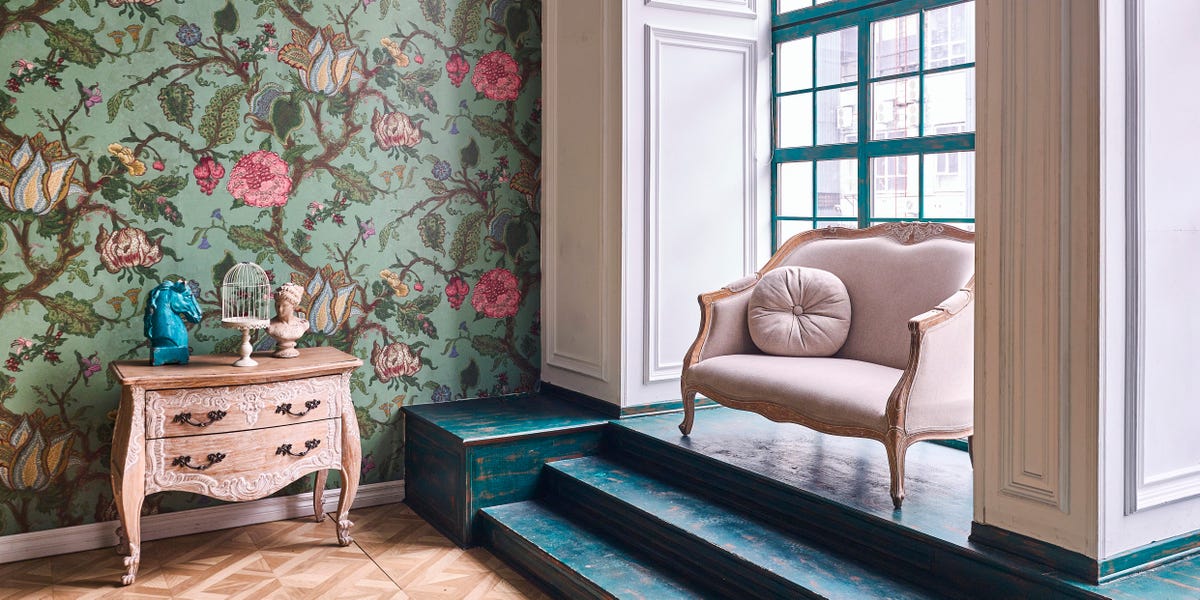
Wallpaper is Making a Comeback – Avoid These 7 Common Mistakes as Advised by Interior Designers
The era of plain-white interior walls has passed, with wallpaper resurging in popularity.
Whether you choose vibrant floral designs, sleek geometric patterns, or textured neutral tones, wallpaper can effortlessly infuse a room with character and vibrancy. However, achieving this requires thoughtful consideration.
Business Insider consulted two interior experts—TC Chou, an architect and interior designer from NYC, and Angeline Guido Hall, a leading designer from Dallas—about typical wallpaper blunders they often encounter.
Selecting the Wrong Wallpaper Type for Your Space
When it comes to wallpaper in humid spaces such as bathrooms, TC Chou stresses the importance of using appropriate materials.
Avoid paper-based wallpapers in these settings, as they are prone to moisture damage and will deteriorate swiftly.
Choose vinyl wallpapers instead; they are crafted to endure humidity and are simple to clean, making them perfect for moisture-prone areas.
Rethink Typical Uses of Wallpaper
Angeline Guido Hall encourages broader thinking with wallpaper placement, suggesting it can transform ceilings, enhance the backs of bookshelves, or subtly accent the panels of cabinet doors.
“Don’t limit wallpaper to just the walls,” she advises.
The Impact of Large Patterns in Confined Spaces
Using bold, repetitive wallpaper patterns in small rooms can feel suffocating, Chou warns.
Such designs tend to break into fragments, losing the cohesive visual punch and not enhancing the ambiance as intended.
Opt instead for smaller motifs or plain hues to elevate the room's sense of space and unity.
Plan Layouts Thoroughly Before Installation
Prepare meticulously when aligning patterns across walls. Hall notes that finishing an entire room with patterned wallpaper can result in alignment mismatches.
Aim to place the least alignment-sensitive patterns in less visible corners to minimize noticeable discrepancies.
Subdued Tones Encourage Calm Environments
For those favoring textured wall finishes, Chou suggests using natural color palettes to sustain a peaceful environment.
Gentle shades can highlight wallpaper textures without overpowering the room, creating a refined, serene space.
Build Your Room's Color Scheme Around the Wallpaper
Chou advises using wallpaper and area rugs as the starting point for developing a room's color scheme.
Wallpapers are rich with colors and motifs that can guide your entire color palette, facilitating a harmonious and well-integrated design.
Prioritize Personal Style Over Resale Potential
Hall encourages homeowners not to let potential resale concerns stifle creative expression with wallpaper.
“If a pattern delights you, embrace it wholeheartedly,” she assures. “High-quality wallpaper is an investment worth making if it pleases your aesthetic tastes, without second-guessing future market considerations.”
Leave a Reply