


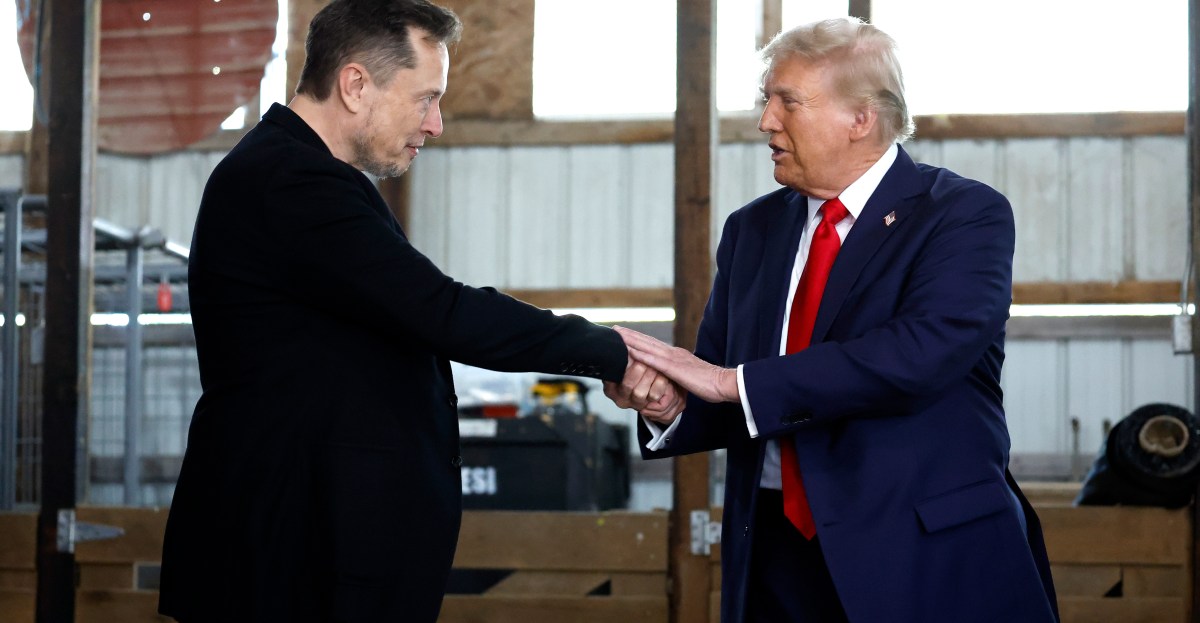
Trump’s techno-libertarian allies head to Washington
Silicon Valley hasn't turned conservative; it just craves independence.
In the aftermath of Trump's 2016 win, top tech executives met at Trump Tower with visible discomfort. However, these same leaders eagerly anticipate working with the incoming president now.
Following Tuesday's election, tech moguls swiftly expressed their congratulations to Trump. As soon as he won the White House, influential figures like Tim Cook and Mark Zuckerberg extended their positive remarks for Trump's new term. Surprisingly, even Jeff Bezos, who has clashed with Trump before, recognized his impressive political resurgence and victory.
This sudden acclaim does not represent a wholesale political shift in Silicon Valley. Many tech leaders, including entry-level workers, heavily backed Kamala Harris, likely due to her longstanding involvement in Bay Area politics and connections with the tech sector. This loyalty reflects a continuation of the Obama era trend, characterized by a thriving partnership between Washington and Silicon Valley. Barack Obama, elected with support from Facebook co-founder Chris Hughes in 2008, integrated startup philosophy into his policies and fostered relationships with tech giants like Zuckerberg.
The Tech Landscape's New Dynamics
That previous dynamic has now shifted to one dominated by a vocal group of techno-libertarian Trump supporters, including Elon Musk, leading investors, and members of the PayPal Mafia, along with the vice president-elect.
So, does this mean tech is leaning right? Is Silicon Valley now a Trump stronghold?
Margaret O’Mara, a University of Washington history professor, observed that Silicon Valley’s tech culture sprang from post-Vietnam baby boomers viewing personal computers as tools for personal freedom.
She added that while they did not align with political conservatism, they shared a libertarian philosophy that spans the political spectrum, manifesting in a unique form of libertarianism.
Silicon Valley's anti-establishment sentiment is evident from campaigns like Apple's iconic “1984” ad encouraging dismantlement of the status quo, to Google’s policy allowing employees to pursue personal projects. Recent tech philosophies embrace anti-establishment thinking, including a heavy interest in cryptocurrency. Today’s techno-libertarians simply wish to innovate and earn without interference.
Shifts and Influences
The current tech leaders engaging with Trump are primarily conducting business. Figures like Tim Cook prioritize professional dynamics, irrespective of political leaders. After the chaotic first Trump term, they understood that the president-elect is responsive to commendations. Thus, they’ve maintained appeasing strategies to potentially influence his return.
This strategy may prove advantageous for multiple reasons. The Biden administration diverged from Obama’s approach, displaying stringent policies towards Big Tech. President Biden appointed Lina Khan, an anti-monopoly expert, to lead the Federal Trade Commission, initiating multiple antitrust actions against leading companies like Amazon, Microsoft, and Meta. With Khan’s position in question, these corporations might find an ally in Trump, who could impact Khan's future. Additionally, tech firms would benefit from Trump’s promise of reduced corporate taxation.
Robert Lalka, Tulane University professor, noted this scenario revolves around a small network of cohesive Trump supporters and the evolution of the Republican Party’s policy focus.
The PayPal Mafia comprises former PayPal employees who later founded significant tech enterprises. If there’s a leader of this pro-Trump techno-libertarian movement, it is Peter Thiel. Having contributed over $1 million to Trump's 2016 campaign and $10 million supporting JD Vance's Senate bid in 2022, Thiel is pivotal. He has financed initiatives for autonomous, unregulated ocean nations, underscoring his image as a “techno-libertarianism” figurehead.
Techno-Authoritarianism's Emergence
The motivations behind techno-libertarianism, now leaning towards techno-authoritarianism, appear more intricate. Elon Musk, also a PayPal co-founder, emerged as one of Trump’s staunchest advocates, donating $119 million through his America PAC, emphasizing his commitment to free expression. Accusations of censorship drove Musk to acquire Twitter in 2022, rebranding it as X, where the dissemination of right-wing narratives possibly aided Trump's election.
The potential advantages for Musk aligning with the White House are extensive. Musk’s previous rapport with Biden was reportedly lacking, such as in instances like being sidelined at an electric vehicle summit. Consequently, Musk gravitated toward Trump. Musk's ventures like SpaceX thrive on government collaborations, while Tesla lobbies for less regulatory oversight on autonomous vehicles to establish a robotaxi market. Moreover, Trump proposing Musk as a potential “secretary of cost-cutting” highlights the symbiotic relationship being cultivated.
Crypto's Influence
Not all PayPal Mafia members support Trump. Reid Hoffman, another former PayPal executive and LinkedIn co-founder, is a well-known fundraiser for the Democratic Party, contributing $7 million to initiatives backing Harris and Biden, even amid disagreements with Lina Khan. His name features in a list of over 100 venture capitalists supporting Harris before the election.
The realm of cryptocurrency plays a substantial role in this evolving political climate. Marc Andreessen’s venture capital group declared a focus on cryptocurrency in 2022, an investment now showing potential returns. Trump has promised a U.S. strategic cryptocurrency reserve for his second term, appealing to enthusiasts. Following years of downturn, Bitcoin and similar currencies surged to unprecedented levels post-election, aligning with Trump’s anti-regulatory, pro-crypto philosophy.
Crypto's Political Clout
Crypto advocacy significantly bolstered Trump and other Republicans, acting as a formidable lobbying influence, targeting politicians viewed as crypto-adverse. This effort resulted in all 48 pro-crypto PAC backed candidates winning their races with no defeats, underscoring its strategic success.
Thus, Trump's triumph may not reflect a tectonic shift within tech politics, but rather a concentrated effort by individuals advancing crypto and libertarian ideals seeking regulatory freedom.
Tech Future Speculations
Might these techno-libertarians merely desire dismantling existing structures or lose interest, retreating to lawless, unbound seasteads? With Trump’s post-victory inclusion of Musk in strategic calls, and potential roles for other PayPal Mafia members in dictating U.S. tech policy, one must question the long-term intentions driving this movement.
Leave a Reply