


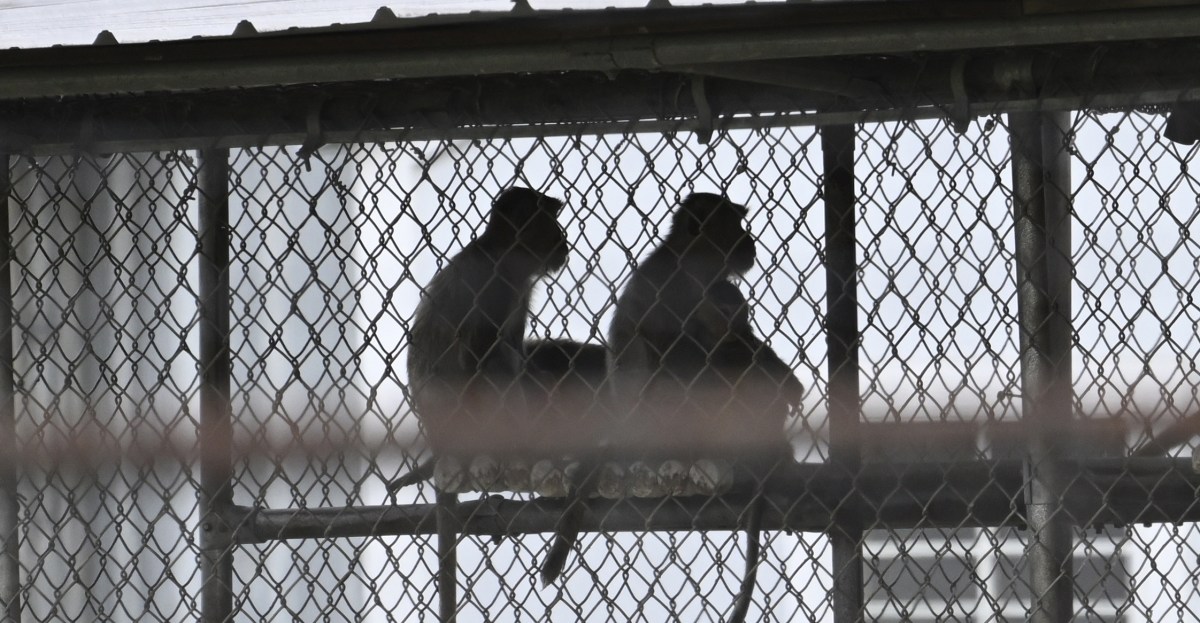
Freedom Claim of Escaped Lab Monkeys in South Carolina
Recently, a group of 43 young rhesus macaques, all female, made a daring escape from the Alpha Genesis research facility in Yemassee, South Carolina. This incident unfolded when a door was improperly secured by an employee, allowing the monkeys to flee.
This isn't an isolated event for Alpha Genesis, a notable supplier of primates for global biomedical research. Back in 2018, the facility was fined $12,600 by the USDA, partly due to previous escape incidents. A local Yemassee council member has remarked on the frequent monkey sightings in the area.
Efforts are underway to retrieve the monkeys, which are comparable in size to domestic cats. Over the weekend, 25 have been recaptured. Meanwhile, Stop Animal Exploitation Now, a group focusing on animal welfare, has urged the USDA to consider legal actions against Alpha Genesis for their recurring inability to secure the animals.
According to Alpha Genesis CEO Greg Westergaard, recovering the remaining macaques is a gradual process, but the team is dedicated to safely bringing all animals back.
Beyond logistical issues, the situation raises broader questions of ethics and rights. These adventurous macaques are reportedly harmless to the public, sparking debate: do they have a right to their newfound freedom?
Legal Implications of the Escape
In recent years, the legal landscape around animal rights has seen significant developments. Court cases have debated the legal personhood of animals, such as elephants, and there has been a decline in using animals for entertainment and laboratory experiments. As it stands, the financial motivation for Alpha Genesis is clear in wanting to recover the monkeys. However, prevailing legal theories hint that as long as these 18 macaques elude capture, they may not be considered the property of the facility. Legal protection might even extend to those aiming to rescue and provide sanctuary for these animals.
The idea of losing a pet might seem illogical to many if an animal happens to escape. For wild animals, the situation is more complex. Historically, wild animal laws stipulate that if a captive creature escapes and blends into a wild setting, ownership can be contested.
Rhesus Macaques on Morgan Island
Despite originating from South and Southeast Asia, rhesus macaques can thrive freely in South Carolina, particularly on Morgan Island. This island hosts a long-established monkey population, which was initially brought over from Puerto Rico in the late 20th century.
Although Alpha Genesis oversees the Morgan Island colony, these monkeys originally led semi-wild lives before being involved in research activities.
History of Animal Legal Status
The legal understanding of animal rights stems from 19th-century American jurisprudence, drawing upon Roman legal perspectives. In these frameworks, wild animals were seen as "fugitive" property due to their ability to move freely.
An early example is the New York case Pierson v. Post, which tackled the issue of ownership based on capture rather than pursuit. Similarly, Mullett v. Bradley, in 1898, recognized escape as a factor that could nullify ownership claims if an animal regains its liberty.
Such reasoning underscores that if an animal is no longer under a person’s control, ownership lapses, an argument potentially relevant to the escaped South Carolina monkeys.
Modern Case Studies
Contemporary cases like Darwin, the Japanese snow macaque found in Canada, further illustrate application of this legal principle. Legally declared a wild animal, Darwin was sent to a sanctuary after escaping, suggesting a pathway for the South Carolina monkeys' rights.
Moral Considerations in Animal Escapades
Beyond legal debates, the escape of these monkeys stirs a deeper moral reflection. Society often empathizes with animals freed from dire conditions, highlighting a disconnect between legal frameworks and human compassion.
Recent events—such as the legal consequences faced by an animal sanctuary owner in New York for harboring escaped cows—underscore how the law can overlook ethical dimensions.
While it is improbable for the legal system to promptly revoke human ownership over animals, there appears to be a tacit acknowledgment of the rights of animals to seek freedom. This case could catalyze conversations on a broader level about the autonomy of animals escaping exploitation.
Leave a Reply