


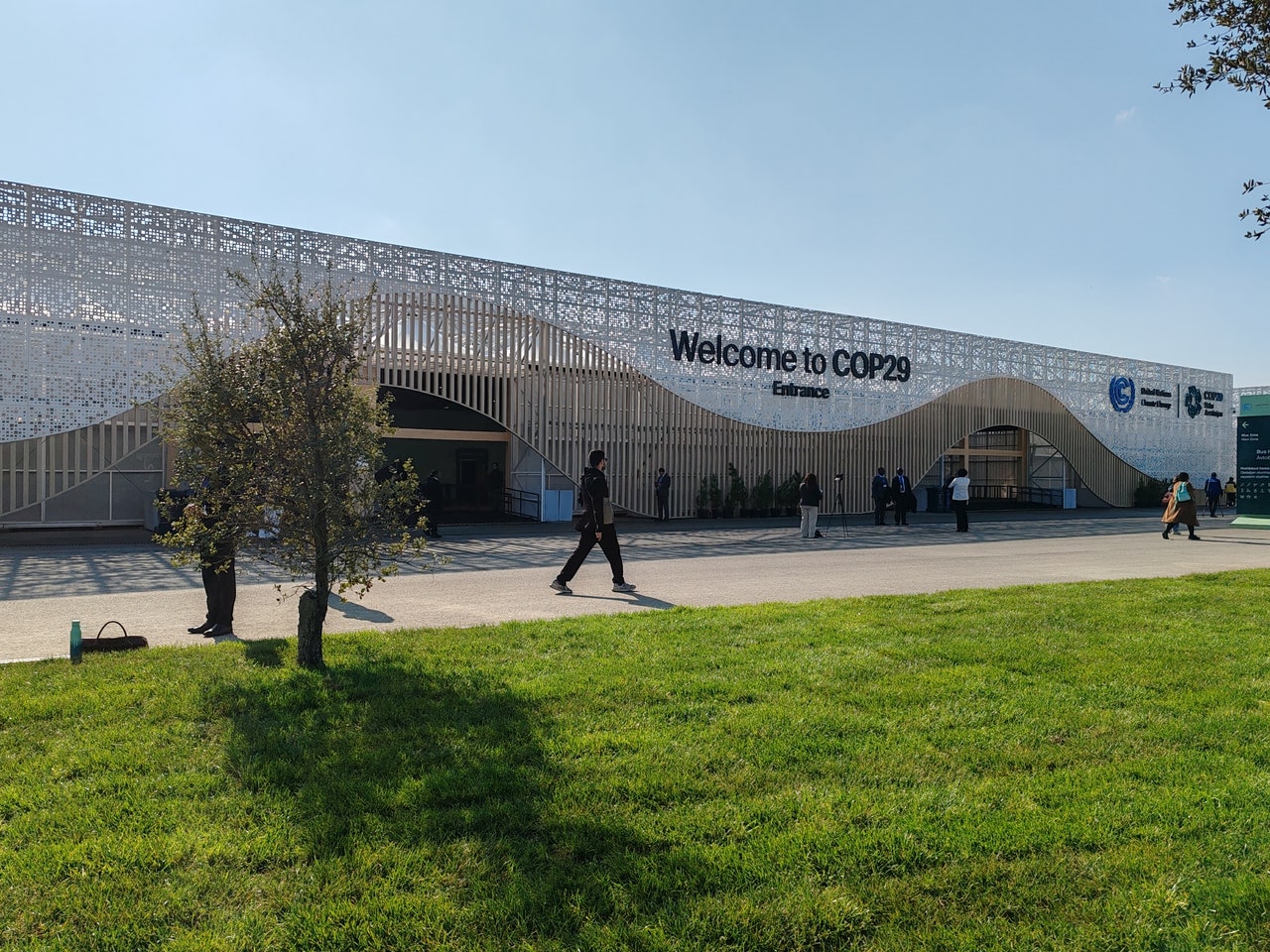
COP29 Commences Amid Climate Financing Goals and Notable Absences
Achieving $1 trillion annually in climate finance is the benchmark for success at the UN Climate Change Conference, COP29, occurring in Baku, Azerbaijan. This ambitious goal seeks a firm commitment from participating nations.
This annual assembly provides a platform for countries of all sizes, ranging from small island nations with minimal populations to global powerhouses, to negotiate on strategies to address and mitigate the effects of climate change.
The conference commences today, and initial discussions will feature heads of state alongside their ministers for the environment. The stage will soon be set for negotiators to take over, working tirelessly to draft the agreements intended to guide future climate actions.
In a bid to sidestep gridlocks, these agreements are reached via consensus, adjusted until all parties are satisfied. Watch closely for developments as these discussions unfold.
Key Topics on the Table
In Baku, known for its pioneering role in the commercial oil industry, discussions will focus heavily on setting the (NCQG) for Climate Finance.
The initial pledge of $100 billion annually, agreed upon in Copenhagen in 2009 and finally achieved in 2022, must be reevaluated. Paris 2015 set the stage for a larger target starting in 2025, birthing the NCQG. At COP29, negotiations will aim to determine a substantial increase, potentially into the trillions, addressing whether funds should encompass grants, loans, or investments, and their division among mitigation, adaptation, and dealing with loss and damage.
Essential considerations include private sector contributions and setting an achievable timeline, with 2030 or 2035 as potential milestones. Inflationary impacts also loom large.
A significant divide remains over responsibility. Developing countries, part of the 'global south,' seek financial support from developed nations, arguing they did not historically contribute to the crisis. Conversely, industrialized countries demand decarbonization promises from developing nations to maintain competitive parity in industrial and technological realms.
China's situation adds complexity; as a major emitter, it contributes significantly to global emissions but is still viewed as developing by the UN, exempt from strict economic obligations imposed on long-time polluters. However, China might adopt firm commitments for greater global standing.
Attendance Roster: Who's Participating and Who's Absent
Baku hosts delegates from nearly 200 nations. The United States, for one, dispatched its team early last week.
Absent from the event are current US President Joe Biden and European Commission President Ursula von der Leyen, preoccupied with setting up the new EC. Representing the EU is Climate Action Commissioner Wopke Hoekstra, known for his diplomatic prowess. Recent floods in Valencia, Spain, have heightened the focus on climate adaptation in Brussels' strategies.
German Chancellor Olaf Scholz stays home due to political unrest, while French President Emmanuel Macron is absent, stemming from tensions over Azerbaijan-Armenia conflicts. Alongside him, numerous French NGOs have also opted not to attend.
China's President Xi Jinping sends his envoy Liu Zhenmin; absent too are Russian President Vladimir Putin and Brazilian President Lula, represented by Environment Minister Marina Silva. Leaders from Japan, Australia, and Mexico, notable polluters, are not in attendance.
In a significant move, Papua New Guinea, heavily impacted by climate change, is boycotting COP29. Its foreign minister, Justin Tkatchenko, criticizes the allocation of pledged funds, claiming they often predominantly benefit external consultants rather than the intended nations.
The US Election's Influence
Casting a shadow is Donald Trump's election. His previous withdrawal from the Paris Agreement, aimed at limiting global warming to 1.5 degrees Celsius, marked a significant shift that was reversed by Biden upon entering office.
Trump's unpredictability implies possible withdrawal from both the Paris Agreement and the overseeing UN convention, potentially barring the US from even observing negotiations, speculates Jacopo Bencini from Florence's European University Institute.
Without the US, only China and the European Union would remain as major players, a situation strained by the ongoing Russia-Ukraine conflict, Bencini notes. Despite its huge impact on emissions and extraction, the US has never acknowledged historical emission responsibility, a point that keeps alternative solutions on the table when the US participates.
Bencini fearfully anticipates greater repercussions from Trump's election compared to 2016, this time with less industry and state government pushback, yet with sustained, albeit subdued, private sector support for climate transitions.
Conversely, Chiara Martinelli from Climate Action Network Europe, an umbrella for over 180 NGOs, sees potential in the EU-China partnership as the key to meeting climate financing goals. Regardless of the US leadership, the EU and its partners bear the mantle of change drivers.
Luca Bergamaschi from Italy's Ecco think tank concurs, emphasizing the necessity for EU and China to work, perhaps independently from the US, in the quest for emission reduction and funding over the next four years, gearing up for fresh commitments at next year's COP30, potentially spotlighting China's increased ambitions.
Leave a Reply