


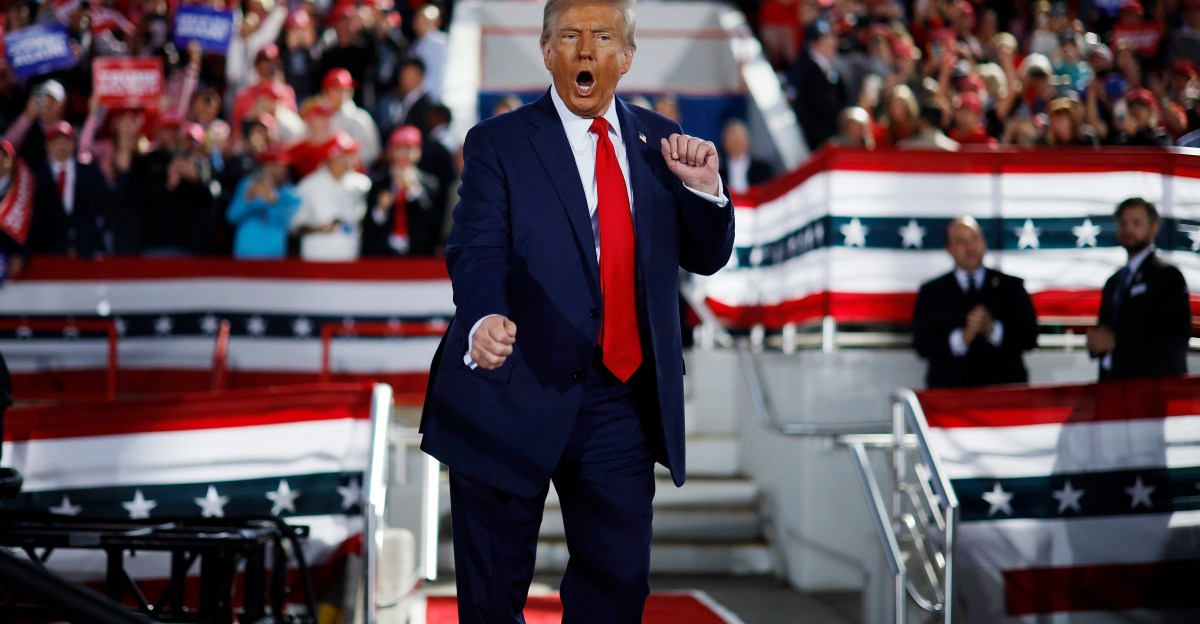
How a Global Shift Propped Up Donald Trump
Across the globe, incumbents are facing challenges. America has proven that it is no exemption.
In the 2024 presidential race, Donald Trump's triumph stemmed from a national trend of voters abandoning the Democratic platform. Kamala Harris, Vice President, saw lower performance compared to Joe Biden's results in 2020 in nearly every demographic and geographic area.
Traditional explanations for campaign failures, such as ineffective messaging or inadequate campaigning, fall short of explaining such a widespread shift. These factors are typically influential among specific demographics, yet Harris encountered a broad and decisive rejection.
A Global Phenomenon of Change
To fully comprehend this shift, it is essential to compare global trends. What unfolded on Election Day was part of a worldwide wave of dissatisfaction with incumbent leaders.
The year 2024 marked a historic turnout in global elections, with a record number of voters casting their ballots. Worldwide, electorates communicated that it was time for a change, irrespective of ruling parties' ideologies or histories.
This trend was evident in various countries, from the United Kingdom to Botswana, and from India to North Macedonia. The global movement was already visible in the previous year, such as in Poland and Argentina, where voters decided to switch away from their existing leaders. Noteworthy exceptions like Mexico were anomalies in a sequence otherwise marked by incumbent defeats in Latin America.
As Trump's win demonstrates, the United States aligns with this global pattern. Exit polls indicate that over 70% of Americans were unhappy with the nation's trajectory, a sentiment they took out on the Democratic administration. Despite Trump being a former president, he was perceived as the alternative candidate for transformation, resulting in electoral success.
Looking Beyond the US
Consider the American media's focus on granular campaign elements. Was Harris's defeat due to misguided vice-presidential selections, misplaced issue emphasis, incorrect voter targets, or inappropriate media appearances?
Although some of these theories may eventually hold water, current data is insufficient to confirm them. If her campaign's shortcomings were primarily about strategy, some improvement in specific areas would be expected. However, the uniform nature of her loss indicates a larger narrative.
Harris's losses with the white working class don't sufficiently explain her overall defeat since similar declines were observed among non-white and college-educated voters. Similarly, her stance on international issues like Gaza failed to account for the comprehensive margin of her defeat. This applied to Latino voters and other demographic groups being examined in post-election analyses.
The uniformity of election swings necessitates consistent explanations. The global context suggests a widespread anti-incumbent sentiment.
The Underlying Issue: Dissatisfaction with Leadership
The explanation based on anti-incumbent sentiment coincides with repeated patterns seen worldwide. In 2020, an unpopular incumbent president lost; in 2024, the party of an unpopular incumbent faced defeat. This broader understanding suggests that, given the context, even a Republican leader might have faced similar challenges if in power.
Looking at right-wing populists, some have experienced success in recent years; however, incumbents from conservative parties in certain countries have had significant electoral setbacks.
If the United States has succumbed to this international trend, it sheds light on current realities but also prompts further questioning: Why at this moment is global disenchantment so pronounced?
Economic Concerns as Root Cause
One plausible factor contributing to this dissatisfaction is inflation. Post-pandemic economic disruptions have led to increased living costs worldwide, an issue deeply felt by electorates. While inflation has subsided in many areas, prices remain elevated compared to pre-pandemic levels, rekindling memories of former affordability and fostering discontent.
Though this inflation narrative is credible, it lacks definitive proof and requires further data collection, including comprehensive analyses of the US election, to ascertain its influence.
Nevertheless, widespread polling indicated Americans' dissatisfaction with the country's current state, likely influencing the leadership turnover and aligning with a global shift from stability toward uncertainty, despite its potentially turbulent consequences.
Leave a Reply