


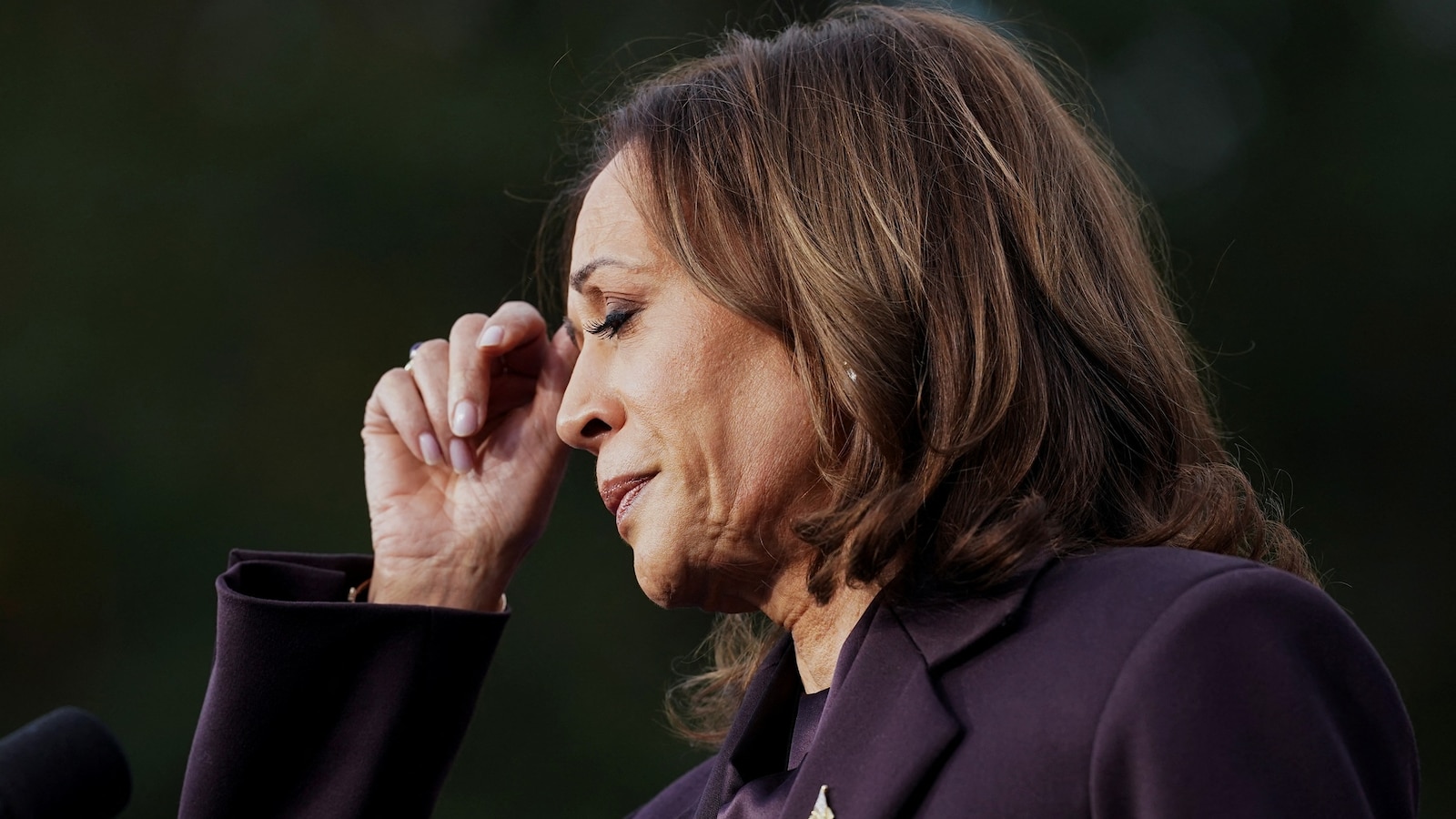
Democrats Face Challenges Following Trump's Unexpected Triumph
Ultimately, a significant number of voters opted to return to familiar ground.
Vice President Kamala Harris, alongside her Democratic colleagues, repeatedly urged the public to move beyond the political era helmed by Donald Trump. They backed former aides who questioned his dedication to democratic principles and presented their plans to tackle financial issues such as price gouging and escalating housing expenses.
However, by Wednesday, Democrats were grappling with the unexpected, as Trump secured a broad-reaching victory, positioning himself as the president-elect and prompting introspection within the Democratic Party regarding the source of their missteps.
"A total, unqualified failure," remarked Chris Kofinis, a strategist for the Democrats, reflecting on the outcome. "This was a complete dismissal of the Democratic narrative, tactics, and Harris' 2024 candidacy. There is no way to mask the sheer scale of this failure."
Trump's win was comprehensive. He was predicted to claim all seven critical swing states while reducing his losses in traditionally Democratic regions from Minnesota through Virginia to New York. He narrowed the gender gap, losing women by 10 points instead of 15 as in 2020, despite the backlash over revoked abortion rights. Furthermore, he made inroads into the Latino vote Harris led by just 8 points compared to a 33-point advantage four years ago.
Democrats, still regrouping and speaking to ABC News, contemplated various strategies to address both the tactical failures of the 2024 campaign and the broader public perception challenges facing the party nationwide.
In an intense sequence of events, Harris assumed her role as the Democratic nominee after President Joe Biden's disappointing debate performance in June, which fueled concerns about his age and capability.
The compressed timeframe was commonly mentioned as a logistic concern. With elections now stretching for nearly two years, Harris had barely more than three months to campaign, redirecting frustrations towards Biden for remaining in the race so long — or even contemplating a reelection run.
"Biden should have stepped aside," stated Jim Kessler, a co-founder of the think tank Third Way. "Democratic leaders and Biden's team dismissed the public's concerns about his age. Voters were voicing worries about border security and crime too. Although the administration eventually addressed these issues, it was too late."
Before the election, Harris and Biden highlighted policies to manage rising costs and criticized Trump for blocking a bipartisan border security bill.
For months prior, the White House maintained that the economy was healthy, despite public anxiety over grocery prices, unemployment, and the stock market. Additionally, they were irritated by their failure to manage unauthorized border crossings, resorting to executive actions similar to Trump's.
Harris, a committed second-in-command, appeared uneasy distancing herself from Biden.
Towards the campaign's end, she argued her administration would chart a new course distinct from Biden's, even pledging to include a Republican in her cabinet. Yet, a viral clip from ABC's "The View" where she struggled to articulate policy differences with Biden reinforced her association with a president whose approval ratings were historically poor.
"The electorate clearly believed the country was heading in the wrong direction, painting Harris as the continuity candidate," commented veteran Democratic counselor, James Carville. "Candidates representing continuity rarely succeed."
Some Democrats attributed their loss to the concept James Carville popularized: economic importance above all.
A poll from September 2020 — amid the COVID-19 crisis — showed Americans feeling economically better than four years prior by 22 points. In contrast, the same poll last September illustrated a decline, with a 13-point sentiment that conditions worsened — a dramatic 35-point shift.
"Economic issues led the way," revealed a source close to the Harris campaign. "At its core, voters act based on their finances. Many believed they prospered under Trump and suffered under the current administration. Other concerns existed but were eclipsed by personal economic realities."
Aside from her close ties to Biden, Harris highlighted one of his favored arguments against Trump — a perceived threat to democracy.
Initially, her campaign attempted to focus on positive introductions. Yet, as past administration officials criticized Trump, she shifted her message, even though many Democrats felt it failed to resonate with voters concerned about immediate, tangible issues.
"Democrats often overlook immediate voter issues while emphasizing long-term problems. Although democracy is vital, it's intangible compared to the cost of living or border security controversies," said Kessler.
Some Democrats identified more profound problems.
Gone were the days when Democrats closely associated with blue-collar and middle-class families. Instead, high-profile events with celebrities replaced these bonds, while some accused the party of lecturing instead of addressing voter concerns.
"We did not have a cohesive plan to tackle pressing concerns like inflation and border security," noted Kofinis. "This approach only served to further estrange voters. It echoed the flawed strategies of past campaigns, which wrongly relied on influential endorsements to sway the common voter."
"I joined the Democratic Party to oppose policies like NAFTA and dismantle entrenched structures in D.C.," remarked strategist Chuck Rocha. "We must reclaim these priorities, echoing what Trump now champions."
Harris Admits Defeat but Vows to Continue the Cause
For the Republicans, the election's outcome was overwhelmingly positive.
Rather than fracturing his support, Trump's legal challenges strengthened his base. Abortion measures offered alternative outlets for voters seeking reproductive rights while criticizing the present government. Trump's primary opponent, Harris, was seen as an extension of the current administration rather than a break from it.
The challenge ahead involves maintaining this momentum.
With a potential Republican-led Congress, Trump's tenure promises new victories. Though term limits prevent him from another presidential bid, replicating his coalition remains complex.
"It's going to be challenging," said GOP analyst Robert Blizzard, who contributed to Ron DeSantis' 2024 presidential endeavor. "Despite imitating Trump's combative approach, numerous GOP candidates faced resounding primary losses this year."
Acknowledging Trump's lasting impact, some Democrats recognized that future success might hinge on lessons derived from his administration.
Voters "anticipate a return to a thriving economy akin to Trump's first term. Should this transpire, Democrats will face a steep ascent in 2028. However, if his policies incite inflation and expose economic pitfalls, opportunities for Democrats may materialize," noted the source familiar with Harris' campaign views.
"The political reality in many parts remains influenced by Trump."
Leave a Reply