


Investment Surge in Nuclear Fusion Amid Rising Enthusiasm
The tech industry's major players are increasingly turning to nuclear energy to meet the rising power needs prompted by advancements in artificial intelligence.
Leading companies like Amazon and Google are heavily investing in nuclear reactor projects and forming strategic alliances with power providers to sustain their data centers.
While many of these tech giants currently harness power through nuclear fission—which involves the splitting of atoms like uranium and plutonium—this method, despite being cleaner than fossil fuels and more reliable than solar, poses its own challenges such as hazardous radioactive waste and environmental concerns from uranium mining.
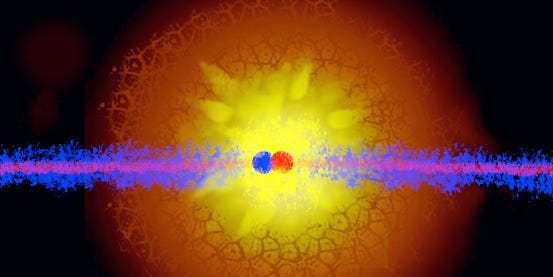
Many tech industry leaders believe nuclear fusion offers a more promising and safer alternative. This process joins two atomic nuclei to create energy, generating less radioactive output and lowering greenhouse emissions.
Bill Gates, cofounder of Microsoft, explained on a recent podcast that fission is derived from dividing large atoms like uranium, while fusion derives from merging smaller atoms, typically hydrogen, to produce energy.
Scientists have shown the potential for nuclear fusion. At California's National Ignition Facility, researchers recently exceeded a significant milestone by producing more energy than consumed in their experiments. Hypothetically, fusion could yield energy four million times that of burning coal or oil, without any carbon emissions. However, challenges remain.
A significant hurdle is the rarity and high cost of tritium, a hydrogen isotope used in fusion which also has radioactive characteristics. Additionally, the fusion process demands temperatures comparable to the sun's core, measuring in the millions of degrees.
Current advancements in artificial intelligence are aiding the progress toward practical fusion energy. Gates, who backs Commonwealth Fusion Systems, notes that fusion technology might be viable within a decade, leading to a future where fusion energy is both economical and generates minimal waste.
Another entity Gates has invested in, Pacific Fusion, recently secured over $900 million through its Series A funding. Gates believes these investments in nuclear technologies will drive down the costs of clean energy.
Ongoing and Future Investment Opportunities
Despite growing interest, Gates highlights that there's a societal tendency to underfund both fission and fusion technologies, even though affordable electricity is crucial for global development.
General Catalyst spearheaded the financial backing for Pacific Fusion alongside stakeholders such as Gates's climate investment fund, Breakthrough Energy Ventures, in addition to renowned investors including Ken Griffin, Patrick Collison, John Doerr, and Microsoft AI head Mustafa Suleyman.
Notably, some industry experts are optimistic about a faster breakthrough for fusion energy. During the TechCrunch Disrupt event, venture capitalist Vinod Khosla anticipated that in five years, discussions will no longer focus on the mere feasibility of fusion technology.
Khosla envisions a future where the focus shifts directly towards engineering systems ready for immediate implementation, bypassing the traditional sequence of technological validation followed by engineering development.
Leave a Reply