


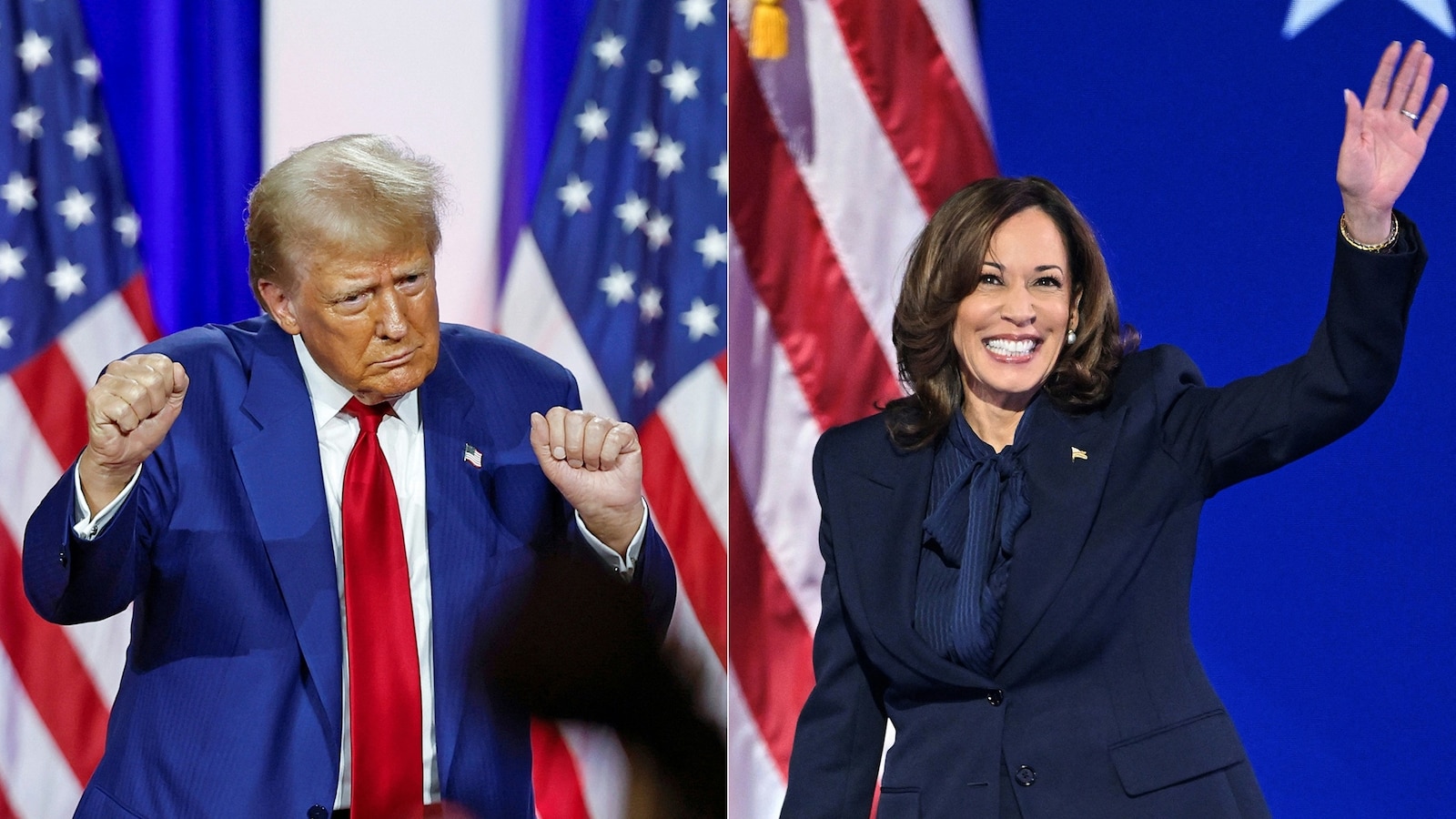
Final Weekend of Presidential Race Shows Nail-Biting Contest: Poll
As the 2024 presidential campaign approaches its finale, a significant portion of voters expresses pessimism, with a substantial three-quarters perceiving the nation as being on the wrong trajectory. This sentiment coincides with widespread discontent—60% of likely voters feel unhappy with the choice of candidates—leading to a closely contested race between Vice President Kamala Harris and former President Donald Trump.
Electoral Dynamics
In the latest survey conducted by ABC News and Ipsos, Harris holds a narrow lead with 49% of likely voter support, while Trump trails with 46%. This static support mirrors the deeply entrenched political divides observed since Harris assumed Biden's position last year.
Harris's current 3-point lead has seen minor fluctuations—+2 in early October and +4 last week. This slim margin is a testament to the typical Democratic-Republican divide seen in prior elections, with Democrats historically securing the popular vote in seven of the past eight elections. Nonetheless, the unpredictable nature of the Electoral College keeps the outcome uncertain.
The Influence of Early Voting
Early voting emerges as a pivotal factor, with 38% of participants reporting they had already voted by Friday. Among these early voters, Harris enjoys a lead, garnering 56% compared to Trump's 38%. This presents a closer contest than Democrats would prefer.
Voter Satisfaction Levels
Voter contentment regarding the election, economic conditions, and national direction is notably low. An overwhelming 74% of voters believe the country is veering off course, the highest such sentiment witnessed just before an election since 2008. Among Harris's supporters, 50% share this view, which spikes to 98% among Trump's.
Economic sentiments underpin this dissatisfaction. More than four in ten voters feel financially worse off since Biden's presidency began, with only 19% claiming an improved financial state. This trend coincides with record-high inflation rates under Biden's administration.
Political and Economic Divide
The schism in political and economic viewpoints is stark. A significant 78% of Trump's backers say they've become financially worse off under Biden, a sentiment shared by just 8% of Harris's supporters. However, when it comes to satisfaction with the available candidates, there is some commonality; 60% overall express dissatisfaction, including 61% from Harris's camp and 57% from Trump's.
Desire for Change
Dissatisfaction with the country's direction often fuels a longing for change, which could be disadvantageous for Harris trying to distance herself from Biden's policies. Only 34% believe she'd maintain the status quo if elected, whereas 35% expect her to induce beneficial change, and 31% foresee negative changes. In contrast, a mere 4% see Trump as keeping things unchanged, but half predict unwelcome upheavals.
Candidate Attributes
In terms of likability, Harris edges out Trump slightly, possessing a more favorable public image. While she splits opinion evenly at 48%, Trump's favorability rating is significantly lower, with only 37% viewing him positively against 60% negatively.
Despite unfavorability among some voters, Trump retains a strong lead in voter preference among those who view both candidates negatively.
Voter Contact Efforts
With such a tight race, the effectiveness of get-out-the-vote (GOTV) strategies is crucial. Harris's campaign appears more proactive, having contacted a larger segment of likely voters both nationally and in battleground states.
Among her supporters, 56% acknowledge receiving outreach from her campaign, compared to 49% of Trump's backers who report similar contact.
Demographic Trends
Among Hispanic voters, preferences have remained fairly consistent, showing a modest lead for Harris over Trump, but with fluctuations comparable to exit polls from past elections. This stability persists despite controversial incidents at campaign events.
Minor-Party Influence
Minor-party candidates have had minimal impact so far, with Libertarian candidate Chase Oliver receiving the most recognition at 1%.
Poll Methodology
The poll was conducted online using a probability-based panel, involving over 3,000 adults, with the results having a margin of error of plus or minus two percentage points. The numbers reflect the political landscape, capturing nuances among Democrats, Republicans, and independents alike.
Leave a Reply