


Repeated Warnings About Bird Strikes Prior to Tragic South Korean Crash
In the days leading up to the December tragedy involving Jeju Air Flight 2216, which resulted in the loss of 179 lives, the airport operators neglected to adhere to critical international and South Korean bird strike prevention standards.
Journalist Jin Yu Young delved into the situation at Muan International Airport, accessing reams of official paperwork and conducting numerous interviews along the way.
Merely ten days before South Korea's deadliest aviation disaster, a key meeting convened at the airport to tackle the rising problem of aircraft-bird collisions, a phenomenon that has seen a notable increase recently.
During the meeting, representatives from a national aviation academy highlighted the frequent bird encounters faced by descending aircraft near the coast. A meeting log obtained by a lawmaker captured a poignant question—how effective truly are our bird deterrent measures?
Unfortunately, the response was far from reassuring. Staffing and resources were cited as insufficient for effective bird control, and even the loudspeakers designed to scatter birds failed to project sound effectively far beyond the airport boundary, according to an official from the managing company. They emphasized continued efforts 'to the best of their ability.'
Environmental Challenges Around Muan Airport
Surrounded by natural bird habitats, Muan International Airport presents additional challenges for aviation safety. These lush areas attract diverse bird species, complicating efforts to mitigate potential hazards for incoming flights.
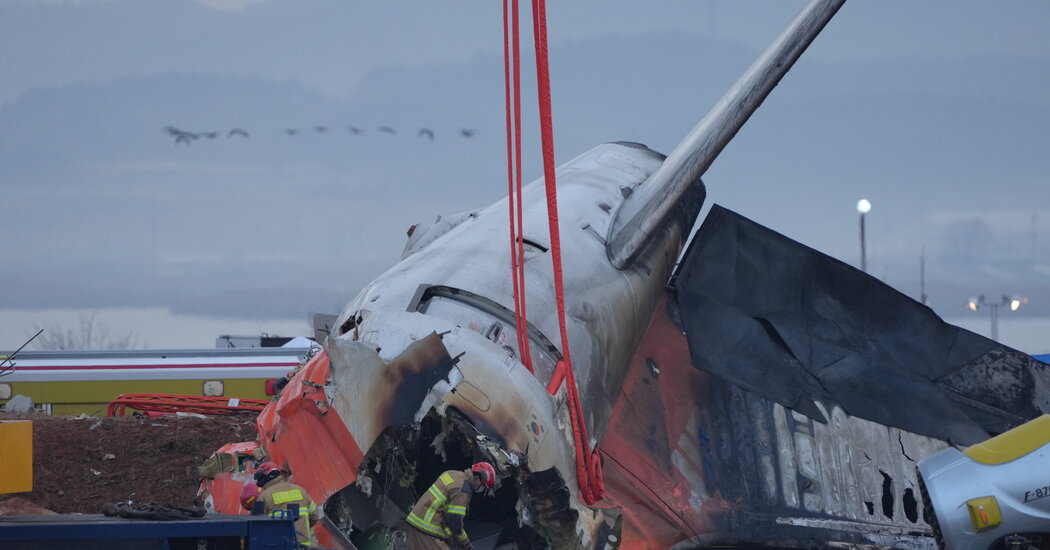
On December 29, during its approach, Jeju Air Flight 2216's crew declared an emergency, signaling a 'Mayday' due to a bird collision. Shortly thereafter, the flight ended in calamity as the aircraft skidded off its course, ultimately colliding with a barrier and bursting into flames.
While investigators are still piecing together the exact cause of the crash, preliminary investigations by the transportation ministry revealed avian remnants in the engines, specifically from the numerous Baikal teal—a common winter visitor to the region known for flying in massive groups.
As investigations continue to unfold, the details emphasize the crucial need for implementing and maintaining stringent wildlife control measures, particularly in areas prone to bird traffic.
Leave a Reply