


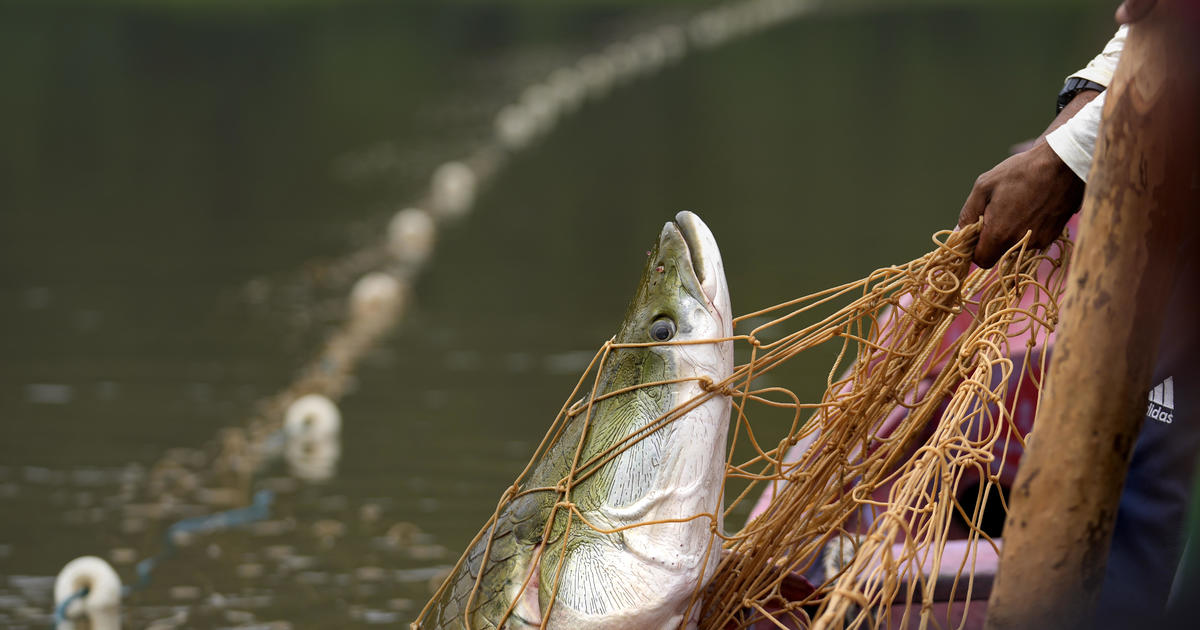
Droughts Endanger the Sustainable Harvest of the Amazon’s Giant Fish
In the Brazilian state of Amazonas, where fishing forms a crucial part of the local economy, nearly 6,000 authorized fishers are witnessing sharp declines in their catch alongside rising operational costs. This situation has prompted calls for support from the national government as they attempt to navigate these challenges.
For the previous year, fishers managed to capture only 70% of the legally approved quota of 100,443 giant pirarucu fish. This year looks even grimmer, with many communities having not started their fishing activities. The authorized fishing season extends from June 1 to November 30.
The practice of regulated fishing for pirarucu began 25 years ago in the Mamiraua region and has expanded since to become a vital income source for riverine communities and Indigenous territories. This system has significantly contributed to saving the species from the brink of extinction.
Traditionally resilient to environmental shifts like drought, the pirarucu, also known as arapaima, now struggles due to exceptionally low water levels that hinder fishers from transporting their catch from remote lakes to larger rivers and marketplaces.
Challenges in Pirarucu Fishing Logistics
Weighing up to 200 kilograms (440 pounds), the pirarucu rely on seasonal floodwaters to move between lakes and rivers. Usually, fishing takes place as water levels fall, but this year, rapid drops eliminated those routes before fishers could start.
In the São Raimundo locale of the Medio Jurua region, fishers face a two-month delay in the fishing season. Coletivo Pirarucu, an organization advocating for riverine families, has asked for an extension of the fishing season to the end of January.
Increased logistical challenges have arisen even on major rivers, with navigation turning complex. Transport time from Carauari, a key area for pirarucu, to Manaus has tripled, raising freight costs significantly.
The Environmental Impact and Communal Response
Researcher Adalberto Luis Val from the National Institute for Amazonian Research emphasizes that pirarucu are not immune to changing climate conditions, which compound issues like higher temperatures, more carbon dioxide, and reduced oxygen levels.
Adapting to airborne respiration, the pirarucu still face perils in increasingly silt-laden waters that obstruct essential physical processes.
With concerns mounting about long-term impacts, Coletivo Pirarucu is pushing for compensation and adaptation strategies for communities affected by these climatic changes. They emphasize how essential it is to address both resilience and mitigation efforts.
Federal responses are underway; James Bessa from Ibama articulates ongoing collaborations aimed at addressing such extreme events and ensuring sustainable living for these communities through scientific research and monitoring.
Advocate Adevaldo Dias stresses the importance of equitable support for those with minimal impact on climate but who bear the greatest burden of environmental instability, underscoring a need for a climate justice approach.
Leave a Reply