


Envisioning 'Freedom Cities' to Slash Housing Costs
During his political campaign, Donald Trump vowed to tackle high housing costs. His plan entails developing entirely new urban areas on federal lands, expecting them to become centers of manufacture and innovation, complete with futuristic transportation and abundant residential options.
Labeling them as "Freedom Cities," Trump envisioned these as catalysts for a profound improvement in living standards across America. However, his vision lacked substantial details and received lukewarm feedback, including from some conservative sectors.
The concept caught the attention of the American Enterprise Institute, which devised a detailed plan identifying viable sites for up to 20 such cities and millions of homes predominantly in the western United States. This initiative, dubbed 'Homesteading 2.0,' targets areas with soaring housing requests and expansive governmental lands.
Potential Sites and Implications
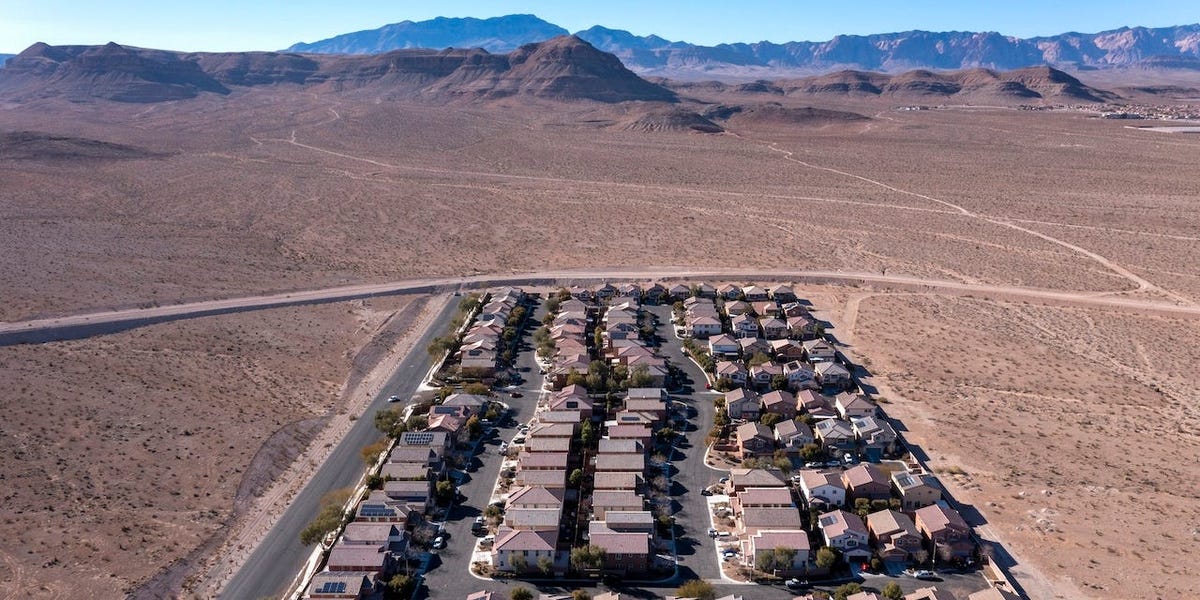
The AEI report zeroes in on western metropolitan areas like Nevada, Oregon, and Utah, proposing new city foundations adjacent to existing infrastructure hubs such as Las Vegas and Bend, Oregon. Researchers have illustrated potential city placements using an interactive map to delineate precise locations.
The idea resonates with particular bipartisan advocates for converting federal lands to alleviate housing shortages. Yet, it necessitates the support of local entities mindful of ecological impacts.
Pushing for Deregulation
Those promoting the 'Freedom Cities' argue for regulatory leniencies to allure developers alongside incentives to foster rapid urbanization. Jeffrey Mason from the Charter Cities Institute suggests focusing on easing regulations around emerging technologies.
Draft legislation is in the works with AEI collaborating with other groups to propose a statutory framework to legitimize these new areas. Even the Trump administration has shown subtle interests—forming a commission under federal departments to evaluate possible housing developments.
The advocacy for using unoccupied federal grounds continues with voices like Arthur Gailes from AEI noting that areas north of Las Vegas are congested by existing federal management—potentially supporting around 600,000 residents if opened up for habitation.
Possibilities of Cross-Party Engagement
The premise of housing projects on federal lands finds degrees of approval across political lines. Former Vice President Kamala Harris backed initiatives toward utilizing federal lands for affordable housing projects.
NYU's Furman Center director, Matthew Murphy, highlights an unanimous acknowledgment of the housing crisis, hence tapping into underused resources as a natural government intervention.
Nevertheless, criticisms echo from environmental conservationists and those wary of the potential resemblance to undemocratic land-use strategies observed in other countries. Scholars like Max Woodworth compare this to China's high-paced urban establishments, questioning the bypass of democratic planning processes.
Leave a Reply