


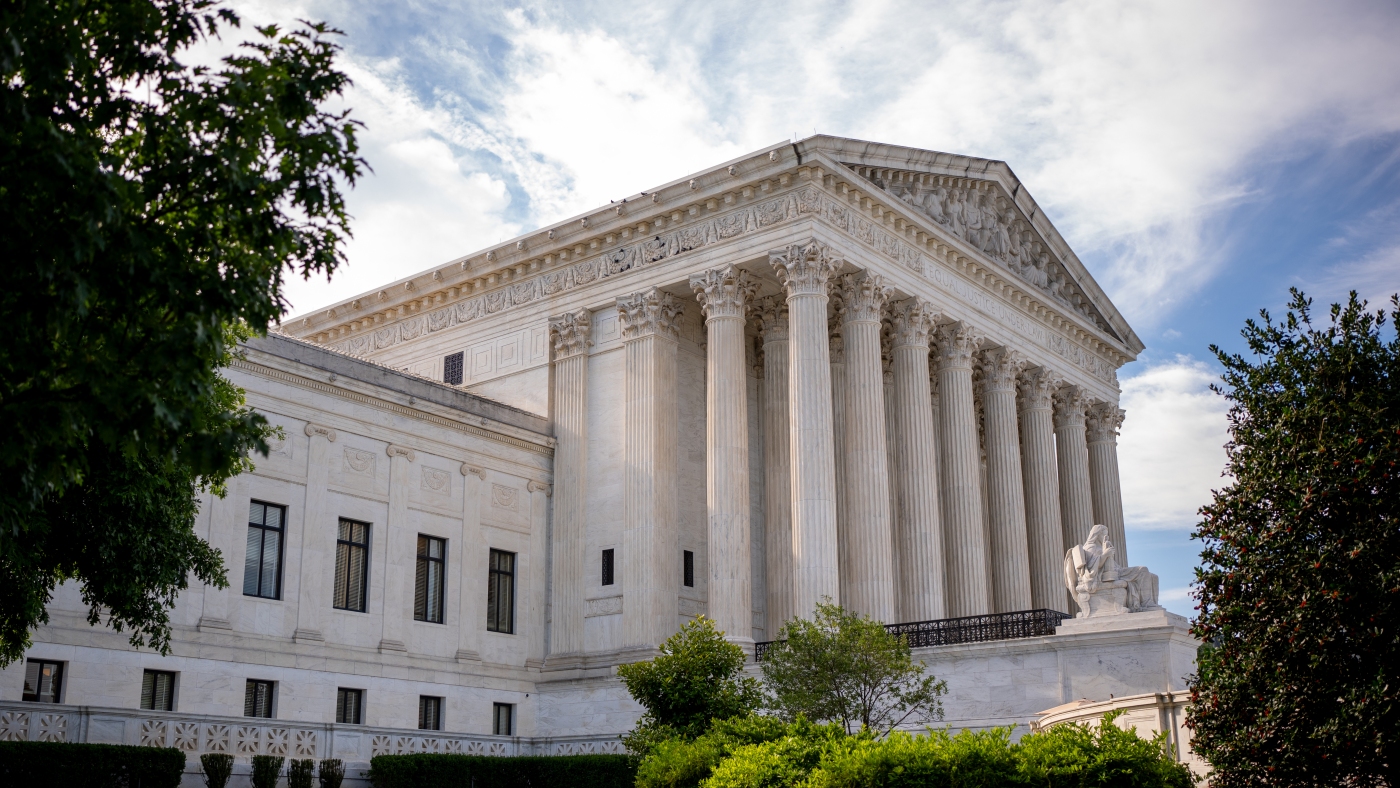
Supreme Court Sides with Trump on Controversial Deportations Issue
The Supreme Court of the United States has delivered a ruling that supports the Trump administration's stance on a hotly debated deportation policy.
On Monday, the court sided with the Trump administration in a case related to the deportation of individuals under the contentious Alien Enemies Act of 1798. Without a signed opinion, the conservative justices nullified a lower court's decision that hampered the administration's deportation ambitions involving this outdated legislation.
The ruling highlights that those contesting deportations under the Alien Enemies Act need to submit individual habeas corpus petitions within the districts where they were arrested. This type of petition allows individuals to question the legitimacy of their confinement.
Initially, the lawsuit aimed to halt deportations affecting all Venezuelans potentially influenced by the Alien Enemies Act. Despite being a temporary success for the Trump administration, the order could indicate future confrontations between the administration and the judicial system, as the government seeks to assert its authority over other branches.
However, the order also confirmed that the deportations authorized by the Alien Enemies Act remain subject to judicial oversight, with individuals being properly informed to challenge their removal in court. The opinion calls for detainees to be notified reasonably to pursue habeas relief before removals occur, with petitions settled in the district of detention.
The repercussions for those already deported, especially to El Salvador under this act without sufficient removal notice, are not clearly established. Justice Brett Kavanaugh wrote a concurring opinion, while Justice Sonia Sotomayor delivered a dissent for the liberal justices, joined by colleagues Elena Kagan and Ketanji Brown Jackson.
Proclamation of the Alien Enemies Act
The legal clash began on March 15 when President Trump issued a directive for the deportation of alleged Venezuelan gang members from the Tren de Aragua, a group labeled by the State Department as a Foreign Terrorist Organization.
The administration swiftly acted on the order, organizing flights to transport suspected gang members to a facility in El Salvador. However, litigation ensued as five others, awaiting deportation, sought judicial intervention to halt the proceedings.
Judge James Boasberg temporarily stopped these deportations and ordered flights to return. Despite the judge's orders, the administration argued against reversing the flights, citing national security reasons.
By staying deportations, the Court appeared to endorse the Alien Enemies Act's invocation. Historically, it's been used sparingly and exclusively during times of congressional war declarations. The administration argues the gang's alleged Venezuelan ties constitute an 'invasion,' fitting within the Act's framework.
Concerns About Legal Rights
Ongoing issues regarding the lack of due process have emerged, as acknowledged in a statement from an ICE official admitting past deportations were conducted erroneously due to 'administrative errors.'
Calls for Judge Boasberg's impeachment emerged following these rulings. Chief Justice John Roberts refuted such calls, emphasizing that impeachment isn't appropriate for judicial disputes, advocating for the appellate review process instead.
The Trump administration's appeal to the federal court of appeals failed to overturn Boasberg’s injunction on a 2-1 decision. Judges highlighted the administration's lack of due process, especially highlighted by dismissive deportations to a notoriously oppressive Salvadoran prison system.
Despite this, the Trump administration appealed to the Supreme Court, arguing the president's broad discretion over national security alone warrants minimal judicial interference. The Supreme Court permitted the continuation of deportations, pending an ultimate decision.
This decision adds to the wave of legal challenges against Trump's executive orders, which have faced significant judicial resistance compared to past administrations.
Leave a Reply