


Airlines Set to Revise 2025 Projections Amid Weakening Travel Demand
With consumer interest in travel waning and economic challenges such as job cuts and spending reductions becoming more evident, the airline industry is facing significant concerns.
Industry experts forecast that American carriers will likely adjust their 2025 financial projections as they release earnings reports. This can be attributed to a noticeable decline in travel demand, a trend that consumers had seemed to resist despite ongoing inflation troubles.
"The market isn't as robust as earlier this year," remarked Raymond James analyst Savanthi Syth to CNBC.
Recently, several airlines revised their performance forecasts, citing disappointing travel reservations across both business and leisure sectors.
Consequently, airline stock prices have fallen steeply, fueled by apprehensions over shrinking demand and exacerbated by recent federal policies advocating for substantial operational reductions.
Syth also noted, "While the recent downturn may seem exaggerated compared to the current situation, there's potential for it to become reality in the forthcoming months."
Financial analysts are adjusting their outlooks for U.S. airlines, reducing price targets and ratings even for typically stable companies like Delta. High-income flyers had been a profitable segment for airlines in recent years, contributing positively to earnings, but the situation appears to be changing.
Although the crisis doesn't reflect the extreme disruption seen during the pandemic, when international borders were shut, there is mounting strain on travel demand, echoing some challenges experienced during the pandemic.
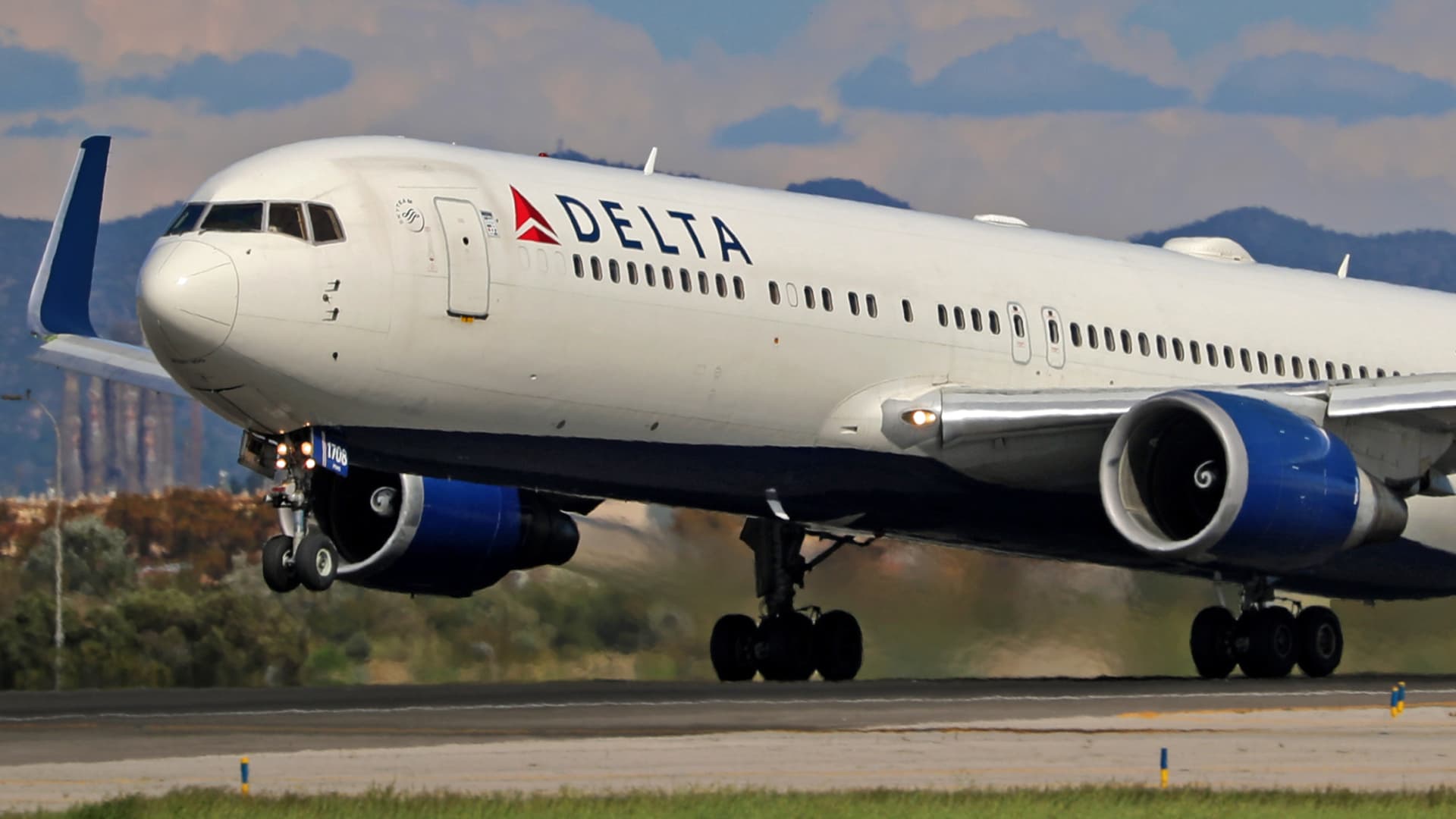
Delta Airlines is set to lead the charge by announcing its quarterly financial results ahead of the market's opening on Wednesday.
Airline stocks have been in a downward spiral this year, with significant drops in value for major players like Delta, American, and United Airlines, reflecting ongoing challenges in 2025.
Such a shift marks a notable departure from the post-pandemic era, where international travel thrived as consumers sought experiences abroad.
Now, decreased international and Canadian travel demand is starting to impact U.S.-Europe flight bookings.
According to Cirium, a well-known aviation data provider, summer bookings between the U.S. and Europe are down by approximately 13% from the previous year. It's important to consider, however, that these numbers are primarily sourced from online travel agencies instead of direct airline bookings.
Implications of a Changing Economic Landscape
Analysts warn that the evolving economic scenario, marked by slower growth and increased inflation, may disrupt the competitive landscape for airlines significantly.
TD Cowen expressed concerns about potential long-term effects on corporate travel and consumer spending, particularly among the Baby Boomer demographic, due to economic pressures.
Moreover, the Bank of America Institute highlighted that recent declines in consumer confidence might be causing individuals to reconsider or even cancel travel plans, with external factors like weather and holiday timing also influencing decisions.
Airline leaders will likely face tough questions about the impact of revenue dips in the high-end travel sector and related company decisions, such as workforce reductions at consultancy firms.
An ongoing subject of debate is whether luxury travel demand will persist. According to Syth, although premium seats might still fill up, airlines might need to enhance loyalty rewards to maintain strong occupancy rates.
She questioned how profitable such flights will continue to be, even if planes remain filled.
Leave a Reply