


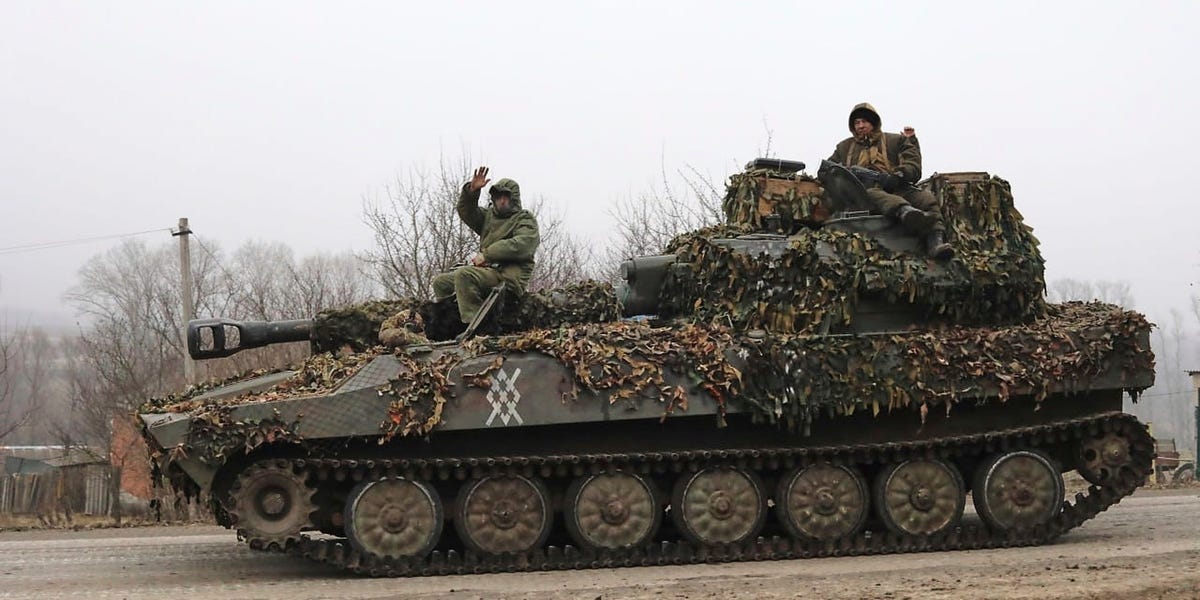
Stalled Russian Advancement in Ukraine: A Western Perspective
Recent evaluations from Western analysts highlight a significant deceleration in Russia's territorial gains in Ukraine, dropping to a mere fraction of their earlier pace.
According to the Institute for the Study of War, a respected research organization based in Washington D.C., the Russian military captured around 78 square miles (203 square kilometers) of Ukrainian land in March.
This contrasts sharply with November when Russia advanced by approximately 242 square miles. During that time, Russian forces heavily targeted the eastern front, deploying soldiers in small, continuous assaults aimed at depleting Ukrainian defenses of munitions and drones.
The UK Ministry of Defense reported an even steeper decline. By March, the pace of Russian advancement had dwindled to a mere fifth of what it was in November.
In an intelligence update, the UK communicated that Russia had gained an additional 55 square miles in March, compared to about 281 square miles in November.
The report noted that Russia's expansion had consistently decreased from the burst in November 2024 when more than 700 square kilometers were seized.
The Defense Ministry did not disclose the methodology behind their evaluation, often relying on Ukrainian government data for their intelligence summaries.
Meanwhile, the Institute for the Study of War utilized geolocated video evidence to substantiate their analysis.
Neither report addressed the impact of winter conditions, which typically complicate logistical operations and adversarial engagements, potentially slowing the intensity of conflicts.
The slowdown is partly attributed to escalating Ukrainian counteroffensives, notably near Toretsk and Pokrovsk, a strategic location in Donetsk that serves as a conduit for other Ukrainian military outposts.
These counterassaults have reversed several of Russia's acquisitions from the prior year. Once deemed largely under Russian dominion in early 2025, Toretsk has seen revived conflict as Ukrainian forces maneuver to encircle Russian positions.
The UK Ministry of Defense reported that Russia’s modest advances in March mostly transpired in the Donetsk region but noted no strategic enhancement of their position there.
Despite territorial gains on the eastern front, these advances have taken a significant human toll. Estimates from Ukrainian and Western sources suggest up to 1,500 Russian casualties—either dead or wounded—occurred daily at the peak of the conflict in the fall.
Russia's aggressive land assault tactics netted roughly 1,600 square miles of territory through 2024, albeit at the dire cost of potentially 427,000 Russian troops killed or injured, as reported by Ukraine.
This approach has fostered a growing sentiment in Ukraine and Europe that Kyiv's victory could come from enduring Russia’s significant human and material losses. The Kremlin faces the burden of compensating the families of fallen and injured soldiers while also offering substantial incentives to recruit new forces.
The Russian defense ministry did not respond to Business Insider's request for comments submitted beyond their usual operational hours.
Leave a Reply