


Nikkei and Asian Stocks Plummet Following U.S.-China Trade Tensions
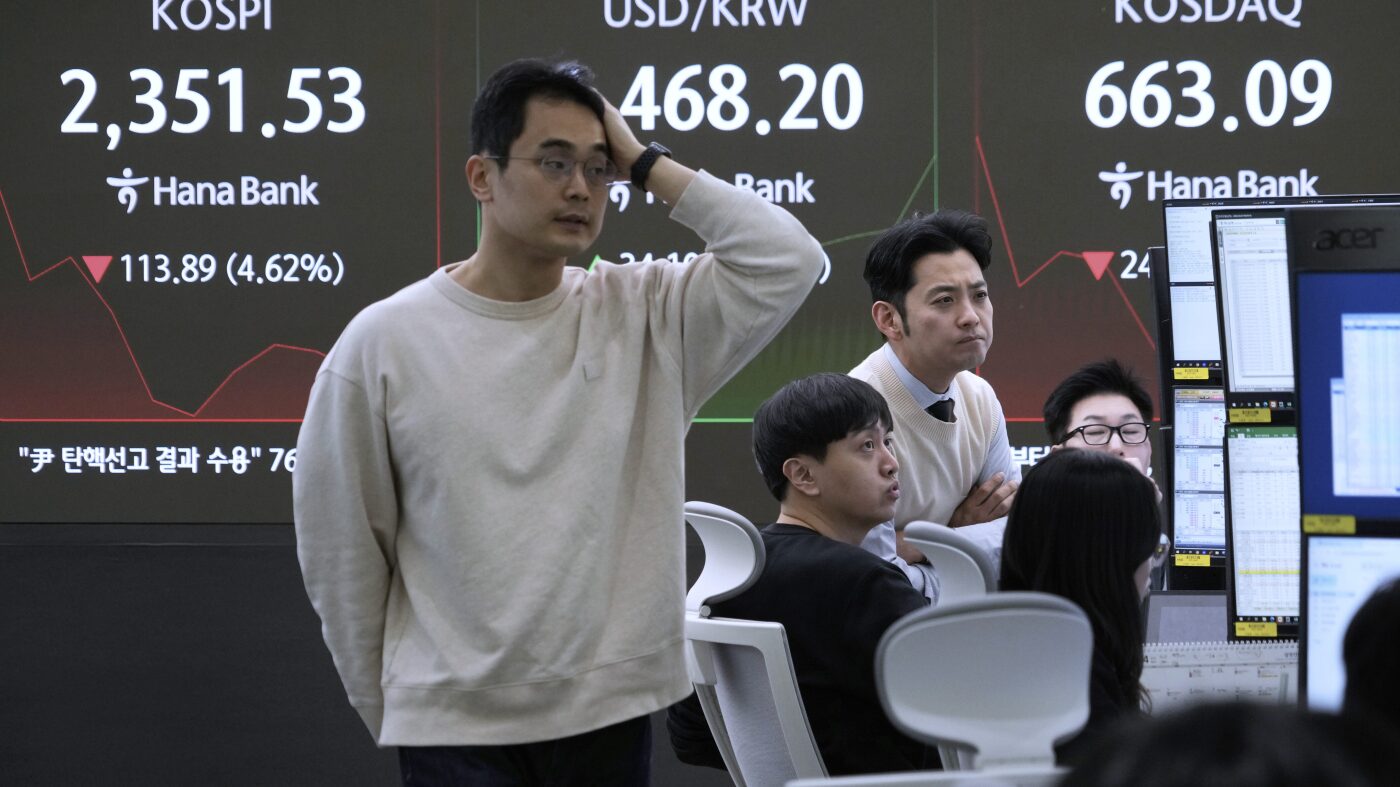
NEW YORK — Monday saw a dramatic decline in Asian stock markets after a severe selloff on Wall Street, spurred by U.S. President Donald Trump's tariff threats against China and the subsequent retaliatory measures from Beijing.
Futures for major U.S. indices pointed towards further losses. The S&P 500 futures contracted by 4.2%, Dow Jones Industrial futures slipped 3.5%, and Nasdaq futures fell by 5.3%.
Japan's Nikkei 225 experienced a steep drop shortly after opening, down nearly 8%. About an hour into trading, it steadied slightly to a 7.1% decrease at the 31,375.71 mark.
Other markets across Asia mirrored this downtrend. South Korea's Kospi decreased by 5.5% to 2,328.52, while Australia's S&P/ASX 200 declined by 6.3% to stand at 7,184.70.
The impact extended to oil prices, which also slumped. U.S. crude oil prices fell 4%, a $2.50 reduction, to $59.49 per barrel, while Brent crude slipped by $2.25 to $63.33 per barrel.
Currencies were not spared from this volatility. The U.S. dollar fell against the Japanese yen, moving from 146.94 yen to 145.98 yen, while the euro slightly appreciated against the dollar.
Economic Concerns Deepen Amidst Trade War
Wall Street's unrest on Friday marked the most significant downturn since the COVID era, with the S&P 500 dropping 6% and the Dow Jones plummeting 5.5%. The Nasdaq followed with a 5.8% decrease.
China announced its response to new U.S. tariffs with a matching increase, escalating the trade war and raising fears of a potential global recession. This response immediately fueled market declines.
China vowed to impose a 34% tariff on all U.S. imports starting April 10, mirroring the U.S.'s similar tariff measures.
These developments pose the central question: will the trade dispute plunge the global economy into a recession? Should this occur, substantial stock devaluations could follow. The S&P 500 recently saw a 17.4% reduction from its February highs.
Federal Reserve and Future Market Directions
Trump appeared unfazed by market volatility, focusing instead on opportunities for capital gain, as expressed in his social media posts from Mar-a-Lago.
The Federal Reserve may resort to interest rate cuts to mitigate economic impacts, though Fed Chair Jerome Powell cautioned about the potential inflationary pressures from such actions.
Powell emphasized the importance of preventing short-term price increases from becoming entrenched inflationary problems.
A key factor will be the duration of the tariffs and the nature of countermeasures by other nations. Some investors are hopeful that negotiations might lead to reduced tariffs in the future.
Market Impact and Corporate Responses
Trump has acknowledged the tariffs might bring temporary discomfort to Americans, but argues the ultimate goal of job repatriation justifies the strategy.
Companies with extensive China operations faced significant setbacks. DuPont saw its stock tumble by 12.7% following China's announcement of an investigation into its Chinese operations.
Similarly, GE Healthcare, which derived 12% of its previous year's revenue from China, experienced a 16% stock drop.
In the bond sector, treasury yields dipped before stabilizing after Jerome Powell shared his inflation concerns, with the 10-year Treasury yield sitting at 4.01%, down from 4.06% the previous day.
Leave a Reply