


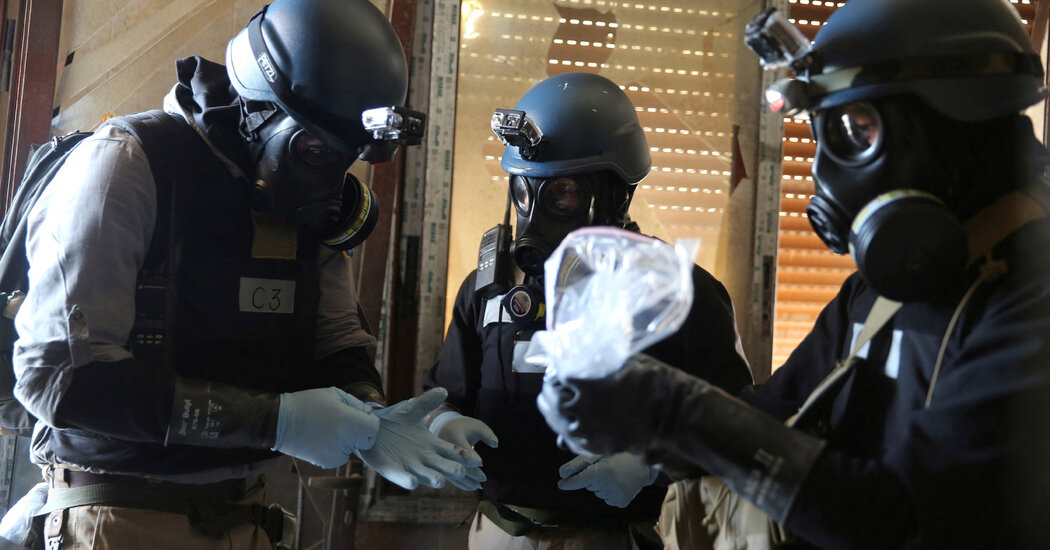
Syria's Extensive Chemical Weapons Sites Pose New Challenges
A recent revelation from inspectors has estimated that Syria hosts over 100 chemical weapon locations, a number significantly surpassing previous beliefs. This revelation confronts the newly established government with substantial obstacles, particularly concerning the security of hazardous materials like sarin, chlorine, and mustard gases.
Journalist Megha Rajagopalan covered this story from Damascus, shedding light through conversations with former scientists involved in chemical weapons and experts in nonproliferation.
The Organization for the Prohibition of Chemical Weapons has, for the first time, approximated the count of these suspected sites in Syria, despite past reluctance from Bashar al-Assad to acknowledge them. This significant quantity is challenging the organization's attempts to enter Syria and examine the remnants of the extensive military initiative of the Assad regime.
Locations within Syria are believed to have been integral to the investigation, production, and storage of chemical warfare substances. The Syrian government, under al-Assad, reportedly employed lethally effective agents like sarin and chlorine against opposition forces and its citizens over many years.
Security Challenges and International Concerns
With the end of Assad’s rule in the previous year, ambiguity shrouded the exact count and protection status of these weapon sites. The chemical arsenal's uncertainty now presents a substantial test for the incoming leadership, recognized internationally for its terrorist affiliations, yet it claims to have severed ties with Al Qaeda.
The dangers associated with chemical weapons usage, particularly in populated zones, elevate the urgency of addressing this issue. Sarin gas, a lethal nerve agent, poses a rapid threat within minutes of exposure, while agents like chlorine and mustard gas, having a devastating history from World War I, inflict severe injuries and can lead to suffocation through intense pulmonary damage.
Leave a Reply