


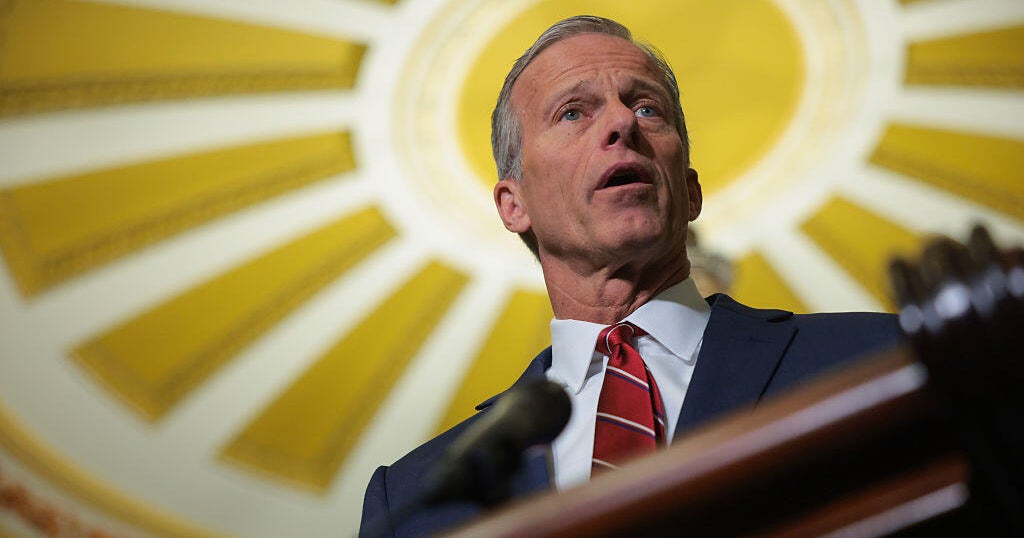
Senate Nears Approval of GOP Fiscal Plan Amid Protracted Voting
As night fell on Friday, Senate Republicans initiated an exhaustive series of votes in a process dubbed the 'vote-a-rama,' edging closer to the realization of President Trump's policy objectives.
Earlier in the week, a 70-page fiscal framework was unveiled by Senate Republicans, outlining strategies to advance President Trump's initiatives on national defense, border control, energy, and taxation. This plan not only seeks to make permanent the tax cuts from Trump's initial term but also permits an additional $1.5 trillion in cuts while potentially elevating the debt limit by $5 trillion.
Thursday saw the Senate overcoming a preliminary obstacle, with Senator Rand Paul of Kentucky casting the sole dissenting Republican vote, indicating that the necessary support is likely secured for final passage over the weekend.
Throughout this lengthy voting session, Democrats have the leverage to propose countless amendments, compelling Republicans to address numerous contentious issues, such as those related to Medicaid and trade tariffs. Once all proposed amendments have been addressed, a concluding vote on the budget resolution will set the stage for a House vote potentially next week.
Senate Minority Leader Chuck Schumer remarked on Thursday that it would be a challenging period for Republicans in the Senate.
"The upcoming series of amendments will put Trump and his allies on the defensive regarding their preference for wealthy interests while undermining family needs," stated Schumer, representing New York.
The Republican budget draft represents an initial phase in the intricate reconciliation process, enabling legislation to bypass the usual 60-vote requirement in the Senate. This strategy allows Republicans to proceed without Democratic support. Both legislative chambers must agree on congruent budget plans directing committees to present their spending proposals before any final bill reflecting President Trump's priorities is passed—a process likely to unfold over several months.
After developing their own budget drafts earlier this year, House and Senate Republicans have now crafted a collaborative path. Yet, debates linger about where to implement spending reductions, prompting leaders to defer some unresolved differences.
In the Senate, minimum spending cut levels are set at just a few billion dollars across various committees, although a 10-year $1.5 trillion goal remains in the House. The Senate anticipates surpassing the initial reductions outlined, providing them with strategic flexibility.
Debate Over Tax Policies
Senate Majority Leader John Thune extolled the financial plan as a groundwork for 'substantial investments' in border security, national defense, and the energy sector, dismissing Democratic objections.
Thune, a Republican from South Dakota, refuted Democratic claims that the proposal unduly favors billionaires, labeling the issue a 'current policy baseline' misunderstanding, which he argues Democrats wrongfully criticize despite it not being a novel tactic.
Customarily, Congress employs a 'current law baseline' as dictated by the 1974 Budget Control Act, considering the expiration of certain financial measures. However, extending Trump's tax reductions would incur an additional $4.5 trillion expense over ten years.
Schumer critiqued Republicans' portrayal of ongoing tax cuts as fiscally harmless, likening the assertion to a mathematical impossibility.
Leave a Reply