


Why Trump's Tariff Map Excludes Canada and Mexico
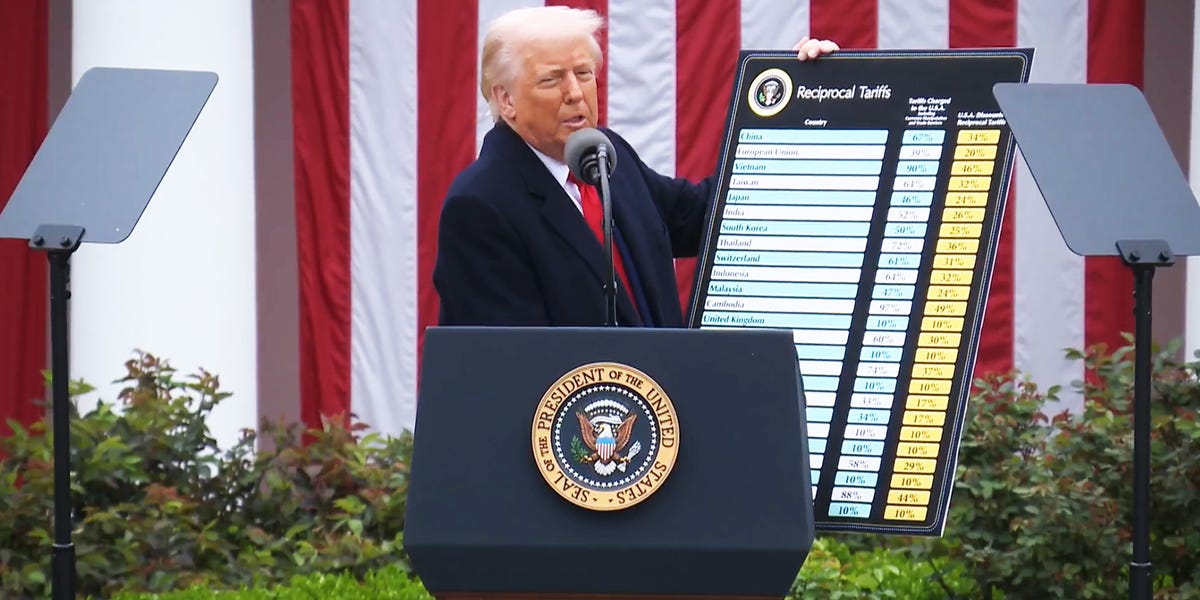
President Trump has recently unveiled extensive tariffs affecting global imports, but in an unexpected twist, Canada and Mexico were not included.
Numerous countries, among them China, were impacted with hefty reciprocal duties. Following the announcement, CNBC highlighted that Chinese imports could be subjected to a combined tariff of 54%, integrating the latest 34% with prior tariffs. Meanwhile, goods from the European Union will now face a 20% duty.
However, as clarified by the White House, this exemption doesn’t equate to a complete pardon for Mexico and Canada. Persistent 25% tariffs on a significant number of goods from these nations remain unchanged.
USMCA Influence and Established Tariffs
In alignment with earlier directives from Trump, a 25% duty affects all products from Canada and Mexico that do not comply with the United States-Mexico-Canada Agreement (USMCA).
According to the administration, these tariffs serve as leverage because of perceived insufficient efforts by both countries in curtailing unauthorized immigration and halting fentanyl trafficking into the U.S. from both borders—an assertion challenged by leaders from the neighboring nations.
The USMCA, the successor of the North American Free Trade Agreement effective 2020, preserves the initial agreement’s duty-free treatment of eligible agricultural, textile, clothing, and other products.
There remains a 10% tariff on non-compliant energy and potash from both borders. This measure appears to appease agricultural sectors concerned over critical fertilizer components.
Strategic Exemption: Economic Ties and Negotiations
Chris Tang, a UCLA supply chain management professor, interpreted the exclusion of Canada and Mexico from the recent tariffs as possibly reflective of President Trump's awareness of their economic importance, though it serves as a bargaining tool as well.
Tang pointed out, "Currently, USMCA-compliant merchandise remains duty-exempt, yet this could change, retaining negotiation leverage for Trump." A spokesperson mentioned terminating Trump's earlier order could lower tariffs on non-USMCA goods to 12%.
Margaret Kidd of the University of Houston emphasized the mutual benefit in maintaining harmonious ties with these trading partners, underlining $945 billion in trade was conducted between the U.S. and Mexico in 2024, primarily traversing Texas — underscoring severe impacts on border states reliant on cross-border trade.
With economies so intertwined, Tang expressed optimism that these omissions might be a conciliatory gesture, fostering better relations amid increased trade disputes since Trump’s tenure began.
"The interconnected nature of our economies," Tang added, " could drive these nations towards productive dialogue, being allies and immediate neighbors, boosting the prospect of joint collaboration."
Leave a Reply