


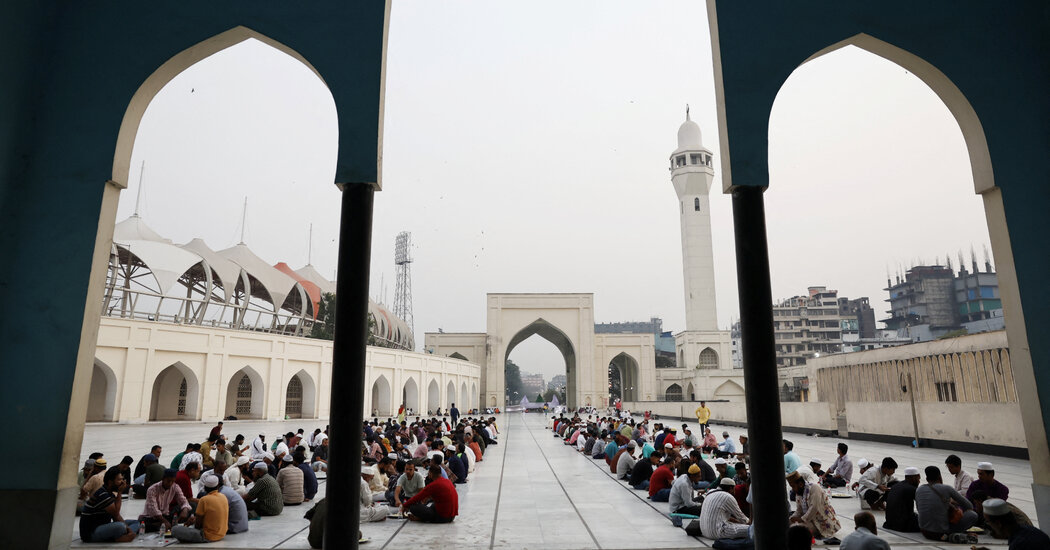
Bangladesh's Transformation Creates Room for Islamist Conservatives
Emergence of Religious Hardliners Amid Political Change
In Bangladesh, amid a significant political transformation following the fall of its former authoritarian government, there has been a rise in religious conservatism. This emergence of a conservative wave is visible in acts that restrict women's freedom, notably in smaller towns where Islamist figures have banned young women from engaging in sports like soccer.
In instances that underscore their growing audacity, religious radicals have coerced law enforcement into releasing a man who was detained for harassing a woman for not wearing a headscarf, only to later celebrate him with flower garlands.
Calls for Extreme Measures and Theocratic Rule
The capital city, Dhaka, has witnessed aggressive rhetoric, with demonstrators threatening violence unless the government imposes the death penalty on those who insult Islam. Only days afterward, a proscribed group organized a large-scale demonstration advocating for an Islamic caliphate to be established within Bangladesh.
As the nation attempts to navigate towards a new future for its vast population, underlying currents of Islamist extremism, once subdued, are now becoming visible. This movement is forcing officials working on a new constitutional draft to reconsider the secular foundation of the country, potentially pivoting to a more religiously-driven governance model.
Islamists Pushing for Systemic Changes
In discussions with leaders from various Islamist factions, including those previously forbidden, there’s a clear, deliberate push towards a more fundamentalist state ethos that punishes dissenters of Islamic morals and advocates for enforced 'modesty.' These broad and undefined terms are reminiscent of regions dominated by mob justice or strict religious rule.
Political projectors involved in the drafting of a new Constitution concede that secularism may be supplanted with pluralism, marking a significant redirection towards forming a religious-centric governance system.
Leave a Reply