


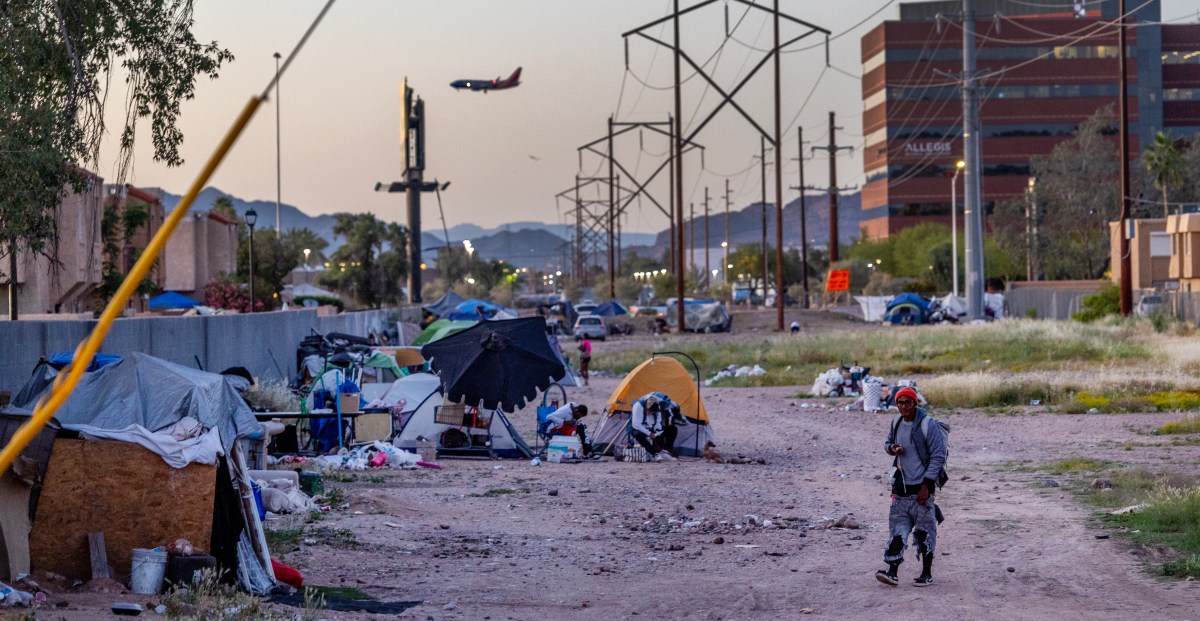
Arizona's New Stride Against Homeless Encampments
Arizona voters, in a pivotal move, endorsed a novel policy that grants funds to property owners if local authorities neglect to dismantle homeless camps.
This decision arrives as a reflection of public sentiment concerning homelessness, following the Supreme Court's recent nod to more expansive camping prohibitions. The approved measure, known as Proposition 312, emerged from contentious debates centered around 'The Zone' in Phoenix, a district near the state capital where over a thousand homeless individuals once congregated.
Conservative groups have championed this measure as a route to encourage stringent management of homelessness by local governments. The voter approval indicates a willingness to endorse firmer control over public spaces.
Implications of Proposition 312
Proposition 312 introduces a system enabling property owners to reclaim expenses for items like surveillance equipment and sanitation services, contingent on evidence showing that ineffective law enforcement has diminished property value or incurred costs dealing with public hazards.
This reimbursement process draws funds from the cities' state allocations, essentially imposing penalties on municipalities that fail to remove encampments. Property owners are limited to submitting one claim annually, extendable for a decade.
The Goldwater Institute spearheaded support for the initiative, highlighting it as a deterrent against repeats of 'The Zone.' Critics caution, however, that it may divert critical resources from homeless services and law enforcement, hampering cities' efforts to effectively address homelessness.
Debate Over Policy Effectiveness
Opponents, including Jesse Rabinowitz of the National Homelessness Law Center, argue that Proposition 312 doesn't tackle the root causes of homelessness, such as insufficient affordable housing, and may escalate legal expenditures at taxpayers’ expense.
The enactment of this policy comes amid Arizona's significant affordable housing crisis, with figures showing around 14,000 individuals facing homelessness nightly.
Despite these concerns, Goldwater CEO Victor Riches proclaimed voter support as a mandate for enforcing laws to combat widespread homelessness.
Conservative Push for Firm Action
This policy illustrates the conservative agenda to standardize robust action against homelessness across municipalities. Following a Supreme Court ruling facilitating camping prohibitions, Proposition 312 offers a financial incentive model to compel enforcement, reflecting growing frustration over perceived inaction by progressive-leaning cities.
Legal expert Ilan Wurman notes that cities often cite legal ambiguities as a restraint; however, the Supreme Court's decision removes that as a valid excuse, propelling advocates to ensure compliance through new legislative tools.
Preparing for Implementation Challenges
To moving forward, Arizona cities face the complex task of implementing this law, finding a balance between diminished autonomy and practical constraints. Key questions persist, such as defining a 'pattern' of non-enforcement and identifying valid expenses.
Phoenix Mayor Kate Gallego has expressed concerns about the potential financial strain on city budgets, noting that processing claims could redirect funds from essential services like shelter expansion.
As states observe Arizona's approach, the ramifications may influence broader homelessness policy, shifting the focus from judicial directives to budgetary strategies for enforcement.
Acknowledging that enforcement isn't a comprehensive solution, stakeholders emphasize the dire need for affordable housing solutions over punitive measures.
Leave a Reply