


The Rift Among Democrats: Assessing the Impact of a Government Shutdown on Trump's Influence
The ongoing debate within the Democratic Party about supporting a temporary measure to prevent a halt in federal funding revolves chiefly around evaluating the degree of control the president wields during a government shutdown.
From Capitol Hill
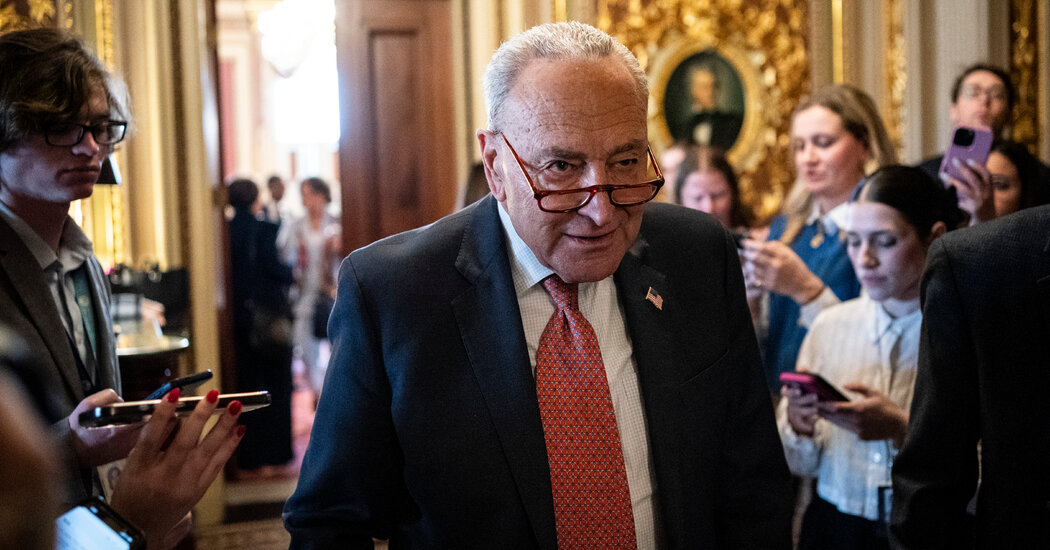
Senator Chuck Schumer, a leading Democrat from New York, declared his alignment with Republicans to facilitate the approval of a provisional spending bill. His reasoning was that a government shutdown might escalate President Trump's power, giving leeway to individuals like Elon Musk to strip down government operations and diminish the size of federal bodies.
"In the event of a shutdown, the Trump administration could determine which agencies and employees are critical, temporarily laying off staff without a guarantee of reemployment," Senator Schumer expressed on Thursday.
However, numerous Democrats contended that merely passing the spending extension could actually ease the path for President Trump's directives and Mr. Musk's proposed Department of Government Efficiency, enabling them to overhaul federal structures while bypassing Congressional oversight.
At the heart of this political clash is a practical dilemma: Does a federal shutdown increase or reduce the executive power held by the White House?
This issue is quite complex. Here's an overview.
Consequences of a Federal Government Shutdown
A government shutdown results in the continuation of critical operations at federal agencies, though staff and external partners might not receive their pay. Many government employees face furlough until legislators authorize additional funds.
Federal offices typically prepare strategic plans to determine essential staff and programs during stoppages. Ultimately, the White House's Office of Management and Budget, led by Russell T. Vought, holds the authority to decide which operations are deemed "necessary" or "essential."
Leave a Reply