


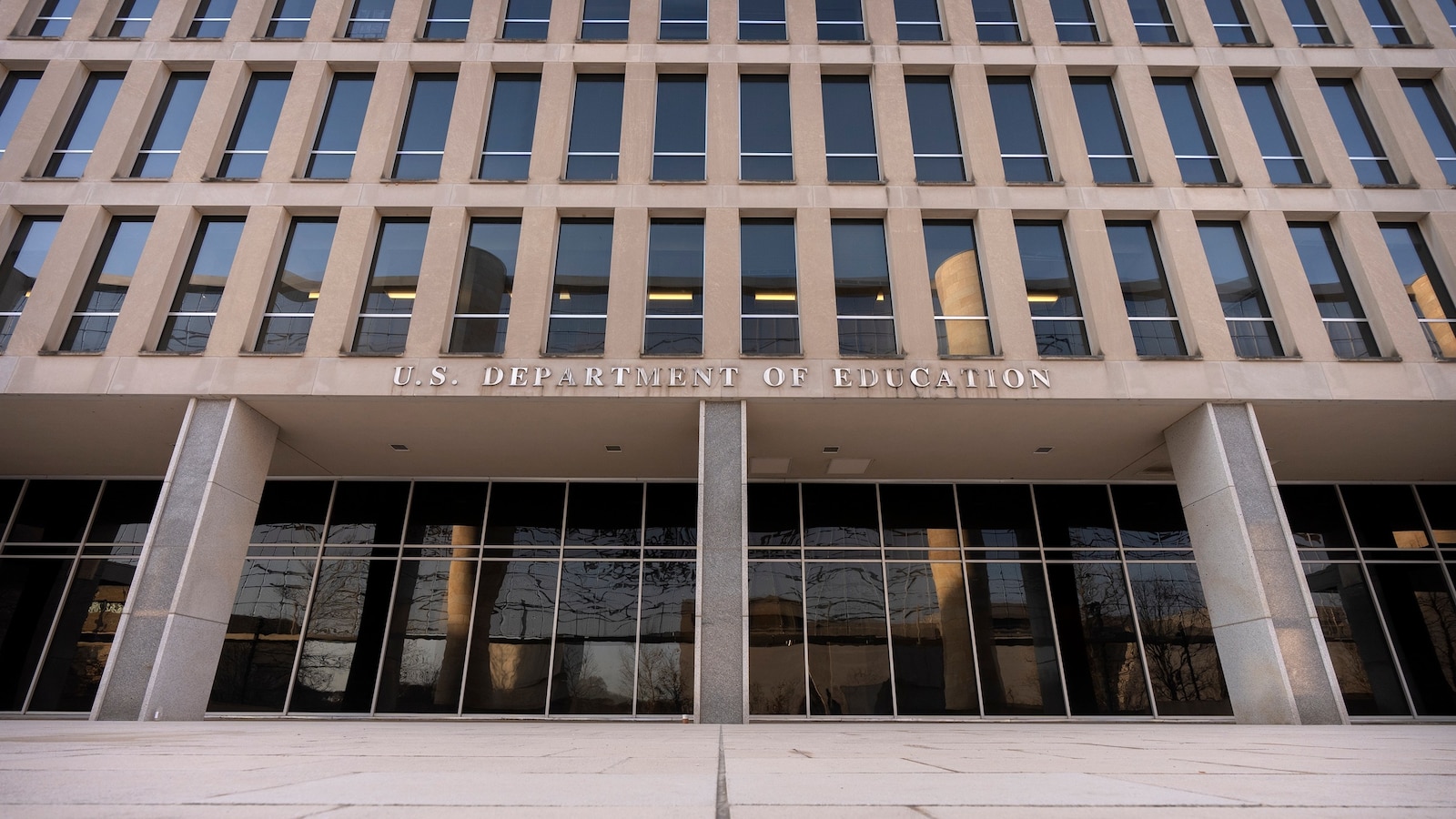
Understanding the Claims About the Department of Education
As the U.S. Department of Education sees reductions, President Trump and his supporters have made assertions concerning the agency and national education that don't fully align with the evidence.
Expenditure versus Educational Outcomes
President Trump has frequently stated that the United States ranks at the bottom among developed nations in education, despite having the highest expenditure per student.
"We are edged out by the rest of the world; we're at number 40, yet we exceed in terms of spending," he mentioned. However, this claim doesn't match up with the data scrutinized by ABC News, which found that other nations outspend the U.S. per student, and America doesn't rank last in world rankings.
No clarification on the data source for Trump's statement was provided by the White House. Nonetheless, statistics show that while the U.S. does invest significantly, with an average of $20,387 in combined federal and local spending per student annually, this ranks third highest globally after adjusting for local currency.
In academic assessments from the OECD’s PISA, which measures students' capabilities in reading, math, and science, the U.S. performs above average in reading and science, ranking ninth and 16th respectively out of about 80 nations, while it sits at 34th in mathematics.
Mixed Academic Results in the U.S.
American students' performance isn't leading in every subject. National assessments have shown worrying trends in reading scores for fourth and eighth graders, with recent drops observed, adding to previous declines.
Although there has been progress in math since the pandemic's onset, the overall achievement levels haven't yet recovered fully to pre-COVID-19 standings.
A noticeable proportion of students failed to finish the last academic year at the expected grade level, and it's uncertain how future data collection might be impacted if the DOE is dissolved.
State Versus Federal Education Responsibilities
The Trump administration has signaled intentions to reduce federal oversight, advocating for control to revert to state governments.
The Department of Education currently controls only a minor fraction of funding (about 10%) for public schools. Education matters like curricula and standards remain largely the domain of state and local authorities.
Federal engagement primarily focuses on ensuring compliance with non-discrimination laws and supporting educational programs for underserved communities, as well as facilitating access to higher education through financial support schemes.
Workplace Realities at the Department of Education
Trump has accused DOE employees of poor attendance and work performance, a claim lacking substantiation from interview findings by ABC News. The department oversees vital programs and monitors compliance with laws enhancing students' educational experience and rights fulfillment.
Despite recent workforce reductions, remaining staff members have underscored the significant contributions and commitment of the affected personnel, especially in roles involving data management and civil rights.
The consolidation of department offices across the country has raised concerns about the continuity of services for students, particularly those with disabilities, who rely heavily on these federal supports.
Leave a Reply