


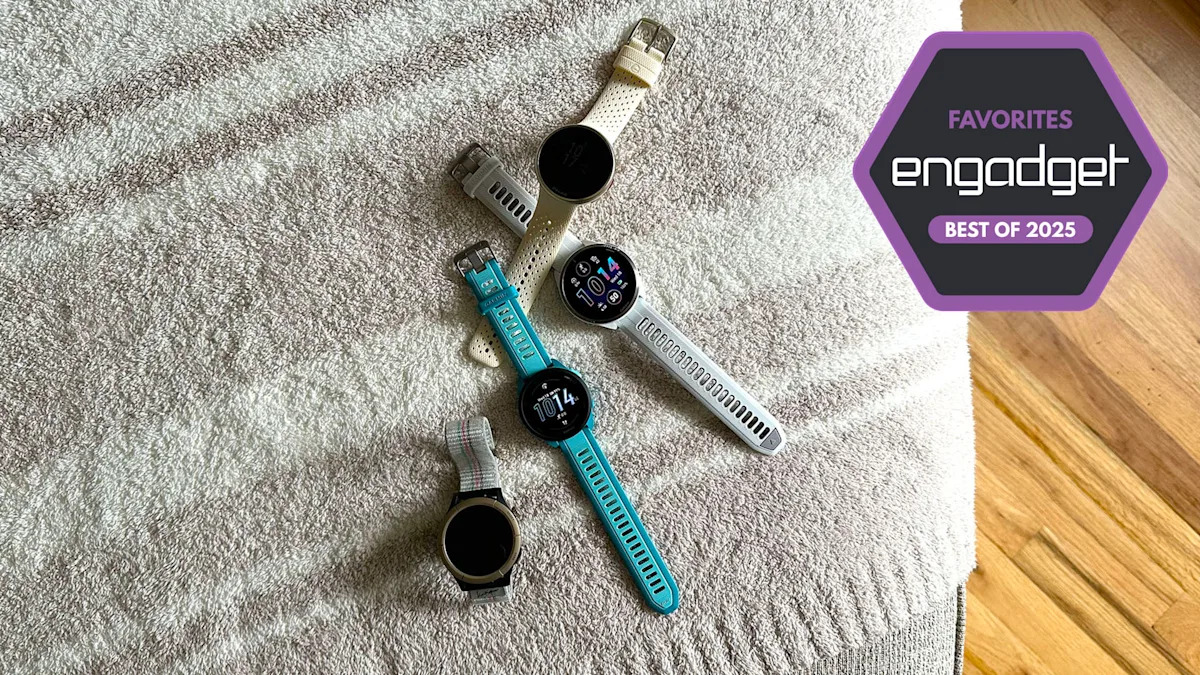
Top GPS Running Watches for 2025
Regardless of whether you casually run or are deeply involved in trail running, choosing an appropriate GPS watch can significantly enhance your experience. Quality GPS running watches do more than just note your speed—they also deliver real-time data and sophisticated training utilities to help achieve your objectives. Of course, they come with precise GPS distance tracking. Some versions have advanced features like offline maps, sleep analysis for recovery, and smart functions such as notifications and contactless payments.
For individuals who require robust durability and extended battery life, high-end sports watches—such as some of the premium Garmin models—are engineered to survive extreme workouts, adverse weather, and extensive runs. Whether preparing for a marathon or seeking a multisport device to match your active lifestyle, these watches are tailored to support your needs.
With numerous options ranging from simple entry-level models to advanced ones filled with detailed running analytics, picking the perfect GPS watch can be daunting. To assist you, we have compiled a list of our top suggestions for the most suitable GPS watches tailored to meet your training demands.
Exemplary GPS Running Watch
Garmin Forerunner 165
Among the tested watches, the Forerunner 165 from Garmin stood out prominently for its appealing usability. Featuring a lightweight design, sharp AMOLED screen, and intuitive buttons, it offers reliable GPS tracking and comprehensive indexing of workouts alongside day-to-day activity.
Initiating a run is remarkably straightforward, with the top-right button specifically labeled 'run,' directing you to the activity selection menu. While outdoor running is the primary focus, the watch supports more than 25 activity profiles including treadmill, walking, and swimming. GPS connection typically takes around 15-20 seconds, though runs can be started immediately with the technology catching up subsequently.
Throughout an exercise session, the vivid AMOLED display easily shows vital metrics such as distance, speed, and heart rate. Default auditory cues notify the user upon completing laps, with further customization possible through the Garmin Connect app for more personalized feedback.
Garmin’s adaptive training modules are supportive for race preparations, such as for 5Ks or 10Ks, with data-driven advice and daily workout suggestions. Although earlier versions of the app faced criticism for user-friendliness, significant updates have made it comprehensive yet navigable, allowing for deep engagement with fitness data. The 165’s physical build is complemented by its size and minimal weight, making it comfortable for prolonged use, and the standard bands ensure an adjustable fit, contributing to more reliable heart rate readings.
Foremost GPS Running Smartwatch
Apple Watch Series 10
Contrary to being a dedicated runner's accessory, the Apple Watch primarily serves as an all-purpose smartwatch with fitness competencies. With its modern evolution, it has become an indispensable daily gadget for many, although it does not specialize as extensively in running functions as competitive devices.
The Apple Watch, particularly the Series 10, impresses with its style, featuring aluminum or titanium components that pair well with countless scenarios, ensuring durability for a range of activities. The watch also provides basic running metrics and a limited but practical suite of fitness data.
Although the Apple Fitness app provides meaningful stats, for comprehensive tracking, turning to third-party applications like Strava or RunKeeper can be more beneficial. These apps work in conjunction with the Apple Watch and sync with the Apple Health ecosystem.
Though battery performance in GPS mode reaches around seven hours, posing limitations for extensive marathon sessions, the Apple Watch Ultra 2 model offers extended duration with consistent GPS tracking, making it appropriate for longer pursuits.
Premium Choice in GPS Running Watches
Garmin Forerunner 965
For those accustomed to Garmin’s Forerunner offerings, the 965 integrates additional advanced features while maintaining the quintessential build so familiar in the 165. With an enlarged casing featuring a titanium plate, it introduces added workout settings and measurements such as oxygen level acclimation and expanded training diagnostics.
This device, with dual band GPS, excels in securing connections under treed or urban canopies, and offers superior battery longevity: up to 23 days for standard operations and substantial endurance in GPS mode. Developers aiming for specific training outcomes can utilize Garmin’s comprehensive spec comparison tool to ensure equipment adequacy.
Ideal Fitness Tracker with GPS
Fitbit Charge 6
As an alternative to traditional designs, the Fitbit Charge 6 stands out. Merging style with functionality, it offers a less intrusive footprint yet delivers core and supplemental metrics across various exercise regimens. While some insights require Fitbit’s premium tier, its competitive price point ensures value, albeit with some feature trade-offs.
Evaluated GPS Running Watches
Polar Pacer Pro
The Polar Pacer Pro presented a precise running trace similar to top contenders but was overshadowed by its hefty price tag and less user-friendly app performance, lagging significantly behind Garmin’s intuitive design.
Amazfit Cheetah Pro
Although accurate in mapping runs, the Amazfit Cheetah Pro was trailed by issues with the touchscreen's sluggish responsiveness, impairing user interaction and causing periodic delays in information access.
Key Considerations for Selecting a GPS Running Watch
GPS Precision and Response
Core to any GPS running watch is the ability to swiftly deliver precise positioning data. While alluring extra features may distract, maintaining robust foundational GPS capabilities is crucial. Thus, the time taken for GPS to accurately pinpoint location in pre-run setups and its steadiness are essential considerations.
Workout Modes & Data Tracking
A glance at product specifications won’t fully reveal a device’s navigational accuracy. Investigating supported fitness profiles is advisable. Whether your focus is solely running or includes diverse exercises, confirm that the tracker offers expansive modes to suit your activities.
Today’s multifaceted fitness gadgets offer broad tracking, linking workout sophistication to cost. The higher the price, the more detailed the monitoring.
Meticulous data evaluation should follow, with leading devices scrutinizing basic parameters and advanced ones providing rich insights into speed, rhythm, stride dynamics, exertion balance, and more.
Physical Build and Mass
When deciding on a GPS watch, evaluate its case size and weight to ensure it suits your wrist and day-to-day lifestyle. Fit and comfort are key, and while size is adaptable, weight may vary based on design. Devices built for endurance particularly benefit those facing challenging environments.
Power Endurance
GPS running watches encompass two power modes: GPS and smartwatch. Prioritize the former due to reliance during active monitoring. Extensive life in smart mode is typically inherent, ensuring several days of operation. Yet, dedicated GPS use shortens duration considerably, necessitating at least a day’s worth of reliable operation for uninterrupted tracking in the field.
Leave a Reply