


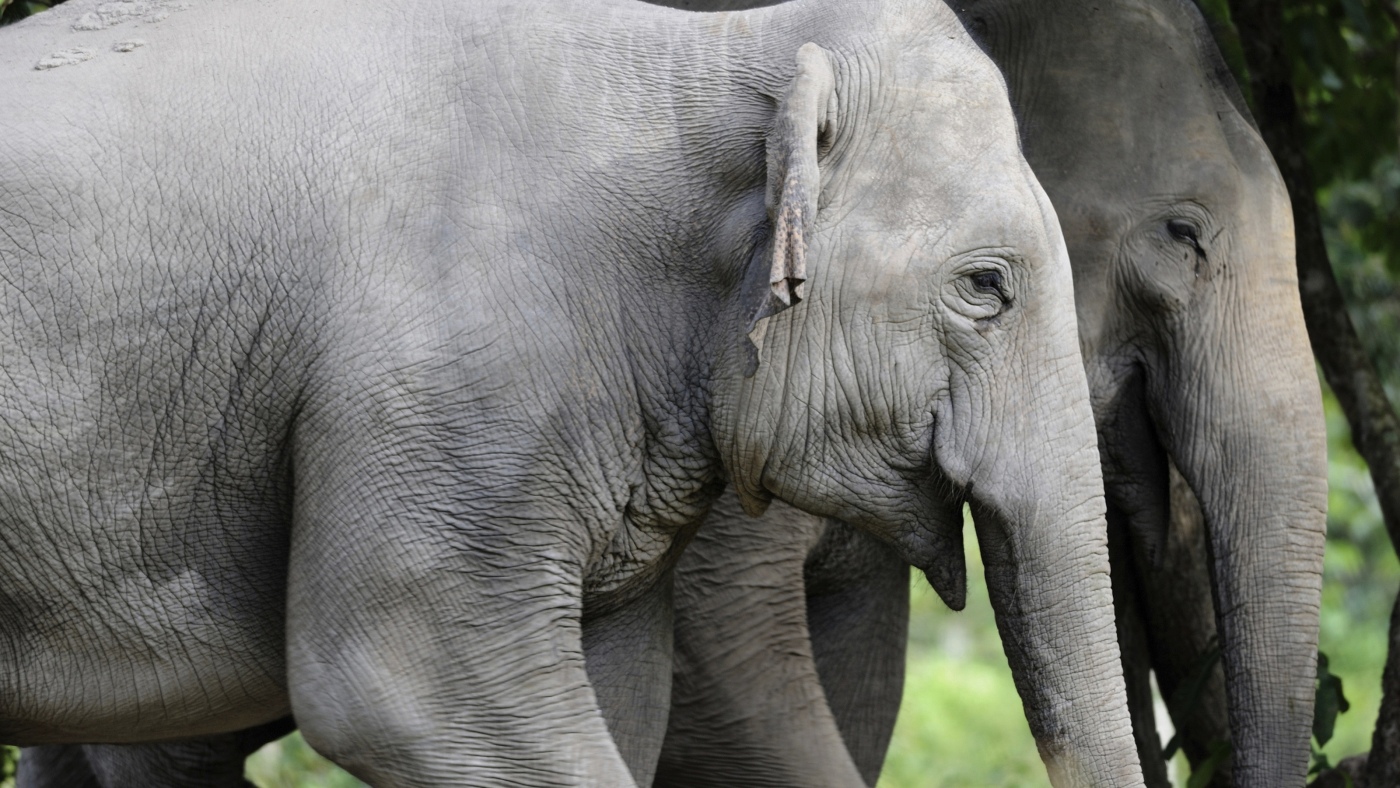
Cambodia's Asian Elephant Population Surpasses Expectations
A recent genetic analysis has unveiled that the population of Asian elephants in the northern regions of Cambodia is larger and healthier than experts previously believed. This discovery brings optimism for the recovery of this endangered species.
The Fauna & Flora conservation organization undertook the study by gathering and examining DNA from elephant droppings in Cambodia's northern plains. Through this genetic data, they identified individual elephants, estimated their numbers, and assessed the genetic diversity crucial for the species' survival over time.
Their findings indicated that 51 elephants reside in the Prey Lang, Preah Roka, and Chhaeb Wildlife Sanctuaries. Importantly, these areas exhibited significant genetic diversity compared to other regions in Cambodia, suggesting a greater potential for the elephants' long-term survival.
The report highlights that the existence of adequate habitats presents an opportunity for population growth, provided these environments are preserved.
Currently, estimates suggest that between 400 and 600 Asian elephants still roam the wilds of Cambodia. The study underscores the potential for the northern regions to serve as strongholds for these elephants, aligning with the country's conservation objectives.
However, habitat degradation remains a critical issue, especially as it often results in habitat fragmentation. The report serves as a valuable foundation for future conservation strategies and land management plans.
This research, made possible with funding from USAID and Britain's People's Postcode Lottery, was carried out in collaboration with the Cambodian Environment Ministry. The Royal University of Phnom Penh handled genetic analyses with guidance from the Royal Zoological Society of Scotland.
Conducted during the dry season of 2020-21, researchers believe that the elephant numbers have not significantly changed due to their slow reproduction rates.
The team aims to extend this research to other parts of Cambodia and neighboring countries like Vietnam, where elephant populations are similarly dispersed.
"We were thrilled by the project's outcomes," remarked Alex Ball from the Royal Zoological Society of Scotland. "Our aim is to apply this approach more broadly, which can enhance our understanding of Asian elephant populations and aid in reversing their decline."
Leave a Reply