


Ukraine’s Azov Task Force Debuts New Drone Model Against Russian Forces
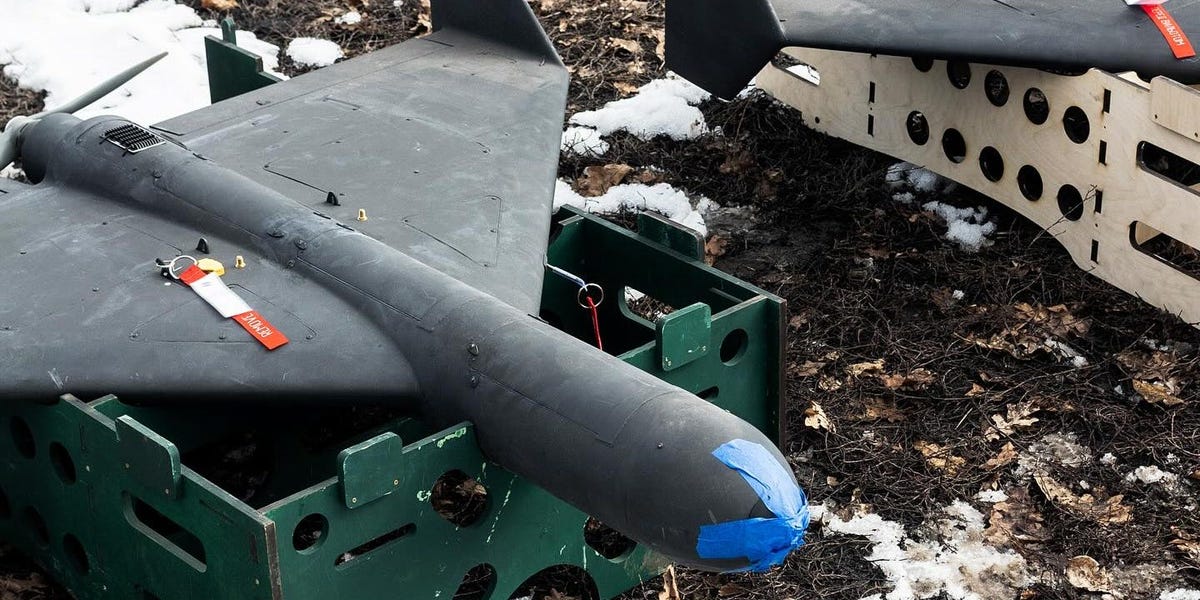
Ukraine's military has introduced a new attack drone reminiscent of a model widely utilized by Russia during the ongoing conflict. Soldiers have reported that this homemade drone, which bears similarities to the Shahed series, is simple to operate and has already begun to enhance their capabilities on the battlefield against Russian forces at the front line.
Deployment by the Azov Brigade
The Azov Brigade, formally recognized as Ukraine's 12th Special Operations Brigade, showcased this new technology, providing visual evidence through a released video featuring the drone targeting and striking a Russian vehicle. The unit has identified this new unmanned aerial system as UAS SETH, which is believed to streamline operational efficiency in engaging Russian military forces and their equipment.
Remarkably, the UAS SETH is a product of Ukrainian manufacturing expertise and has been deployed in the Toretsk sector. It was initially supplied through the efforts of the Come Back Alive foundation.
Investment in Drone Technology
Ukraine has committed substantial resources to its drone capabilities, viewing these innovations as pivotal in reducing the human toll of war by relying on technology rather than manpower. The nation's forecasted spending includes a significant allocation—over $2.6 billion—for acquiring nearly 4.5 million first-person-view drones throughout the current year.
Technological Advances and Challenges
Despite the lack of extensive information about the new drone, it bears a striking resemblance to the Iranian-developed Shahed series, primarily employed by Russia. These drones, classified as loitering munitions, carry out unidirectional attacks, typically powered by gas engines with pusher propellers. The design of Ukraine's new model suggests similarities to the Shahed-136, commonly used against vital urban centers and infrastructure in Ukraine.
Reports from United24—a platform linked to the Ukrainian government—indicate that the new drones are equipped with electric motors and may need a launch catapult. Capable of carrying loads between 6 to 11 pounds over distances extending up to 30 miles, these drones also potentially exhibit resistance to certain electronic countermeasures.
Countermeasures and Adaptations
While the Shahed drones used by Russia have a greater range and are integrated within their precision-guided arsenal, rendering them less suited for tactical engagements, Ukrainian defenses have effectively neutralized some variants like the Shahed-136 using affordable, mobile air-defense platforms such as truck-mounted armaments.
However, newer iterations such as the Shahed-238—capable of higher speeds and altitudes—introduce additional obstacles. The Ukrainian innovation boasts automated features that allow for persistent surveillance over target areas, supported by an advanced targeting system.
Technological Development and Future Directions
During a strategic conference in Kyiv with German officials last December, President Volodymyr Zelenskyy evaluated various drone prototypes. Among them was a model similar to the current system being employed by the Azov Brigade.
The drone warfare landscape has been pivotal in this conflict, prompting both sides to innovate countermeasures. These include strategies to bypass signal disruptions or the development of drones that function independently of radio frequencies, such as those using fiber-optics.
Furthermore, artificial intelligence-driven drones represent a breakthrough in modern warfare technology, necessitating constant adaptation and enhancement of capabilities to meet the evolving demands of the drone battlefield.
Leave a Reply