


Trump Revives Family Detention Policy
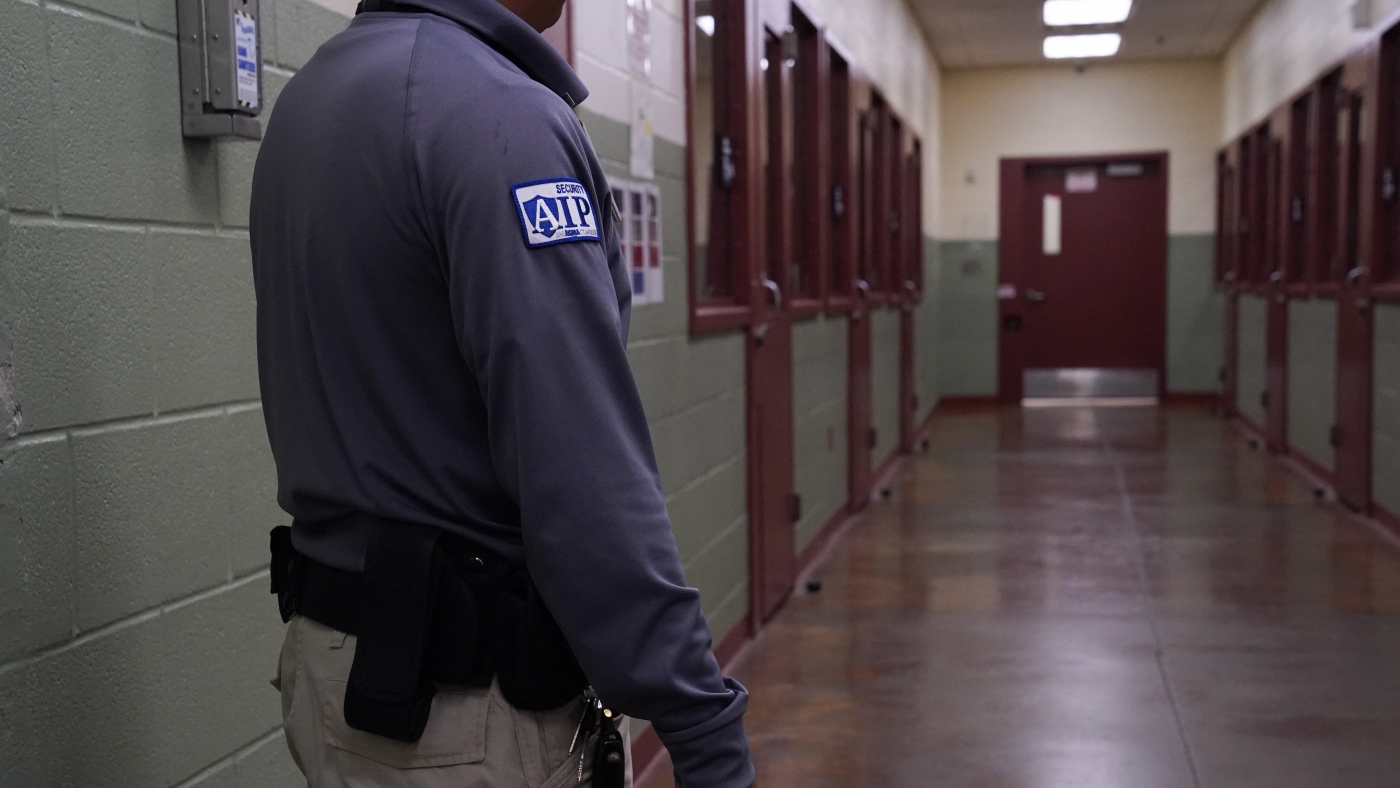
In 2024, a security guard stood on duty during a media tour at the Port Isabel Detention Center in Los Fresnos, Texas, as the Trump administration planned to reinstate the detention of families in Texas detention centers.
The policy of detaining families with children has been reintroduced by the Trump administration as part of a strategy to reduce illegal border crossings.
The Department of Homeland Security is reopening the Karnes and Dilley facilities in Texas, transforming them to accommodate whole families.
DHS indicated that families have already started arriving at the Karnes City detention center in southeastern Texas. During the Biden administration, these facilities were repurposed to hold adults only.
During Trump’s prior term, family detention was employed as a deterrent against illegal migration. The practice, also seen under the Bush and Obama administrations, was paused in the interim period.
Tricia McLaughlin, a DHS spokesperson, stated that individuals with deportation orders sanctioned by federal judges must comply with the law to avoid detention. "Illegal immigrants' best option is to leave voluntarily to potentially return and realize their American dream," she added.
Concerns from Immigration Advocates
Advocates for immigrants have raised alarms about the negative impacts of reviving family detentions, particularly the adverse effects on minors.
Setareh Ghandehari of the Detention Watch Network emphasized that detention causes stress and trauma, particularly in children. The organization campaigns for the cessation of immigrant detention altogether.
Critics have called for families to manage their immigration proceedings within communities, supported by local groups and services.
Amy Fischer from Amnesty International USA declared that housing children seeking refuge in detention centers is unjust and unacceptable.
Previously, under Trump’s administration, family separation was practiced to curb illegal immigration, a policy met with extensive backlash, including criticism from fellow Republicans.
Although reversed, this policy led to lasting impacts, with approximately 1,000 children yet to reunite with their families after separations at the border.
Expansion of Detention Facilities by Private Contractors
Dilley’s facility was reopened following an arrangement between CoreCivic, a private prison corporation, and ICE to operate facilities for up to 2,400 detainees. CoreCivic noted its previous management of the facility after the contract lapsed in August 2024, expecting a new contract to bring in $180 million annually through 2030.
CoreCivic's CEO, Damon Hininger, expressed anticipation of increasing demand from government partners, particularly federal entities, for detention capacity.
Contracts with CoreCivic and the Federal Bureau of Prisons have been utilized by the current administration to expand available space for detainees.
Since the start of Trump's second term, additional facilities have been operational in states such as New Jersey, Ohio, Nevada, Oklahoma, and Mississippi to accommodate the increased detention needs.
Leave a Reply