


Supreme Court Poised to Dismiss Major Mexican Lawsuit Against Gun Firms
At least seven justices, perhaps even the full bench of nine, appear set to dismiss Mexico's allegations against American gun manufacturers.
Overview of the Legal Battle
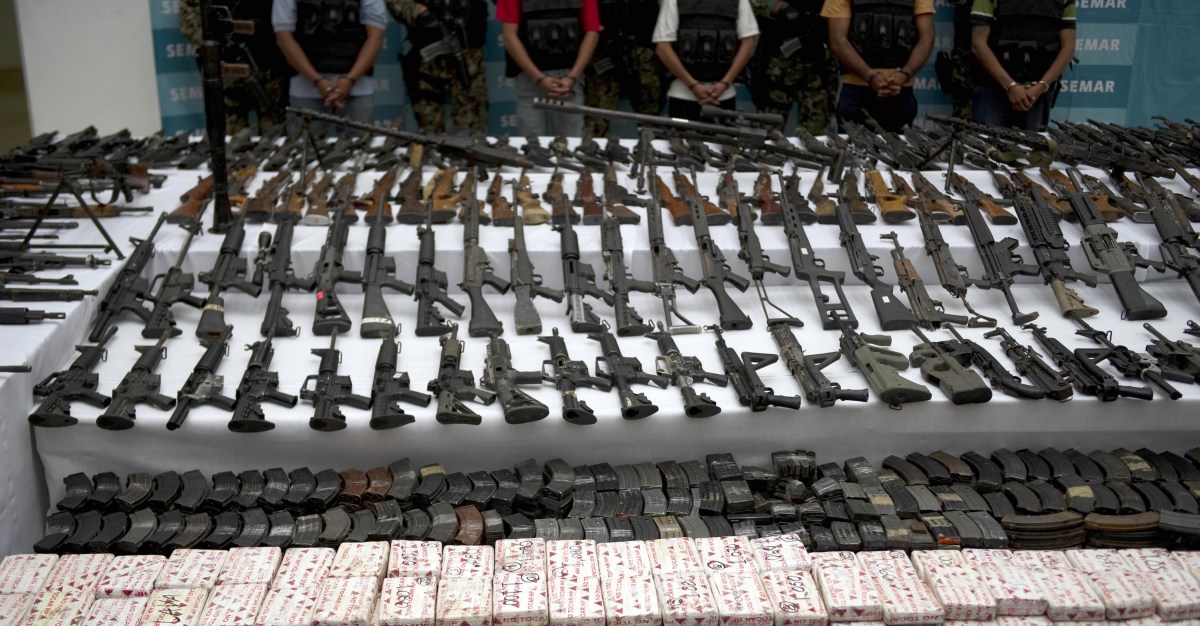
Mexico has initiated legal action against several leading US gun makers and a distributor, accusing them of knowingly funneling firearms into the hands of criminals. As per a federal appellate court, these defendants account for over two-thirds of the firearms trafficked from the US into Mexico, amounting to hundreds of thousands annually.
Even though a federal appeals court has thus far allowed the suit to proceed, Tuesday's Supreme Court proceedings indicated a steep uphill battle for Mexico. The bench, including Republican justices and Justice Ketanji Brown Jackson appointed by President Biden, appeared very skeptical of Mexico's case.
Legal Shield of the Gun Industry
A crucial obstacle for Mexico is the 2005 Protection of Lawful Commerce in Arms Act (PLCAA), which provides substantial legal protections to firearm companies. This legislation largely shields gun manufacturers from liability for crimes committed with their products, provided these items operate according to design and intent.
The path for suing under PLCAA is narrow, requiring proof that gun firms deliberately breached state or federal laws, and that such breaches directly caused the harm in question. Mexico asserts that these companies abetted crime by knowingly supplying traffickers that cater to cartels.
Obstacles in the Legal Theory
Justice Clarence Thomas began questioning Mexico's identification of the specific laws allegedly violated, while Justice Neil Gorsuch raised the requirement for intent. Despite pointing to laws against unlicensed gun sales, the burden of proof remains high for Mexico.
The Court's precedents on aiding and abetting lack clarity, particularly when compared to a recent unanimous decision that exempted social media firms from liability for terrorism-related content, arguing against vague attributions of liability for the misuse of services.
Justice Brett Kavanaugh raised concerns about expansive liability theories, arguing they could result in an impractical scope of responsibility for manufacturers if embraced by the judiciary.
Debate on Legal Principles
Justice Jackson contended that while statutory violations might proceed, common law bases for such lawsuits are impeded by legislative intent to safeguard the authority of statutory law. The aiding and abetting theory finds its roots in common law, which complicates matters.
Justice Alito introduced a tangential argument, mentioning perspectives on US-Mexico relations, which does not directly tackle the legal questions under consideration.
Rejection of a Disruptive Argument
The justices rejected an argument made by the gun companies that could have posed broader legal disruptions had it been accepted. They debated the scope of 'proximate cause,' an essential concept defining legal liability for harms caused.
A redefinition proposed by the gun firms sought to limit liability to initial acts within a causal chain, which could exculpate manufacturers from responsibility due to successive independent actions. This concept was not warmly received by the Court.
With several key justices expressing skepticism, there remains a faint hope for those who wish to see these manufacturers face legal repercussions. Nonetheless, the prevailing sentiment suggests the gun makers are on track to win this battle.
Leave a Reply