


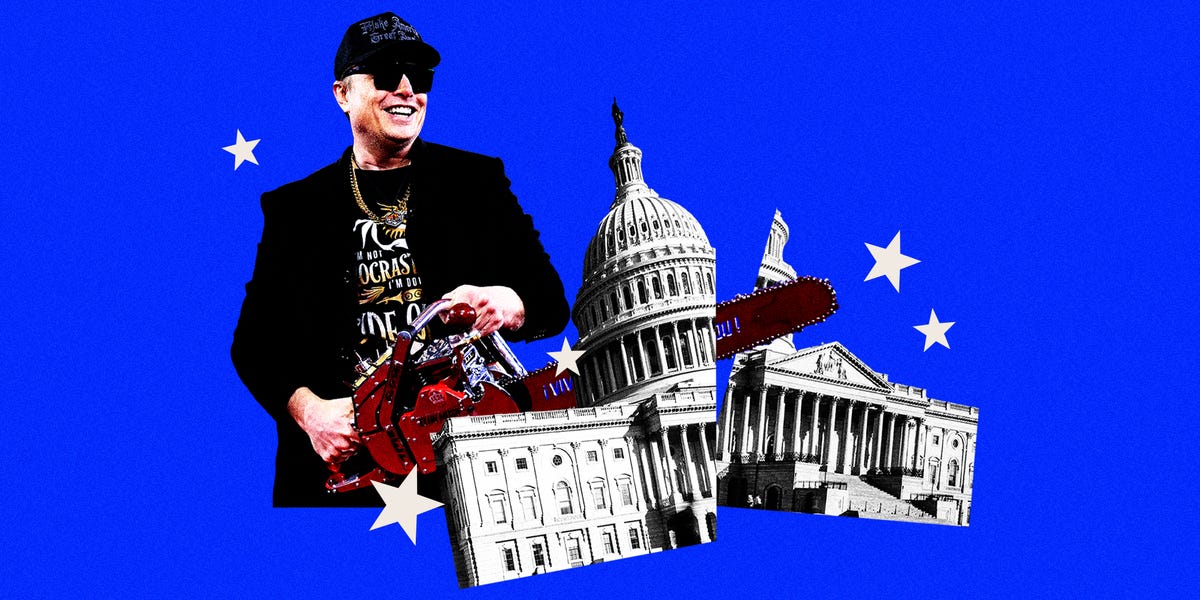
DOGE Under Scrutiny: A Management Debacle?
The re-election of Donald Trump reignited Republican ambitions to dismantle bureaucracy, a goal they had pursued in vain since Reagan's era. While previous efforts faltered, Trump's appointment of Elon Musk as the head of the Department of Government Efficiency (DOGE) was seen by many as the dawn of a new era. In November, I consulted with management and policy gurus: Could Musk’s drastic measures that have reshaped his ventures like Tesla and X – known for his lean-and-mean tactics – translate into effective systemic cuts in Washington’s inefficiencies?
Experts foresaw that Musk might encounter more constraints in the federal environment than in his private enterprise dominion. The federal system operates on laws and checks, unlike the autocratic leeway he enjoyed at Tesla or X. Despite this, optimism lingered due to Musk's audacious overhaul at Twitter, which survived against odds post-staff cuts. Michael Morris from Columbia Business School suggested that transformative destruction sometimes is essential for large outfit reforms, though overall, experts maintained a reserved optimism.
Fast forward to the present, and we are six weeks into DOGE's active phase, facing a barrage of news. Through DOGE, Musk has challenged legal boundaries, notably dismantling USAID, a change many legal analysts argue breaches constitutional grounds. Swift job cuts followed, with thousands axed, albeit some rehired upon recognizing their critical roles. Musk-aligned engineers have now integrated into governmental IT sectors.
Once more, I sought the views of those experts for their take on current developments. Their initial hope had now turned to deep apprehension. DOGE's approach was branded as 'awkward,' 'misguided,' and indicative of 'reckless politics.'
Concerns and Criticisms About Musk's Leadership
Linda Bilmes, a Harvard public policy scholar, expressed disbelief at the 'audacity' of the operations – even for a figure as brazen as Musk. She perceived a motive to destabilize things without concrete foresight of improvement. Bilmes reflected on the missed chances for impactful counsel from knowledgeable bodies like the Government Accountability Office or seasoned federal employees. A recent GAO blueprint to boost efficiency was virtually ignored, as Trump dismissed numerous inspectors general while Musk depicted federal employees more as adversaries than allies. DOGE’s communication with federal workers involved non-equivocal pressure: weekly success audits under the threat of job loss.
During a recent action-focused conference, Musk famously advocated wielding a ‘chainsaw’ approach to bureaucracy. According to Bilmes, however, had Musk been sincere in his understanding quest, he would have opted for a metaphor of attentive listening instead.
Some liken Musk’s aggressive strategy to the infamous ‘Chainsaw’ Al Dunlap’s playbook from the 1990s, whose stint at Scott Paper and then Sunbeam involved brutal job cuts, fostering temporarily inflated stock values. Yet, Sunbeam’s eventual financial implosion after shady practices left a legacy of destruction, where quick fixes became long-term failures, reflecting a swap of traumas, noted Morris.
Strategic Gamble or Irresponsible Overreach?
Musk’s comparisons to Dunlap arise as much of his approach seems driven towards more than eliminating inefficiencies like superfluous office spaces. Instead, it tests the limits of government worker endurance while bolstering executive branch authority. Rabblerousing actions such as ceasing luxurious Pentagon meals or eradicating the penny were seen as side touches.
Morris holds some hope, though merged with alarm, highlighting the danger of uninformed personnel potentially accessing sensitive information, risking privacy breaches and espionage. Yet, Musk’s bravado might be necessary to untangle the dormant excesses entrenched by political conduct aiming for re-election rather than reform.
Unique in modern administration, Musk’s role doesn’t require electoral accountability. His intentions are bluntly forecast: anticipated economic sacrifices for governmental downsizing, and Trump remains an enabler, tasking agencies to undergo meticulous financial recording under DOGE.
Backlash and Uncertain Futures
Repercussions are now palpable, as actions such as an injunction blocking punitive terminations surface. Criticism emerges not just from usual political opponents but insiders of Trump’s own camp, with high-profile figures lambasting Musk’s overreach and perceived disregard for American principles.
DOGE stirred chaos with rushed worker performance validations, spawning distress among federal employees. Experts caution that such management styles can demoralize the workforce at a time when their focus is on critical public safety roles rather than productivity matrices.
Joseph Fuller from Harvard hints at DOGE's broad intention: harvesting data to eventually automate routine roles, aiming for cost efficiency and deficit reduction. Yet, episodes marred by campaigner-like clumsiness could undermine this vision, possibly inciting future remorse.
The tactics seen at DOGE mirror those employed in corporate crises, as noted by Fuller, describing them as knee-jerk reaction mechanisms more suited for economic emergencies, rather than government operations dealing with uninterrupted service continuity. Unlike a business, government can't risk functionality for the sake of economic turnaround or sale.
The federal landscape isn’t akin to companies like Sunbeam or platforms like Twitter. Concerns stretch to the existential, such as potential collapses of pivotal institutions like USAID, which could result in human casualties. Evaluating government efficacy requires different metrics than those used in corporate appraisals.
Conclusion: Beyond Corporate Reckoning
The federal government’s mission transcends profit motives or startup models, largely exempt from the usual corporate cycle of failure and acquisition that outlets like Tesla or SpaceX navigated. The stakes of government actions are high-reaching spheres like public welfare and national security, positions too critical for experimental gambits or analogous trial spaces tested in private ventures.
Leave a Reply