


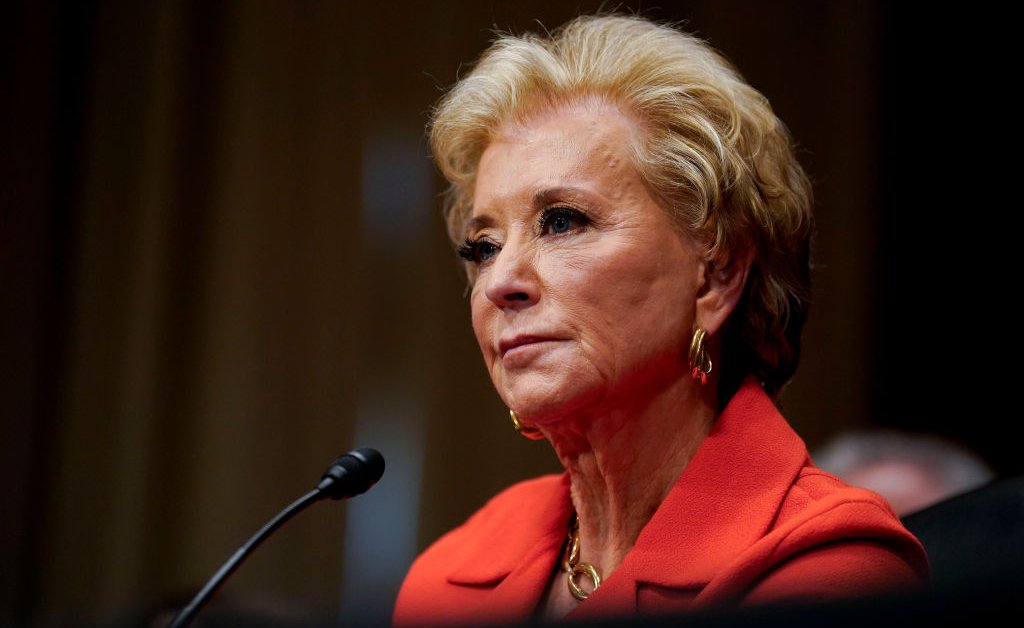
Senate Appoints Linda McMahon as Head of Education Department
WASHINGTON — On Monday, the Senate approved Linda McMahon, once at the helm of WWE, to lead the Department of Education. This department has been a frequent target of criticism from President Donald Trump, who has expressed intentions to dismantle it.
McMahon's role involves both winding down the department and progressing Trump's educational plans. Trump has already dismissed programs supporting diversity and accommodations for transgender students, along with advocating for broader school choice programs.
Despite Trump's criticisms, he has tasked McMahon with essentially working towards eliminating her own role. The final vote confirmed McMahon with a 51-45 margin.
Background and Reactions to McMahon’s Appointment
At 76, McMahon, a billionaire and former executive of the WWE, is a surprising choice for the position. Her experience with education is largely limited to her time on Connecticut’s state board of education and her long-term involvement with Sacred Heart University.
Her proponents argue that McMahon is an adept executive capable of reforming a department viewed as underperforming by Republicans. Detractors, however, voice concerns over her lack of qualifications and potential detrimental cuts in educational funding.
Before her confirmation, Senate Minority Leader Chuck Schumer advocated against the appointment, emphasizing the public's attachment to the Department of Education and the risk of substantial funding losses if Trump’s plans proceed.
McMahon's Vision and Congressional Authority
At her hearing, McMahon distanced herself from Trump’s sharper rhetoric, advocating instead for enhancing the efficiency of the department rather than defunding it. She admitted that Congress alone can decide to close the department, and she promised to maintain funding for low-income educational programs such as Title I, Pell grants, and the Public Service Loan Forgiveness initiative.
The possibility of transferring certain department operations, like enforcing disability rights, to other agencies, such as Health and Human Services, was also suggested by McMahon.
Strategic Movements and Legislative Challenges
Even before McMahon’s confirmation, there were deliberations within the White House about issuing an executive order to minimize the department’s size while seeking Congressional approval to shut it down entirely. Some of McMahon’s supporters were against taking decisive action until her confirmation, avoiding any backlash.
Established in 1979, the Education Department is tasked with distributing funds to schools and managing the extensive federal student loan system. President Trump has often stated that this department has been influenced by liberal ideologies.
The administration has instructed schools to eradicate diversity programs or they risk losing federal support, setting a deadline shortly after McMahon's confirmation.
During his campaign, Trump emphasized stripping the federal government of its educational influence, thereby increasing autonomy for states, even though federal funds contribute significantly to public schooling.
Current Administrative Policies and Impact
The Trump administration is revamping the department’s operations, cutting numerous contracts amidst claims of wastefulness, and reducing the functions of institutions such as the Institute of Education Sciences.
McMahon has assured that spending will align with Congressional directives and minimized the report of cuts as an audit-based measure.
Previously leading the Small Business Administration under Trump, McMahon, a steadfast ally of the president, has also ventured into politics, with two unsuccessful Senate candidacies in her past.
Leave a Reply