


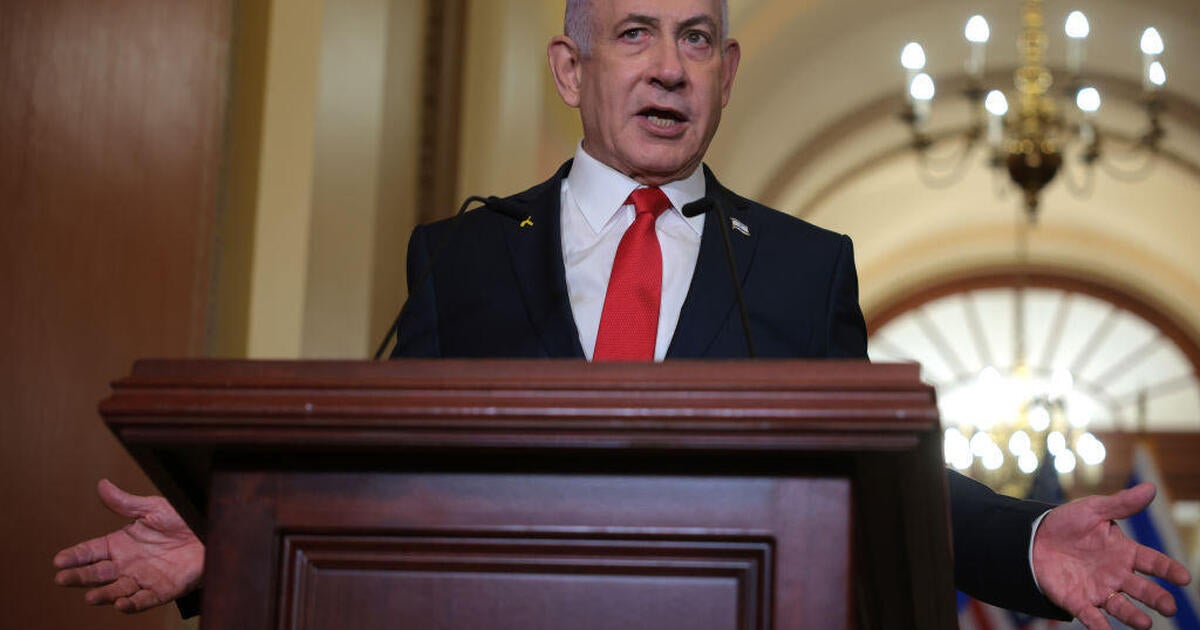
Israel Endorses U.S. Ceasefire Plan: Netanyahu Confirms
/ CBS/AP
Early Sunday, Israel's government officially backed a proposal to extend the ceasefire in Gaza to cover the Ramadan and Passover periods. Despite this, Hamas has focused on negotiating the second stage of the ceasefire instead.
Prime Minister Benjamin Netanyahu's announcement came just moments after the initial ceasefire phase concluded. Currently, discussions about starting the next phase are underway, which are aimed at concluding the conflict and ensuring the safe return of all hostages still being held in Gaza.
The new details from Israel indicated an American initiative proposing a ceasefire that would last until Passover on April 20. During the plan's initial phase, it was anticipated that half of the hostages, both alive and deceased, would be released. The remaining hostages would be freed contingent upon a deal for a lasting ceasefire.
This proposal arose after U.S. envoy Steve Witkoff assessed that bridging the differences between the involved parties seemed unattainable at the moment and that further dialogue time was essential to pursue a permanent ceasefire.
Although Hamas hasn't officially commented immediately, it previously dismissed Israel's suggestion to prolong the ceasefire's first phase by 42 days, hence doubling its duration. This rejection, allegedly due to breaching the truce terms, was shared confidentially by a Hamas member involved in private negotiations.
Israel, alongside mediators from Qatar, Egypt, and the United States, has been delving into discussions in Cairo about progressing to the ceasefire's second phase. Despite Hamas' absence, their stance was conveyed through Egyptian and Qatari conciliation efforts. Basem Naim from Hamas' political bureau signaled a lack of development before Israel's negotiators returned.
According to the existing ceasefire arrangement, combat actions are to be halted throughout phase two negotiations.
Israel's updated statement highlights that it retains the option to resume military activities should it determine the negotiations to be fruitless. It also notes Hamas' refusal of their suggestion to lengthen the first ceasefire phase.
The statement indicated willingness to negotiate should Hamas alter its stance and accept the Witkoff plan.
Ahead of Israel's statement, an anonymous Egyptian official participating in the talks shared insights, stating that Hamas, Qatar, and Egypt preferred maintaining the current ceasefire arrangement. They opposed Israel's plan to extend the truce by a month with hostages released every Saturday without progressing to phase two talks.
The Egyptian contact mentioned that the U.S. aimed at initiating phase two talks while advocating for hostage exchanges during discussions. Yet, Hamas has prioritized adhering wholly to the existing ceasefire terms.
The first negotiation phase witnessed a halt in 15 months of violence in Gaza, resulting in the release of 33 hostages, eight of whom were deceased, contrasted with the freeing of about 2,000 Palestinian detainees. Many individuals returned to their homes in northern Gaza owing to increased humanitarian assistance and Israel's military rerouting to buffer areas.
The conflict originated with Hamas's October 7, 2023, militant strike, causing approximately 1,200 Israeli deaths, predominantly of civilians, and resulting in around 250 hostages. Israel's subsequent military response resulted in over 48,000 Palestinian fatalities, which Gaza's health authorities report without distinguishing between civilian and militant deaths; a significant number of fatalities were reportedly among women and children.
Currently, Israel estimates that 32 of the 59 hostages still within Gaza are deceased.
Both parties agreed to a three-stage ceasefire agreement in January, with phase two discussions planned to commence in early February. Recently, Israeli citizens gathered in demonstrations urging government adherence to the agreement.
Hamas has reiterated its dedication to fulfilling every facet of the agreement and called upon international agencies to push Israel towards swiftly initiating the second phase.
Several hurdles challenge future ceasefire progress, including Israel stating that Hamas will not govern Gaza following the conflict. Netanyahu dismissed the Palestinian Authority's involvement in post-war Gaza governance, particularly the Fatah-led faction.
Hamas head Mohamed Darwish expressed readiness to cede power to a unified Palestinian leadership or an Egyptian-suggested technocratic body unassociated with Hamas or Fatah. His remarks were part of a written message directed at the upcoming Arab leaders' meeting in Cairo. Hamas opposes suggestions from Israel about exiling its leadership.
U.S. envoy Witkoff, commenting on a televised interview last weekend, emphasized that rescuing the last known American hostage in Gaza is a top mission. The hostage was abducted during the October 7 attacks while active in the Israeli military.
"I know his parents," Witkoff revealed in a conversation with CBS News. "We maintain communication. It's a significant objective for President Trump to repatriate all Americans, and we are optimistic about freeing Edan."
Leave a Reply