


Breaking Down the Costs of Starting a Pickleball eCommerce Business
My partner and I decided to allocate a budget of $10,000 towards establishing a pickleball paddle business. As it turns out, our financial outlay has far exceeded our original estimates, consuming 60% of our funds.
Underestimating Startup Expenses
I'd always been told to double any initial cost estimations when commencing a business. This advice felt overly cautious until I ventured into business ownership. In the spring of 2023, buoyed by interviews with prolific Amazon entrepreneurs, my roommate and I—a pair of ambitious millennials from LA—decided to test our eCommerce strengths.
Our first major decision was financial: how much were we each prepared to risk? We concluded that $5,000 from each of us was acceptable, knowing there might be no return on our investment. Despite being expensive to produce, we selected pickleball paddles due to their potential profitability, drawn from a conversation with an entrepreneur who had turned $2,000 into a monthly revenue of $40,000 by selling hosiery.
Setting Up Financial Operations
To manage our business finances separately, we investigated several banking services, ultimately choosing Mercury for its startup-friendly, fee-less offerings, including complimentary domestic and international wire transfers—facilitating large transactions to our suppliers.
By early 2024 and after months of brainstorming, we finally activated our account in April. Fast forward to November, and our balance has dwindled from $10,000 to below $4,000, even before making a substantial inventory purchase.
Allocating the Initial $6,000
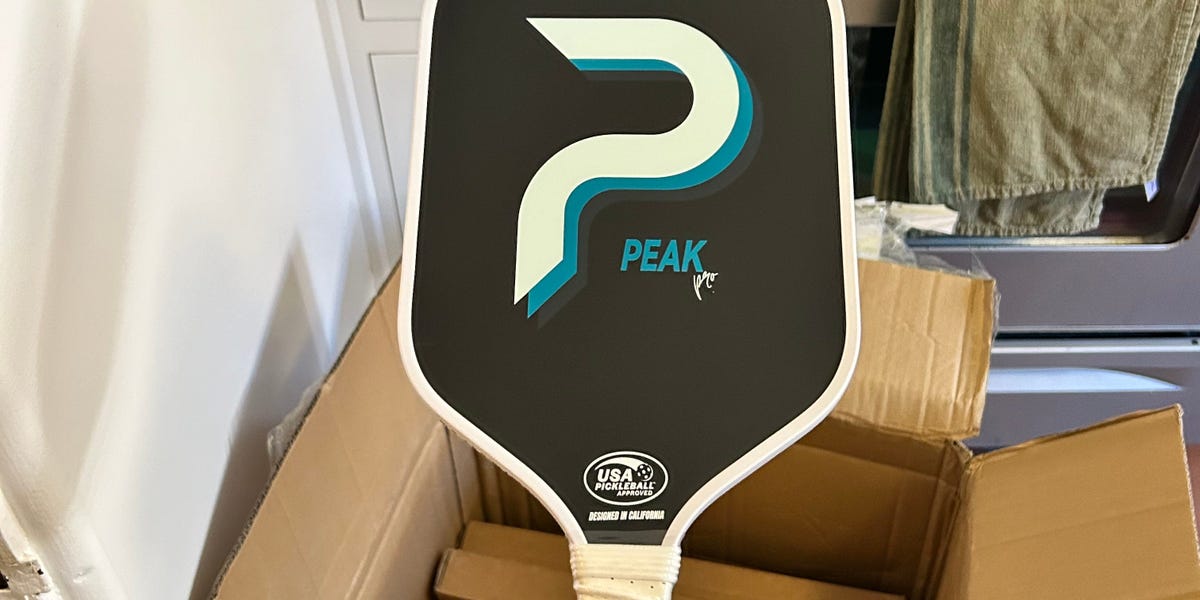
First on our expenditures was the USA Pickleball (USAP) association. Initially, $495 went toward registering a manufacturer account, enabling us to have our paddle tested. Approval would permit us to label our product as USAP-approved, a crucial factor for participating in sanctioned tournaments, given our target of producing high-quality items for more serious players.
Following the submission of our paddle design, we faced an unexpected expense of $2,095 for testing fees. Additionally, we had to dispatch seven paddles to various testing venues, adding $49 in shipping costs. Despite being an unanticipated charge, we hope these certifications will bolster our long-term credibility.
Prototype Development
Partnering with 330 Trading, a firm that aligns eCommerce companies with manufacturers, we spent around $1,475 on prototypes and a batch of 20 paddles, seven of which were earmarked for USAP testing. Our forthcoming major order, contingent on USAP approval, will comprise 500 units and cost around $10,000.
Crafting the Brand Image
For packaging, we purchased 500 tailor-made bubble mailers from Sticker Mule, incurring $1,240, with half stashed within my apartment. Elsewhere on branding, we engaged a designer who developed our logo for $250—a worthy investment aiding our brand identity strategy.
Meanwhile, subscribing to Canva Pro for $15 monthly provides essential graphic design tools, despite a more restricted free version being available.
Utilizing Freelance Talent
On Fiverr, we contracted freelancers for packaging design ($64) and website development ($158). Additionally, trademark registration with the US Patent and Trademark Office set us back another $250, and legal structuring costs, including filing an LLC, totaled $75. We also maintain a Shopify Basic account at $39 monthly.
Monitoring Finances
Our Mercury account reflects significant outlays already. Stay tuned as we navigate the challenge of recouping our investments and achieving profitability.
Leave a Reply