


Trump's Executive Order Removes Police Misconduct Database, State Sharing Still Possible
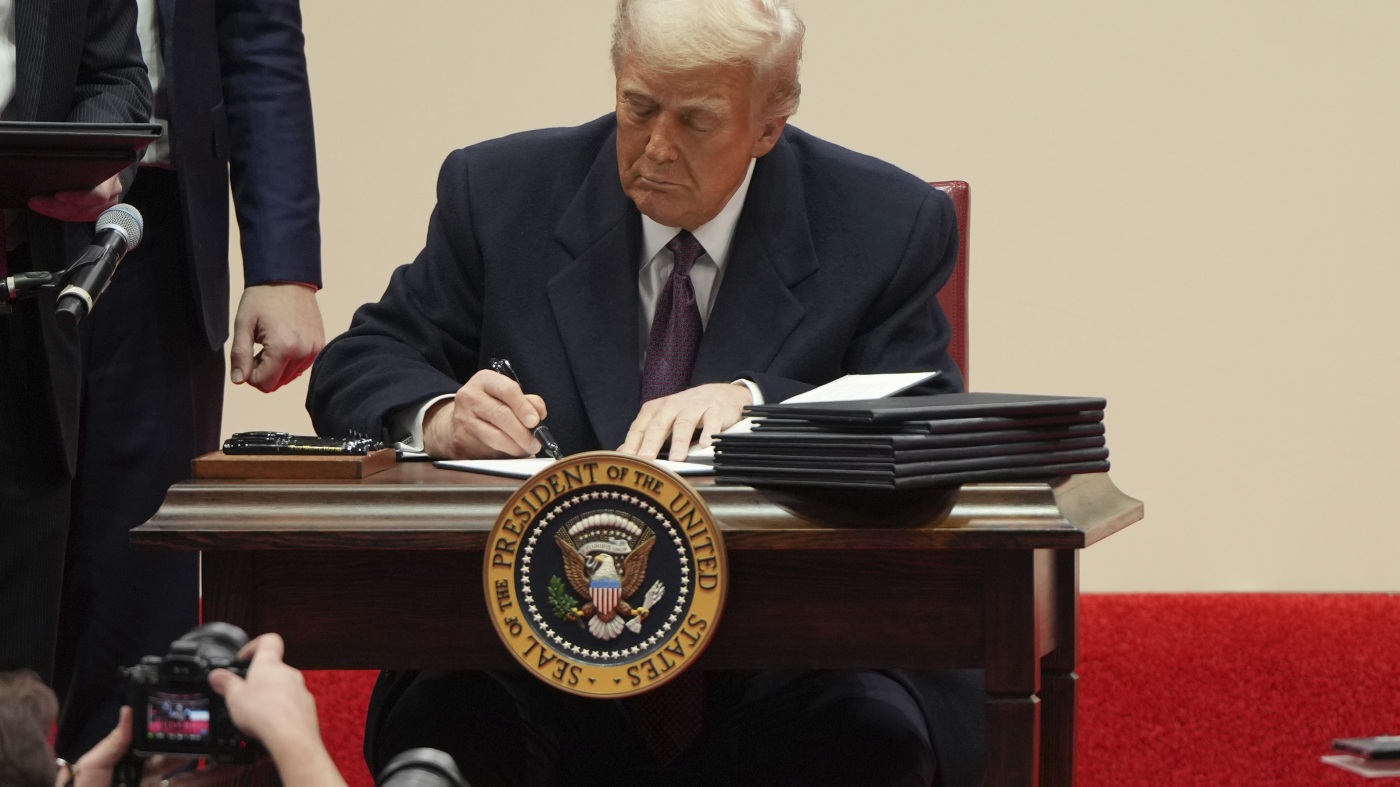
On January 20, 2025, President Donald Trump participated in a signing ceremony during his inauguration festivities in Washington, D.C., marking his return to office.
A notable measure—a federal database intended for conducting background checks on law enforcement officers—has been discontinued as a result of one of President Trump's executive orders. This decision was part of his immediate actions upon reassuming the presidency.
Closure of the NLEAD System
The National Law Enforcement Accountability Database (NLEAD), which commenced operations in 2023, served as a central archive for the professional histories of federal law enforcement officials. It primarily facilitated the verification of records by potential employers, encompassing other federal entities and local policing bodies. As of now, this system is no longer functional.
The suspension of NLEAD is among several policy reversals executed by Trump in a slew of inaugural executive orders. These orders include the annulment of numerous Biden-era policies, implemented notably for their emphasis on police accountability following high-profile incidents of misconduct.
Uncertainty Surrounding Reasons for NLEAD Shutdown
Despite requests for clarification, neither the Trump administration nor the Department of Justice has provided a rationale for the shutdown of the NLEAD.
The termination of this system raises concerns particularly when law enforcement personnel transition between federal entities. The Biden administration's objective was for local police agencies to also access these records, an option now foreclosed.
Alternative State-Level Systems
Although the federal NLEAD is no more, state and local departments still typically recruit from within their own or neighboring municipal agencies, rather than from the federal pool. The National Decertification Index (NDI) remains a vital tool for these departments, enabling them to verify officers' credentials across state lines.
Public interest in the NDI has surged recently due to heightened awareness of the issue of 'wandering officers'—those with misconduct records moving undetected between jobs. Brian Grisham, associated with the NDI, highlights a significant uptick in the system’s usage from 23% to 71% of policing departments over the past five years.
Sustained Participation and Funding
Grisham further notes that the NDI, managed by a coalition of state police regulatory groups, operates independently of the federal government. Although it has received federal funding, this funding is not essential for its operation, ensuring its continued growth and stability.
Legacy of Biden's Executive Order and Future Prospects
President Biden’s original executive directive intended to enhance policing transparency at the federal level partly filled the void left by congressional inaction on the George Floyd Justice in Policing Act. Although repealed, many elements of Biden's order, such as policies for body-worn cameras, have already been adopted and are likely to persist in practice.
Federal agencies like the U.S. Marshals Service and Immigration and Customs Enforcement indicate ongoing adherence to these policies, suggesting that some reforms achieved under Biden’s mandate will endure regardless of Trump’s revocation.
Leave a Reply