


U.S. Applauds Kurdish Leader's Appeal for PKK Disarmament
In a groundbreaking appeal, Abdullah Ocalan, the incarcerated leader of the Kurdish separatist group, called for an end to armed conflict by urging the Kurdistan Workers' Party (PKK) to disarm. This conflict, waged for decades against the Turkish government, has led to the deaths of tens of thousands and strained U.S. relations with Turkey, a key NATO ally.
Recognized as a terrorist organization by the United States, EU, NATO, and numerous countries, the PKK could profoundly influence the larger Middle Eastern region, especially affecting millions of Kurds in Syria, Iraq, and Iran, if they heed Ocalan's plea.
Ocalan's letter, read by Kurdish politicians in Istanbul, asserted, "I am issuing a historic call for the cessation of arms, taking full responsibility for this appeal. All factions must disarm, leading to the disbandment of the PKK."
Historical Context and Vision for Peace
Founded in 1978 with a vision of independent statehood for Turkey’s Kurdish minority, the PKK later shifted its aim towards autonomy. Over the years, violent conflicts between the PKK and Turkish military have claimed around 40,000 lives and displaced hundreds of thousands.
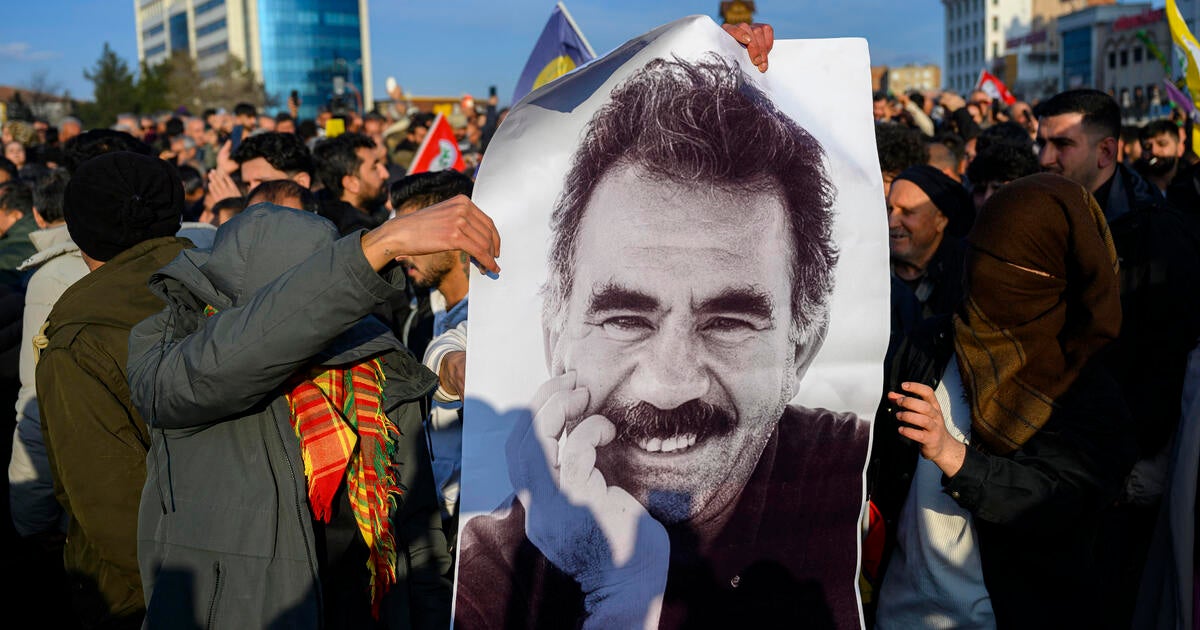
Despite his imprisonment since 1999, Ocalan remains the symbolic leader of the PKK. The public reading of his appeal in predominantly Kurdish regions of Turkey was met with hope for lasting peace.
"The democratic path is paramount in pursuing political systems," Ocalan emphasized in his message.
Global and Regional Responses
While no immediate reaction came from the current PKK leaders, a February statement indicated alignment with Ocalan's call, signaling a readiness for transformation within the group.
The U.S. has embraced this initiative, recognizing the pivotal role Turkey holds in counterterrorism due to its geopolitical position at the crossroads of Asia and the Middle East.
The National Security Council, through spokesperson Brian Hughes, acknowledged the significance of Ocalan’s call, expressing optimism for its potential to calm Turkish concerns regarding U.S. alliances with Kurdish groups in Syria.
UN Secretary-General Antonio Guterres also supported the disarmament appeal, presenting it as a beacon of hope for resolving the conflict.
Challenges and Future Prospects
Ocalan's proposition arrives as Turkey navigates accusations concerning its suppression of dissent, particularly in Kurdish-populated areas where elected officials have been replaced with state appointees. This political tension adds complexity to peace endeavors.
Although Turkey has not formally reacted, officials like Efkan Ala, from the ruling party, emphasize outcome over overt declarations, reflecting on whether these disarmament pledges will be enacted effectively.
Past efforts at peace, including a failed ceasefire over a decade ago, linger as reminders of the challenges ahead. Yet, experts believe a resolution with the PKK could significantly improve Turkey’s bilateral ties and bring substantial benefits.
Leave a Reply