


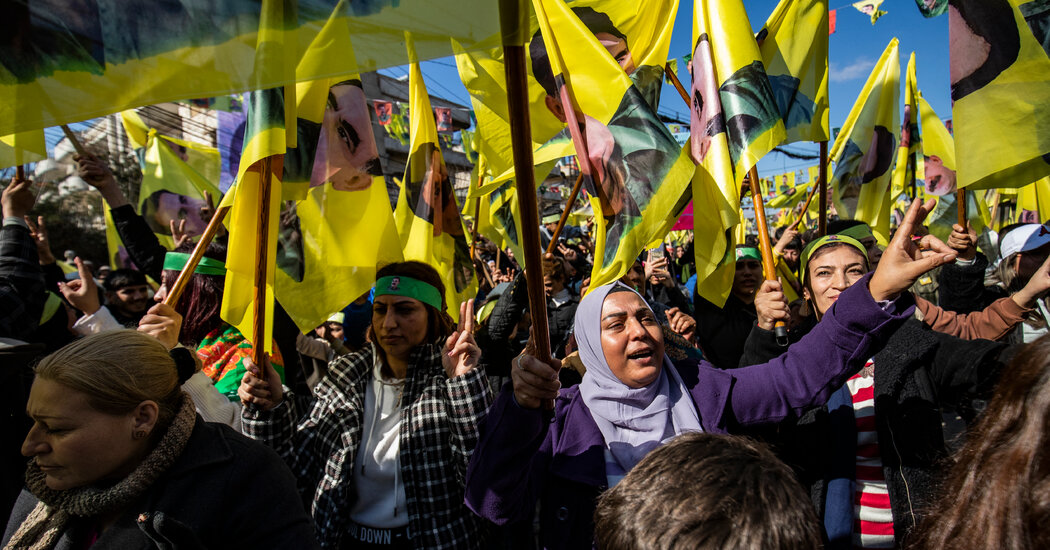
Understanding the Turkey-P.K.K. Conflict
Over four decades, the strife between Turkey and the Kurdistan Workers’ Party, or P.K.K., has claimed upwards of 40,000 lives. Recently, the P.K.K.'s leader has urged the group to lay down their weapons.
Ben Hubbard, who reports on Turkey and the nearby areas, provides insights into this prolonged conflict.
The prolonged conflict involves a rebel group, the P.K.K., which aims for enhanced rights for Turkey’s Kurdish minority and has conducted an armed rebellion against the state for over forty years.
The bloody standoff has led to significant casualties, resulting from the P.K.K.'s actions targeting both military and civilian sites, and subsequent Turkish military retaliations against the insurgents and their supporters in various communities. Nations including the U.S. and Turkey categorize this faction as a terrorist entity.
The founder of the P.K.K., Abdullah Ocalan, has issued a call for peace. However, the impact of his appeal remains uncertain, as does the Turkish government’s response in terms of potential concessions for peace.
Background on the P.K.K.
The P.K.K. began its armed opposition against the Turkish government during the 1980s, initially advocating for the establishment of an independent Kurdish state. Kurds, making up an estimated 15 percent or more of Turkey's population, were the focus of these demands.
Taking roots in the rugged terrain of eastern and southern Turkey, the P.K.K. set targets on police stations and military bases, provoking severe government reprisals. Over time, the turmoil extended to other regions, with the P.K.K. orchestrating deadly attacks in metropolitan areas, claiming the lives of countless civilians.
Leave a Reply