


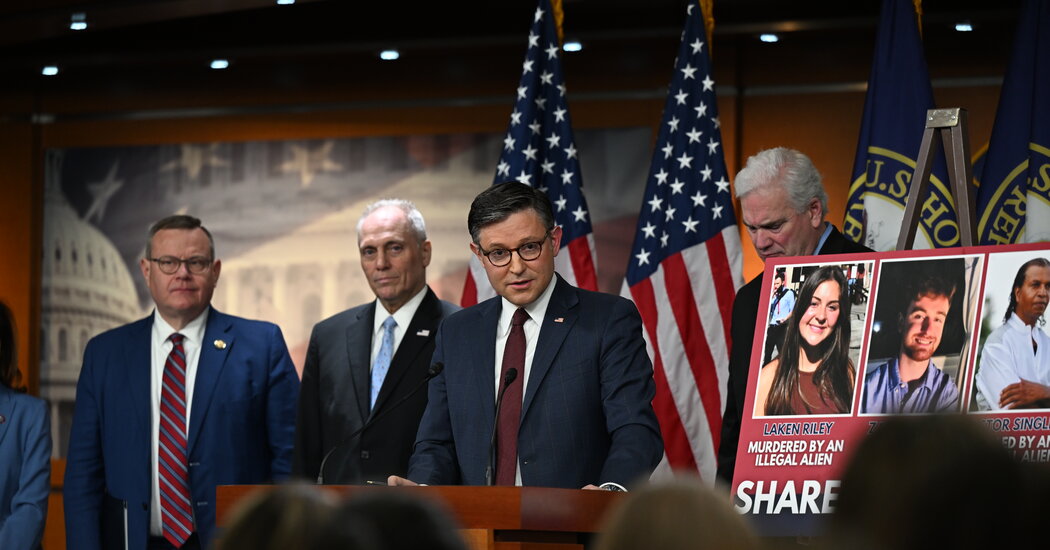
House Approves GOP Budget, Signaling Large-Scale Tax and Spending Adjustments
In a step towards implementing key aspects of President Trump’s domestic policies, the House of Representatives narrowly approved a Republican-led budget proposal. This move introduces significant tax cuts and a considerable reduction in federal expenses, heightening internal disputes among Republicans about which federal programs will face cuts to facilitate substantial tax reductions.
The approved resolution proposes $4.5 trillion in tax cuts coupled with a $2 trillion decrease in federal spending spread over the next decade. The nearly split decision, with most votes falling along party lines at 217-215, sets the stage for intense negotiations within the Republican Party. The primary debate centers on selecting federal programs to scale down to balance these tax benefits, which predominantly advantaged the wealthiest individuals.
A tumultuous session saw Republican leaders grappling with dissent from conservative members who demanded further cuts. Their initial failure to resolve these internal disputes led to the cancellation of the budget vote, only for it to be reinstated moments later amid confusion, illustrating the challenging journey ahead as Republicans attempt to navigate President Trump’s policy ambitions through Congressional approval despite anticipated opposition from Democrats.
Strategic Pathway to Tax Reform
The passage of this budget blueprint marks an essential milestone for the Republicans. By enabling a legislative procedure known as reconciliation, this strategy paves the way for proposed financial measures to pass through Congress while avoiding the threat of a filibuster in the Senate. By adhering to this procedure, Republicans aim for tax reforms that require only a simple majority for passage, significantly streamlining the legislative process.
Leave a Reply