


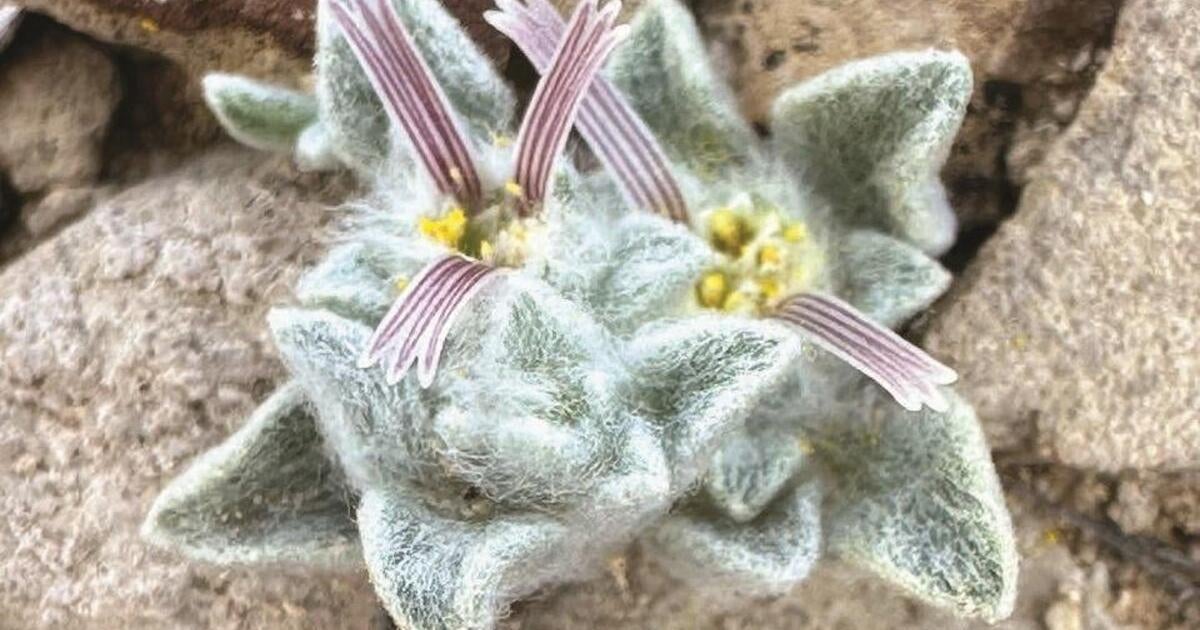
Introducing the 'Wooly Devil': A New Botanical Marvel in Texas
The discovery of a novel plant species at Big Bend National Park in Texas was revealed recently by officials from the National Park Service.
This new species, elegantly nicknamed the Wooly Devil, was initially noticed in March 2024 by Deb Manley, a dedicated botany volunteer, accompanied by a vigilant park ranger. Growing in isolation amid desert stones in a less-traveled part of the park, these diminutive and hairy plants stood out with their striking yellow blossoms.
Authorities, alongside plant specialists, embarked on an exploration of botanical databases and sought expert opinions. Through these efforts, it gradually became evident they had encountered a rare botanical anomaly.
This marks the first occasion in nearly half a century that a fresh plant species has been located within any U.S. national park. The comprehensive study of the Wooly Devil involved collaboration between Big Bend staff and Sul Ross State University.
According to findings published in a reputable botanical journal, the Wooly Devil belongs to the daisy family yet stands genetically apart, warranting a new genus classification. It shares familial ties with plants like paperflowers and bitterweed, known for their yellow blooms.
Characterized by its smaller stature, the Wooly Devil measures between just under 1 centimeter to 3-7 centimeters across. The scientific nomenclature assigned, 'Ovicula biradiata,' draws from its sheep-like wooly appearance and its distinctive double ray petal formation.
Big Bend National Park Superintendent Anjna O'Connor expressed enthusiasm about the vast unknowns regarding this newfound species and its ecological role.
Spanning over 800,000 acres in southwest Texas, Big Bend forms part of the Chihuahuan Desert, renowned as the Western Hemisphere’s most diverse desert ecosystem.
Researcher Lichter Marck highlighted to the California Academy of Sciences that the resilience of desert floras like the Wooly Devil arises from their adaptation to harsh climates. Nonetheless, these plants remain vulnerable amidst mounting environmental challenges.
Marck noted the Wooly Devil’s extremely restricted presence within northern areas of the park, expressing concerns that this species, newly documented, might already be under ecological threat.
Leave a Reply