


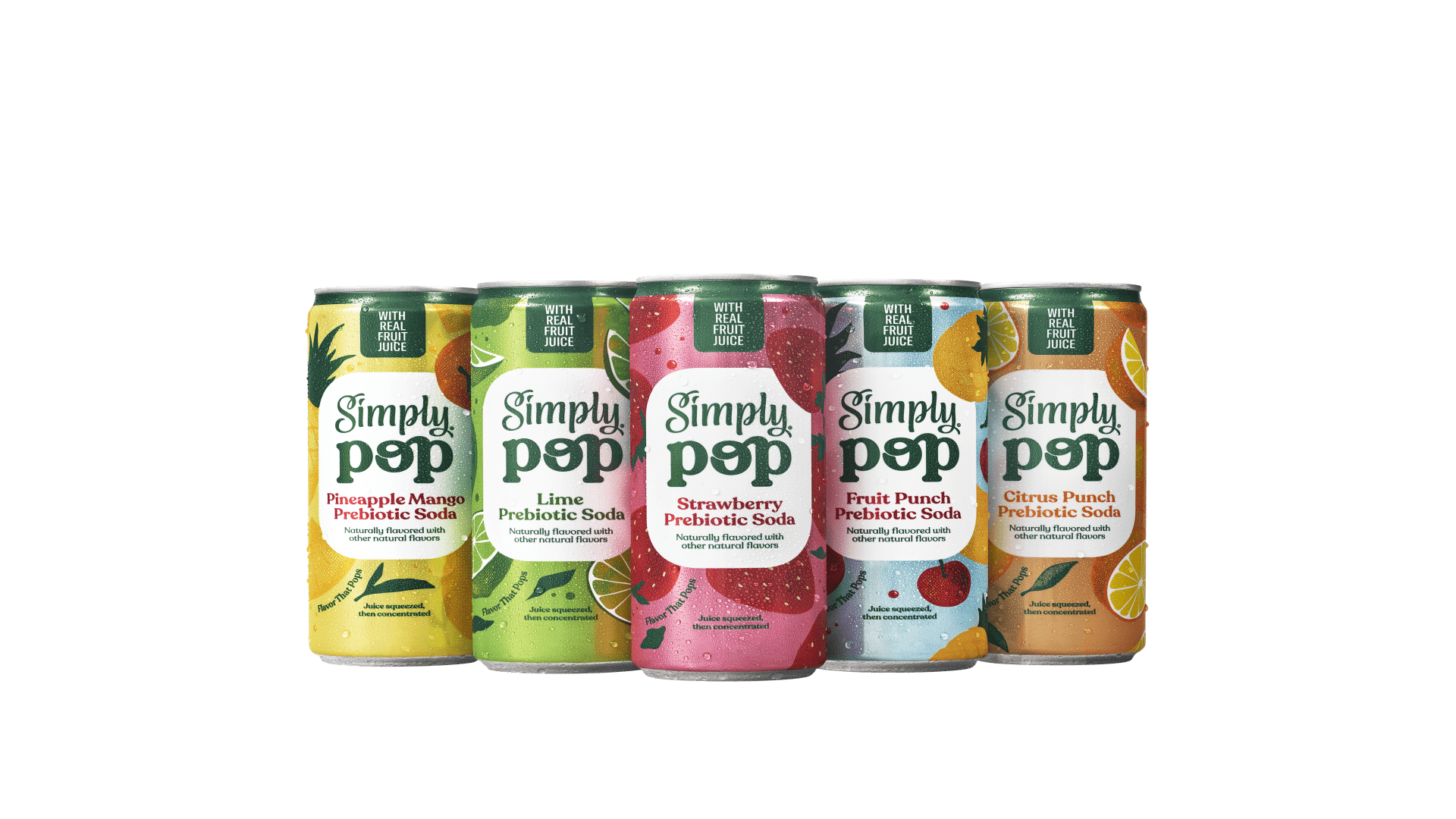
Coca-Cola Ventures into the Prebiotic Soda Market With Simply Pop
Coca-Cola has unveiled Simply Pop, its new prebiotic soda line, positioning itself against emerging brands like Olipop and Poppi.
The launch is set for late February, initially targeting consumers in the West Coast and Southeastern regions, introducing them to Coke's version of the increasingly popular beverage.
Over the past two decades, traditional soda consumption in the U.S. has dwindled due to health issues and a broader range of drink alternatives, including cold brews, energy beverages, and enhanced water options. However, prebiotic sodas have witnessed rapid growth recently, propelled by niche players Olipop and Poppi.
As indicators of their success, Olipop hit a valuation of $1.85 billion, while Poppi committed up to $8 million to advertise during a major event, leveraging their appeal to a vast audience.
According to Euromonitor International, the market for digestive health beverages in the U.S. expanded from $197 million in 2020 to an estimated $440 million by 2024. Although this is a small segment of the colossal soda market, it represents significant growth potential.
Inspired by its Simply juice line, Coke's Simply Pop emphasizes fruity flavors, offering varieties such as pineapple mango, lime, strawberry, fruit punch, and citrus punch.
Consumer Interests and Health Considerations
Becca Kerr, CEO of Coke's North American nutrition division, elucidates, "We've engaged with consumers who are keen on great-tasting, healthier options—areas that Simply and Coke are well-versed in delivering."
Simply Pop, free of added sugars, comprises 25% to 30% genuine fruit juice as well as vitamin C and zinc for immune support. Each serving contains six grams of prebiotic fiber, surpassing Poppi's offerings yet featuring less fiber than Olipop.
The Trend of Prebiotics
Prebiotics are gaining traction due to claims of enhancing "gut health" by fostering beneficial gut bacteria. However, discussions continue about the exact health benefits they confer.
"The demand for such products is notable among younger demographics, like millennials and Gen Z, as well as multicultural groups," Kerr notes.
Challenges in Health Claims
Health-related marketing claims can face skepticism. Poppi, for example, is currently negotiating an agreement following allegations that its marketing overly emphasizes health benefits that their products may not provide.
Kerr mentions that Coca-Cola has considered entering the prebiotic soda space for years. Both Coke and PepsiCo have shown interest in possibly acquiring Olipop, with Pepsi planning to debut its own prebiotic soda line by 2025.
Coca-Cola's Strategy and Market Presence
Although new to prebiotic sodas, Coca-Cola has extensive experience in the broader soda industry, equipped with over a century's worth of market-leading strategies, a robust marketing spine, and substantial revenue exceeding $47 billion in 2024. This dwarfs Olipop's more modest earnings, capping over $400 million the same year.
Not every foray into trending drinks proves successful for Coke, as seen with past failures like Coke Spiced and limited distribution for Aha sparkling water, underscoring the challenges of this competitive market.
Leave a Reply