


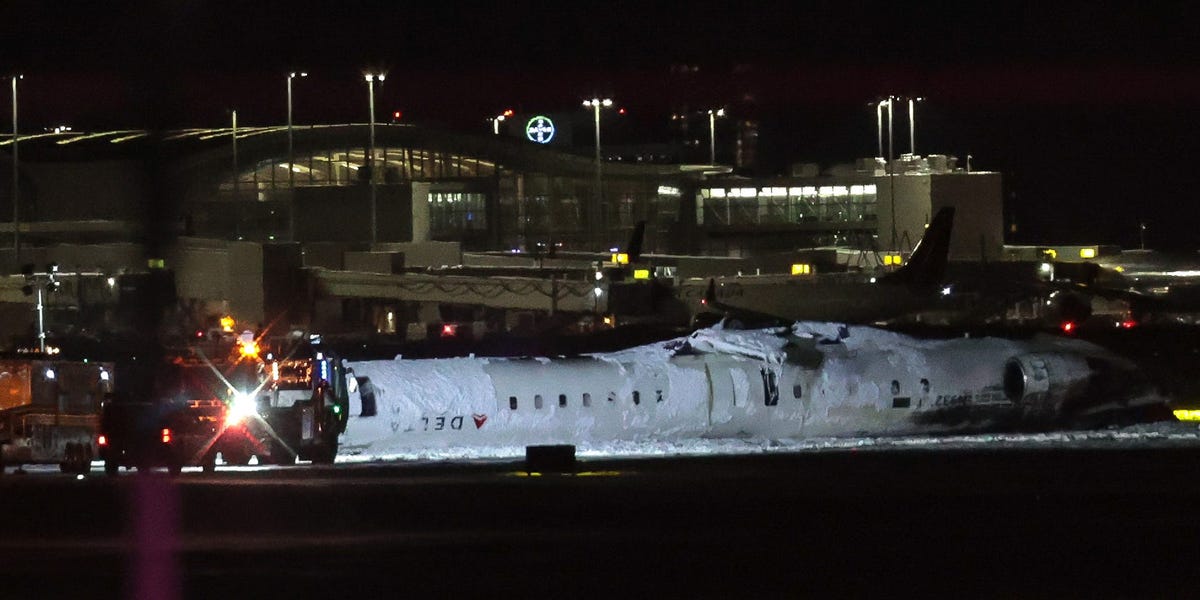
London to Toronto Flight Ends Without Destination After Delta Crash Causes Chaos
In a dramatic turn of events, two transatlantic flights found themselves rerouted due to a Delta aircraft accident in Toronto. The closure of Toronto Pearson International Airport sparked widespread disruptions.
The Bombardier CRJ900 incident at the airport led to both runways being shut down after the plane was overturned, shedding its wings in the process. Out of 80 passengers onboard, 18 sustained injuries.
A British Airways Boeing 777, which was en route from London to Toronto, had to abruptly reverse course.
Unexpected Journey Back to London
Three hours into its journey, British Airways Flight 99 made a U-turn over the Atlantic, according to Flightradar24's reports. The flight touched down at London Heathrow around midnight after a six-hour venture from its original takeoff point.
Under normal conditions, the trip to Toronto would span approximately eight hours.
Other Flights Face Disruptions
Meanwhile, TAP Air Portugal's flight heading to Toronto from Lisbon also changed course after two hours over the Atlantic. Initially thought to divert to the Azores, it returned to Lisbon about eight hours post-departure.
Neither TAP nor British Airways offered comments to Business Insider regarding these events.
Widespread Aviation Impact
According to Flightradar24, an additional 44 flights were affected by Monday's crash. A variety of alternate airports saw traffic, with 11 flights rerouting to Montreal, nine to Ottawa, six to Hamilton, and three each to both Chicago O'Hare and Pittsburgh.
While passengers may find these diversions inconvenient, they represent a significant economic burden for airlines, disrupting flight schedules substantially.
The Complexity of Flight Diversions
Despite seeming counterintuitive, returning over large expanses of ocean is quite common. Airlines often find it more manageable to reorganize passengers and staff at centralized hub airports, which have the necessary resources.
Nearby airports might not have the infrastructure to cope with unexpected traffic surges during such incidents.
Leave a Reply