


Guatemala and the U.S. Forge Another Migrant Return Agreement
Reported by The Associated Press.
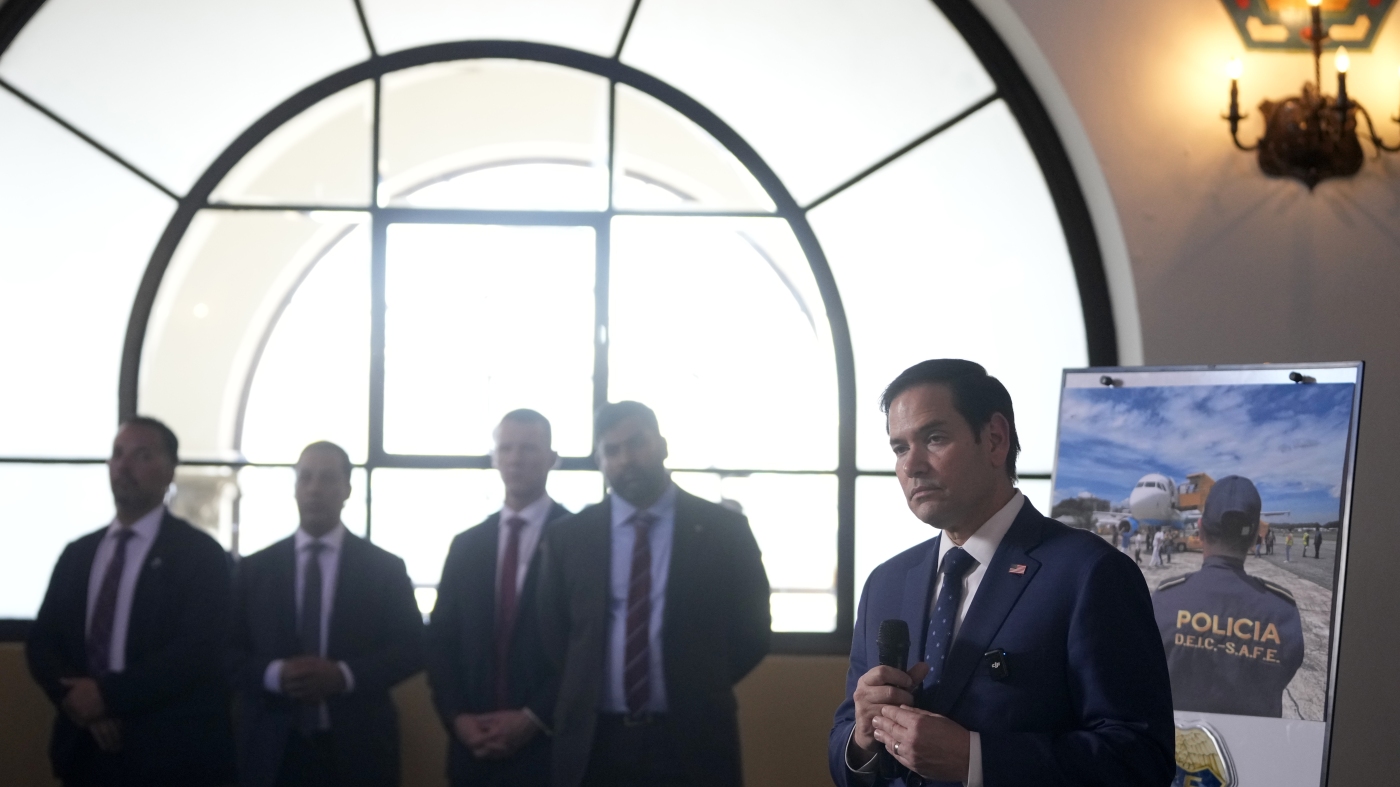
U.S. Secretary of State Marco Rubio addressed the media after visiting a migrant processing center in Guatemala City, highlighting ongoing efforts to combat drug smuggling.
New Deportation Deal with Guatemala
GUATEMALA CITY – Guatemalan President Bernardo Arévalo declared on Wednesday that his government has agreed to accept deported migrants from various nations sent by the United States. Secretary of State Rubio achieved this arrangement during his immigration-focused trip through Central America.
The accord stipulates that the United States will finance the return of these deportees to their homelands.
President Arévalo announced a 40% increase in deportation flight frequency, involving both Guatemalan and other foreign nationals, during a joint press briefing with Rubio.
Regional Immigration Policies
Guatemala has previously agreed to receive seven to eight flights of its citizens weekly from the United States, a practice continuing from the Trump and Biden administrations. Under these policies, deportees have even been returned via U.S. military aircraft.
In parallel, El Salvador confirmed an expansive deportation deal. President Nayib Bukele outlined that his country would take in deportees regardless of their nationality, including U.S. citizens detained for violent offenses.
Both Trump and Rubio highlighted the legal challenges of incarcerating U.S. citizens abroad.
Legal and Diplomacy Concerns
Trump remarked, "If it were legally permissible, I'd endorse it immediately," while Rubio noted the necessity of adhering to constitutional boundaries.
Rubio's Diplomatic Journey
Immigration initiatives have dominated Rubio's inaugural overseas trip as the nation's chief diplomat. His itinerary covers five nations—Panama, El Salvador, Costa Rica, Guatemala, and the Dominican Republic.
These agreements with Guatemala and El Salvador are strategic moves to manage immigration enforcement challenges, particularly for migrants challenging to repatriate, such as those from Venezuela. The U.S. has established robust networks with several Central American countries for such deportations.
Boosting Guatemala's Migration Infrastructure
Guatemala plans to extend its capacity to accept not only its citizens but deportees from various nationalities, facilitating their journey back to their original countries. Specific operational details still need development.
President Arévalo suggested addressing immigration through economic improvements to discourage emigration, announcing a forthcoming high-level private and public sector delegation to Washington to pursue this goal.
Security and International Assistance
A new Guatemalan border control unit, comprised of police and military personnel, will patrol national boundaries with Honduras and El Salvador to fight cross-border criminality, Arévalo stated.
Rubio's visit coincided with the administration's reduction of USAID operations, which provoked uncertainty among its staff in Guatemala. Despite this, Rubio met with embassy workers and their families, providing assurances about their situation.
Embassy Activities and Future Plans
Rubio concluded his Guatemala visit by inspecting a local migrant processing facility, where an anticipated 40% rise in deportees is expected, supported by U.S. government resources.
Rubio received briefings on Guatemala's anti-drug initiatives, which included significant seizures of fentanyl precursors—capable of producing over 114 million doses—since late November.
Permitting exceptions to Trump's foreign aid suspension, Rubio has approved funding continuance for vital programs, seeing them as essential to U.S. interests.
In discussions with Mexico's Foreign Secretary Juan Ramón de la Fuente, Rubio explored collaborative efforts to fortify border security, combat fentanyl trafficking, and dismantle international criminal networks.
Leave a Reply