


Challenges for Cannabis Buyers in the U.S. Amidst an Overwhelming Illegal Market
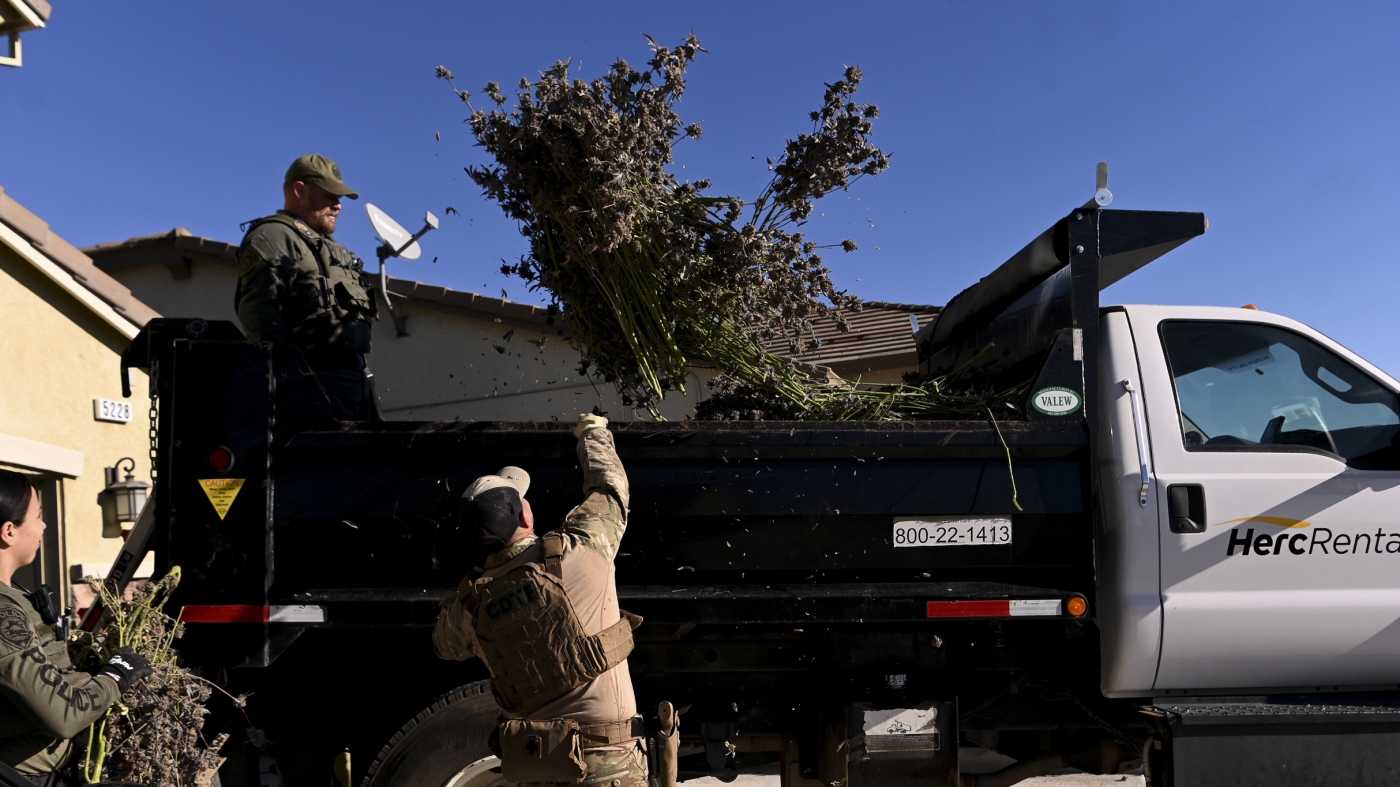
Throughout most of the United States, unlawfully sold cannabis often overshadows the legal offerings available in licensed stores. The California Department of Cannabis Control's law enforcement personnel engage in efforts to seize illegal marijuana from places like the Goldridge neighborhood in Fairfield.
During a winter morning in Fairfield, midway between Sacramento and San Francisco, Sgt. Erin McAtee and a team from the California Department executed a search operation in a seemingly typical suburban home. Inside, they discovered the place was a chaotic cannabis farm.
The interior revealed mold on tarps and chemicals not authorized for consumer product usage, marking the property as a hazardous illegal grow site.
Leading raids across private properties, McAtee's team seized over two thousand pounds of cannabis plants. This snapshot highlights the tangled landscape of cannabis sales over a decade since recreational use began legalizing across states.
Legal Operations Outmatched by Illegal Enterprises
Despite the availability of safely regulated cannabis akin to buying a bottle of alcohol, much of the trade remains under clandestine operations. California's authorities acknowledge the illegal market's dominance despite licensed venues.
Sgt. McAtee clarified the difficulty even trained officers face in distinguishing regulated cannabis from illicit goods, as unauthorized dealers feign legitimacy, claiming fake licenses.
Consumers face even greater challenges trying to identify legal from illegal products. Paul Armentano of the National Organization for the Reform of Marijuana Laws highlights that products from unmonitored sources pose safety hazards.
When consumer goods like cannabis, alcohol, or even vegetables are unregulated, many concerns arise, according to Armentano.
The Thriving Black Market and Consumer Implications
Advocates who hoped legal cannabis businesses would edge out illegal operations were met with the reverse. Expert Vanda Felbab-Brown explains how criminal networks, some linked to China, find appealing opportunities in cannabis with relatively less crackdowns.
Felbab-Brown notes the utilization of these illegal farms for money laundering, which sometimes involves human trafficking. NPR's request for comments from Chinese officials on organized crime involvement in U.S. cannabis went unanswered.
Illegal sellers, free from tax and regulatory expenses, offer lower prices compared to legal stores and can send products nationwide, bypassing federal restrictions.
The unregulated cannabis often shows up in packaging similar to its legal counterparts, making it hard to tell apart, while potentially containing harmful substances.
Guidance for Consumers in Navigating the Cannabis Market
To reliably secure regulated cannabis, experts suggest visiting licensed retailers in states where they operate legally, despite possibly higher costs.
In locales offering legal cannabis, online resources can guide buyers to legitimate sellers. Double-checking store licenses ensures product credibility.
Historical parallels are drawn with alcohol's prohibition-to-regulation transition. Legalizing cannabis follows a complex path similar to alcohol's post-prohibition era.
Beau Kilmer from the Rand Drug Policy Research Center indicates the uneven transition period, pointing to ineffective strategies against illegal markets.
Some areas, like New York City, begin targeting unauthorized cannabis outlets in efforts to support legal vendors, confiscating vast quantities of illegal produce.
Yet, experts foresee the black market's persistence, as enforcement and regulations catch up.
Back in Fairfield, McAtee watched as seized cannabis prepared for removal, acknowledging its potential widespread illegal distribution beyond state lines.
Leave a Reply