


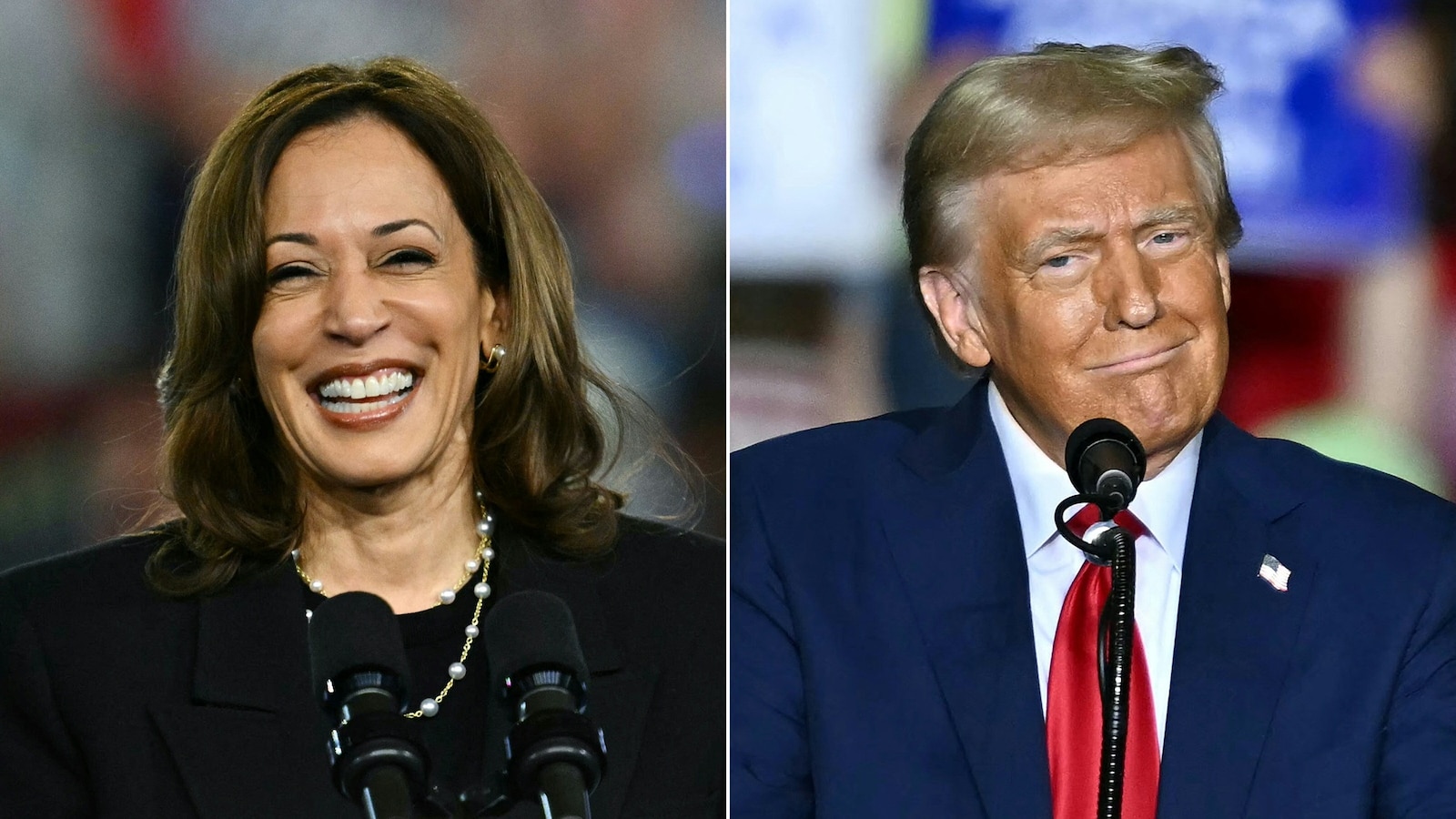
The Global Perspective: Foreign Policy in the 2024 U.S. Election
The impending electoral face-off between Vice President Kamala Harris and former President Donald Trump presents an intriguing dichotomy in terms of foreign policy direction — a choice between maintaining established paths and initiating new strategies.
Throughout her vice presidency, Harris has aligned with President Biden's international initiatives, forwarding an agenda aimed at re-establishing American diplomatic traditions following the unpredictability of Trump's tenure.
Biden's administration, however, has contended with a significant decline in global stability, manifest in two large-scale conflicts — one in Europe, the other in the Middle East — with significant American involvement.
Divergent Foreign Policy Visions
Trump's campaign is driven by the principles of 'America first' and 'peace through strength,' critiquing his opponents for their alleged roles in fostering global chaos through perceived frailty and mismanagement.
Harris and her Democratic team portray Trump as an unpredictable leader susceptible to manipulation by cunning international counterparts.
Russia and Ukraine
The conflict between Russia and Ukraine has been a focal point of Biden's presidency. Initially, his administration lent robust support to Kyiv as Ukrainian forces resisted Putin’s military strategies.
This policy has aimed at ensuring Ukraine's endurance while seeking to strategically outmaneuver Russia, avoiding escalation to a potential nuclear confrontation involving NATO.
Critics from within Ukraine have voiced frustration over slow progress on NATO membership aspirations, delays in military aid, and restrictions on using supplied weaponry.
Middle Eastern Tensions
The October 7, 2023, assaults by Hamas in Israel have ignited extensive regional conflicts, drawing American forces into direct engagements with Iran and its affiliates.
The ongoing conflict in areas like Gaza and Lebanon coincides with the presidential race, affecting the dynamic roles of America in these regions.
Trump criticizes the current administration's handling of such issues, arguing that unwavering U.S. backing for Israel will persist regardless of the presidential victor.
Some experts believe Harris might bring slight adjustments to the current approach towards the Israeli-Palestinian conflict, though sweeping changes are unlikely.
China and Taiwan Relations
The policy stance on China remains a contentious topic, with both Harris and Trump expected to maintain a tough line on Beijing as a top strategic opponent of the U.S.
Experts suggest that Harris, lacking a distinct track record on China, might continue Biden's approach, characterized by challenging economic and diplomatic actions.
Conversely, Trump's previous admiration for Xi Jinping could paradoxically benefit China's long-term strategic aims despite his unpredictability being a potential challenge.
North and South Korea Dynamics
Trump's unique relationship with North Korea opened dialogues but caused apprehensions in South Korea concerning U.S. military commitments.
Moving forward, there is uncertainty surrounding future negotiations, as both Harris and Trump potentially adopt different stances on nuclear talks with Pyongyang.
NATO and European Relations
Trump’s critical view of NATO expenditure commitments marks a sharp contrast with the Biden administration’s efforts to maintain allied unity amidst increasing defense spending obligations.
European allies are cautious, facing potential shifts in U.S. policy that might provoke difficult decisions, whether under a renewed Trump administration or a continuation through Harris.
Leave a Reply