


Mexico Denounces Allegations of Cartel Collaboration, Promises Trade Retaliation Against U.S.
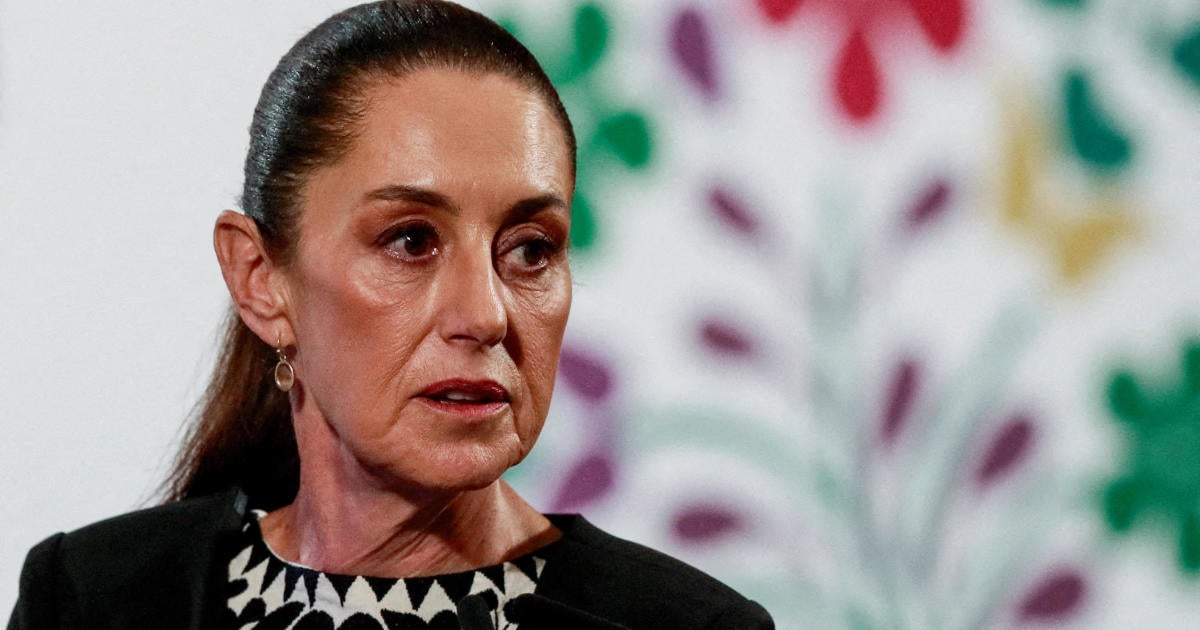
Mexico's President has strongly refuted U.S. acccusations that her administration is working alongside drug cartels, promising a response to Trump's broad trade penalties.
Relations between the neighboring countries sharply deteriorated after assertions from the U.S. regarding unauthorized immigration and drug trafficking, triggering tariffs on Mexican and Canadian imports.
The President has directed Economy Minister Marcelo Ebrard to activate an alternate strategy, which involves both tariff and non-tariff measures, to uphold Mexico's interests.
Ebrard criticized the tariffs imposed by Trump as a clear breach of the North American free trade agreement.
The President also retaliated against U.S. claims of a 'unacceptable alliance' with drug cartels.
She emphatically denied the accusations, attributing any real collusion to U.S. firearms dealers supplying criminal organizations.
Moreover, she urged U.S. authorities to focus on addressing fentanyl abuse domestically by curbing street-level drug dealing and the associated financial crimes.
Although U.S. voices have previously suggested links between Mexico's government and cartels, this marks the first official accusation, noted retired diplomat Agustin Gutierrez Canet.
Gutierrez remarked that such inflammatory remarks from Trump are a strategic maneuver, yet should be approached with caution.
Experts warn that the imposition of tariffs by America's largest trading partner could severely undermine Mexico's economy.
Given that over 80% of Mexico's exports are bought by the U.S., the economic impact could be significant.
According to Capital Economics, these tariffs could potentially trigger a recession in both Canada and Mexico within the year, considering exports form a vital part of GDP.
The tariffs might escalate consumer prices on Mexican-imported goods like avocados.
In 2023, the U.S. brought in more than $45 billion worth of agricultural goods from Mexico, comprising fresh produce and meat, as per U.S. Department of Agriculture data.
A blanket tariff of 25% could result in a 12% decrease in Mexican exports, stated Banco BASE's head economist, Gabriela Siller.
She forecasted that the nation's GDP might shrink by 4% in 2025 if these tariffs sustain throughout the year.
Siller concluded that if the tariffs endure for several months, Mexico could plunge into a deep recession.
Leave a Reply